Submerged Arc Welding (SAW) to DIN EN 1090-2 EXC3
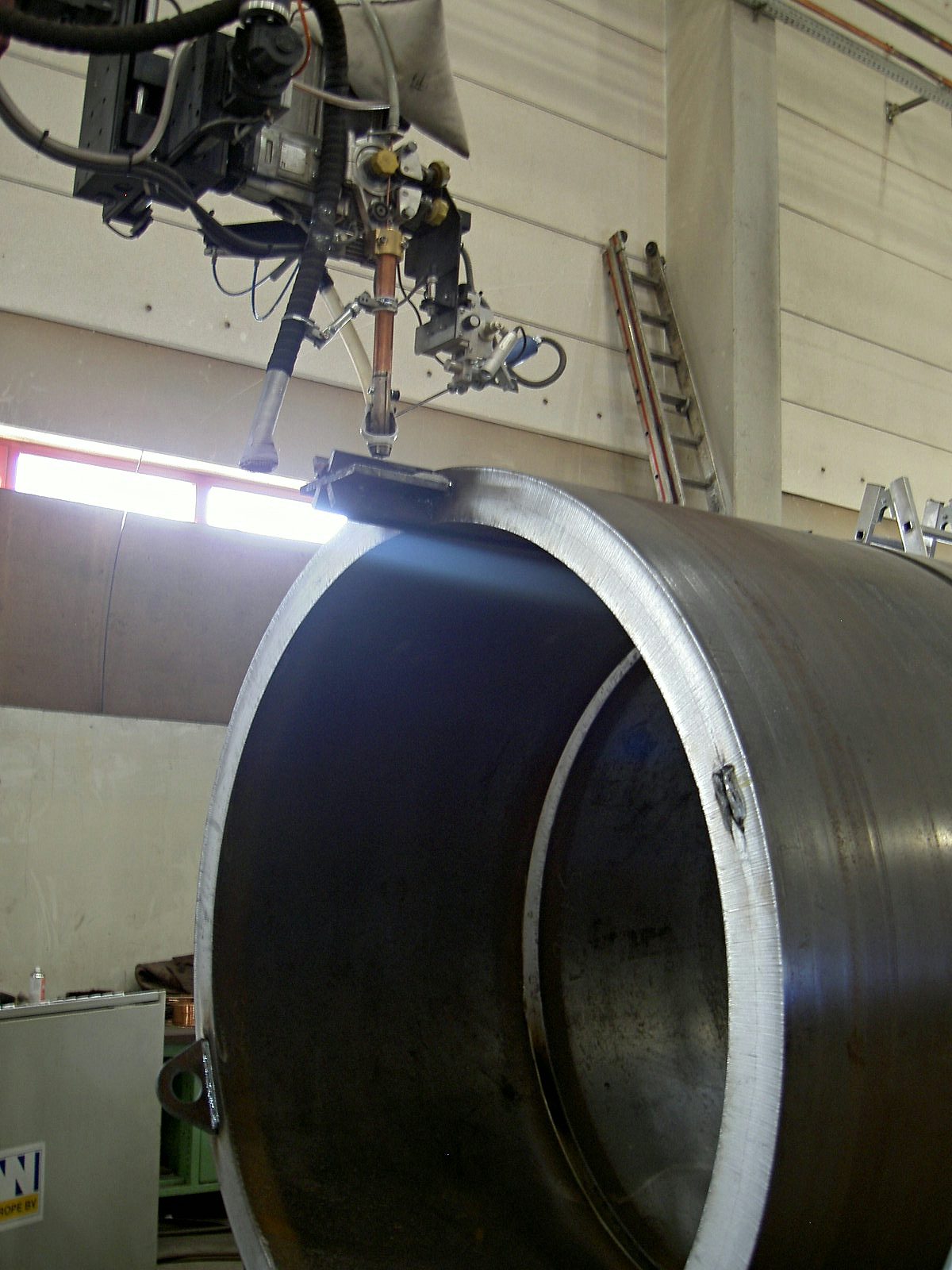
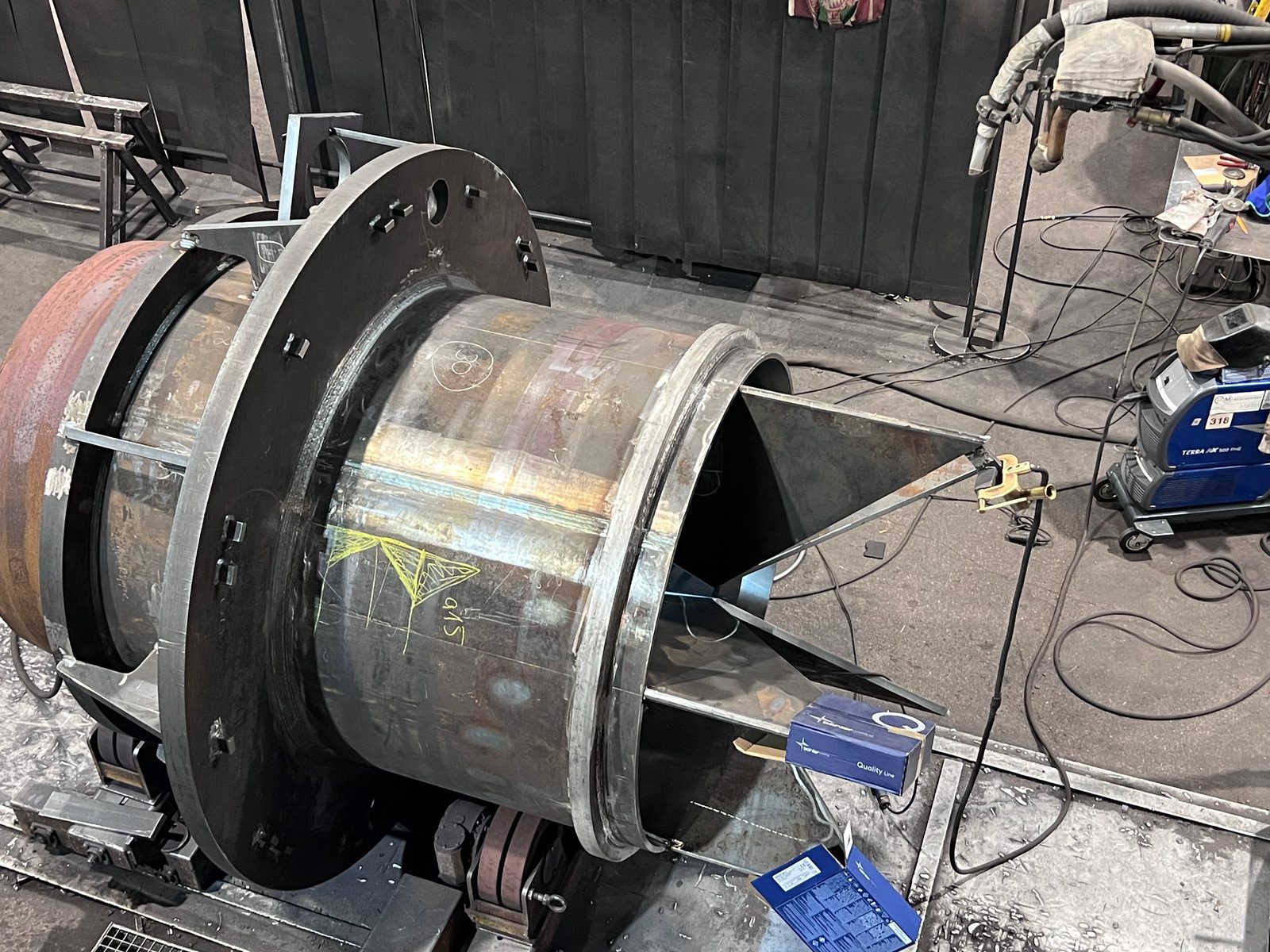
Deep, high-strength longitudinal and circumferential seams on heavy parts up to 50 t – fully mechanized submerged arc welding to DIN EN 1090-2 EXC3 in Lorch.
ESAB systems with high deposition rate for large seam volumes.
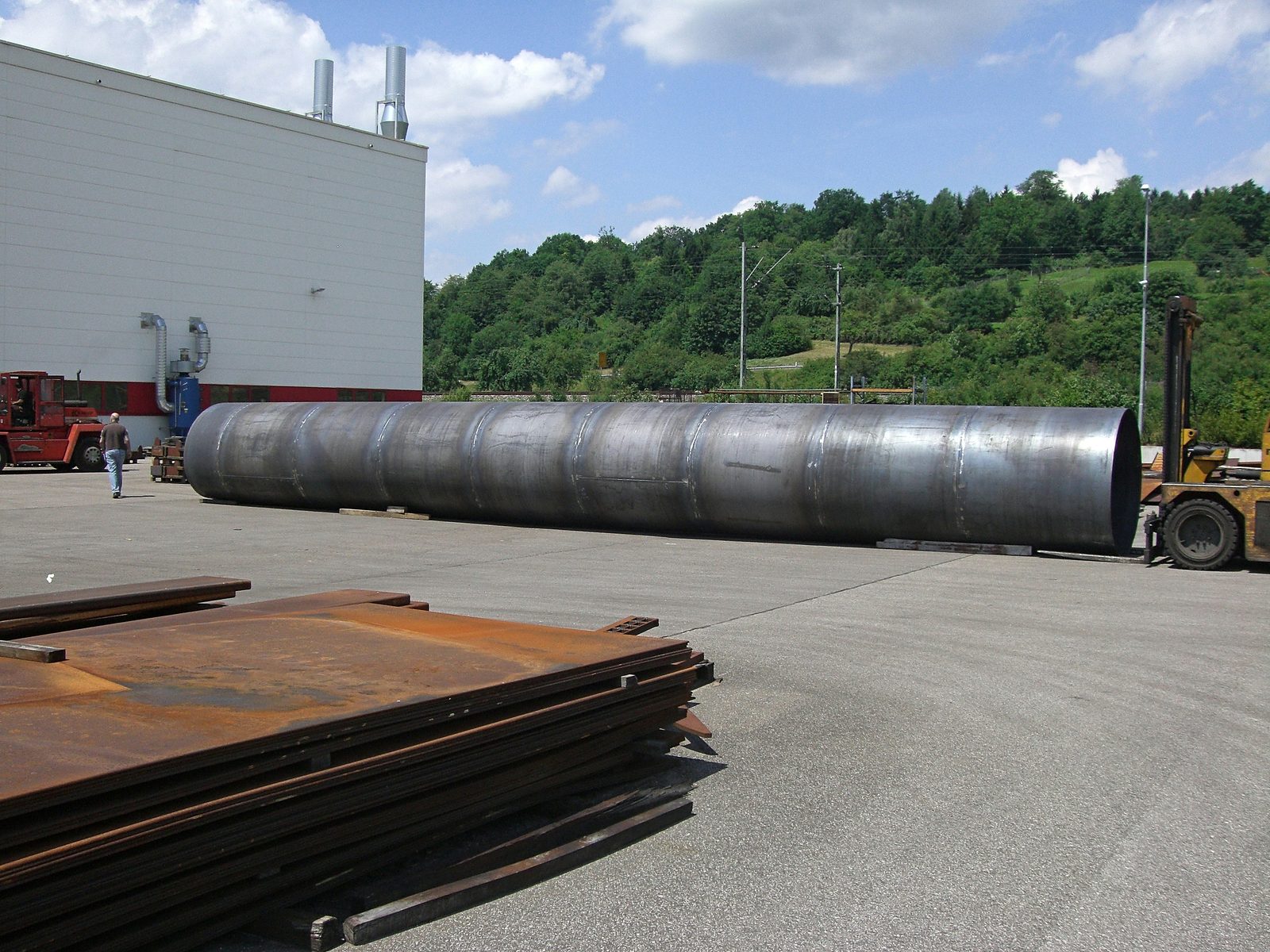
High-strength longitudinal and circumferential seams even on large-format structures.
2×25 t crane system for safe handling of heavy components.
Certified welding contractor to EXC3, EN ISO 3834-2 and DIN EN ISO 9001:2015.
VT, PT and MT to DIN EN ISO 9712 in-house, UT on a project basis.
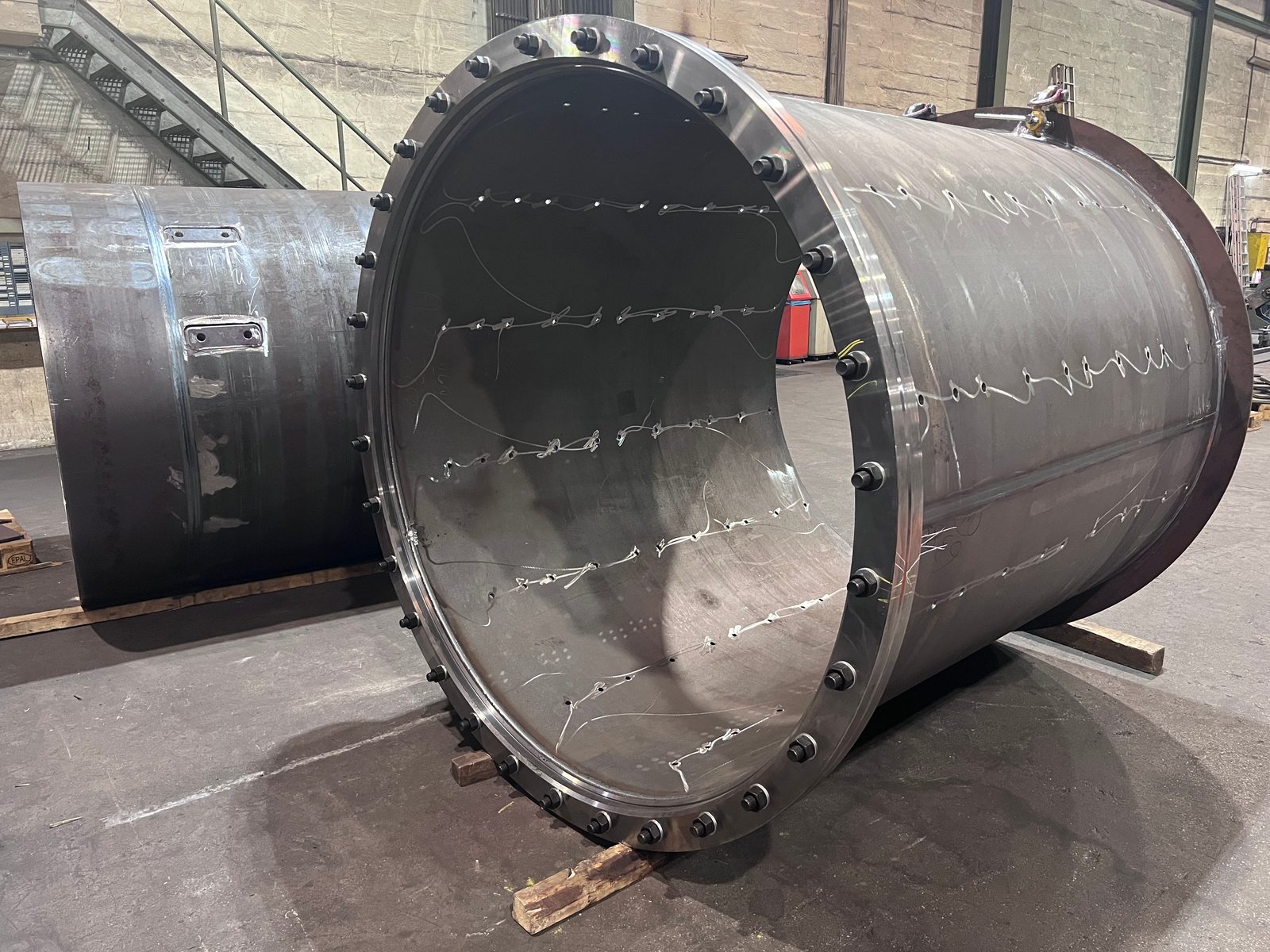
CNC machining, shot blasting, painting and assembly within the same facility.
Submerged Arc Welding at Bock – Fully Mechanized, High-Strength, Large-Format
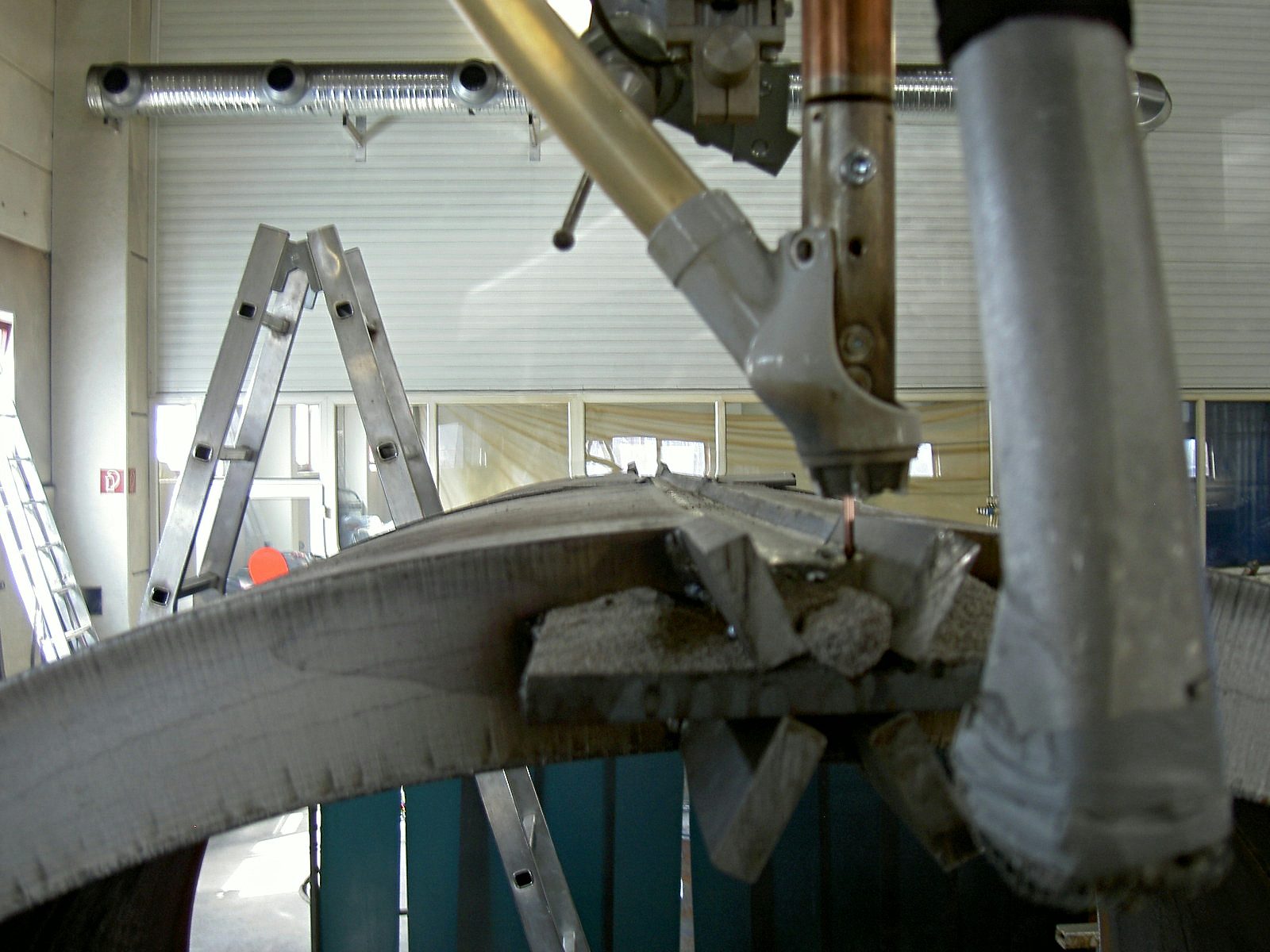
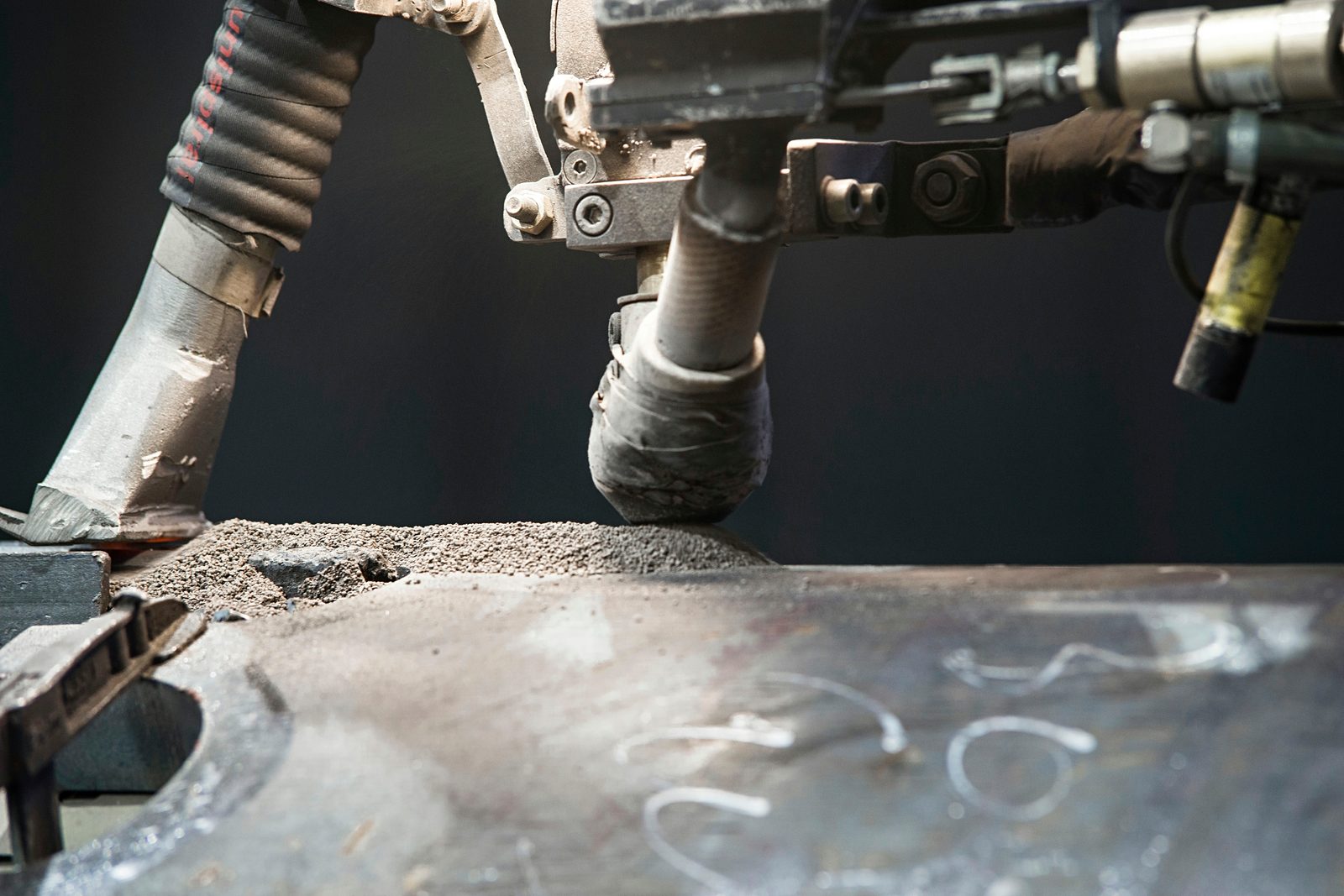
Submerged arc welding (SAW) is a fully mechanized arc welding process in which the arc burns beneath a layer of granulated flux. The process enables deep penetration, low spatter losses and a consistent weld surface – combined with high deposition rates and stable process control.
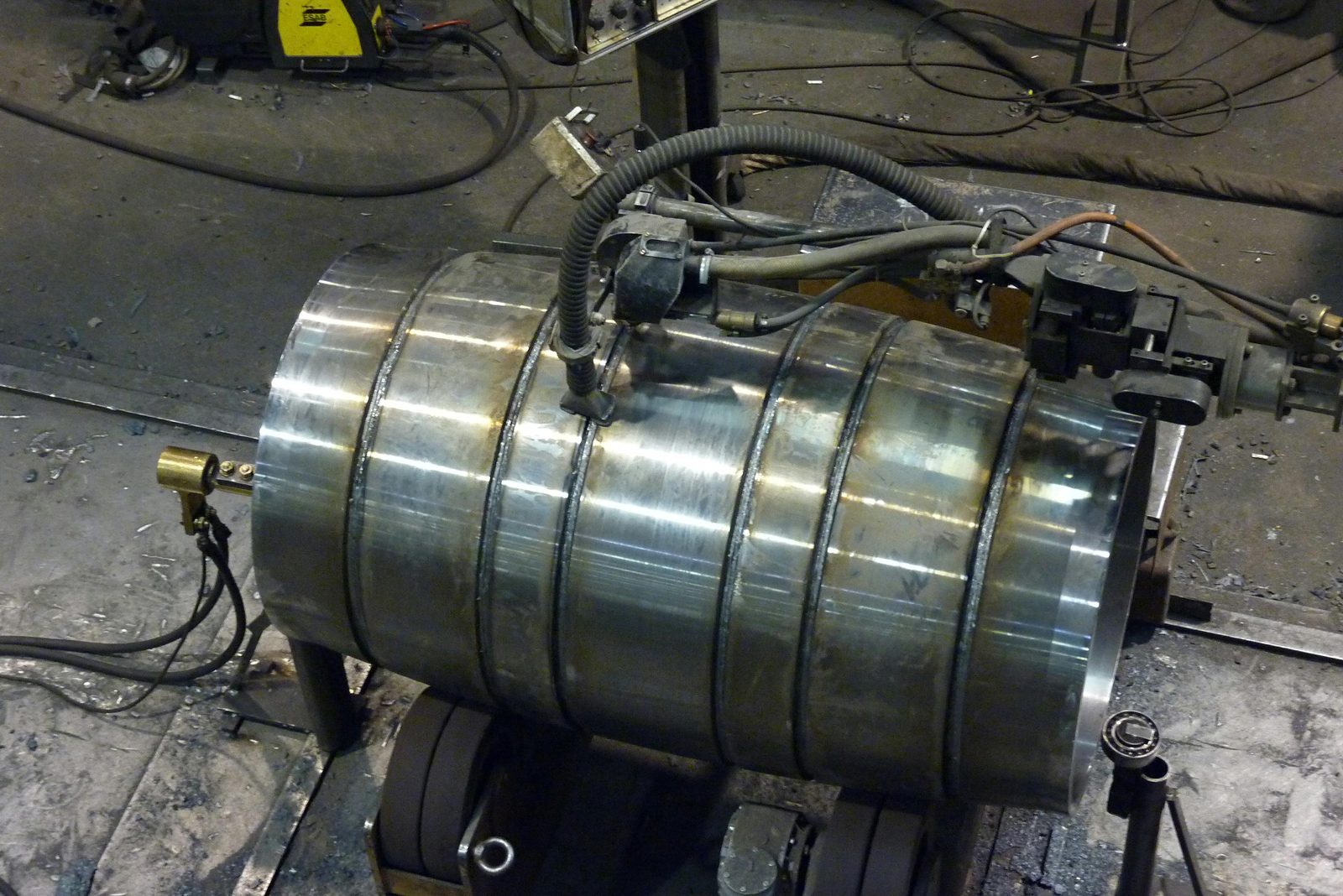
At Bock, SAW is used for long, straight seams on heavy components and large-format structures – where MIG/MAG or TIG welding reach their capacitative or process limits. Typical applications include load-bearing longitudinal seams on tubular sections, beams, vessels and welded structures with high strength requirements.
Production is embedded within the certified quality framework to DIN EN 1090-2 EXC3 and EN ISO 3834-2. Welding process qualifications, inspection requirements and documentation obligations are an integral part of the production processes.
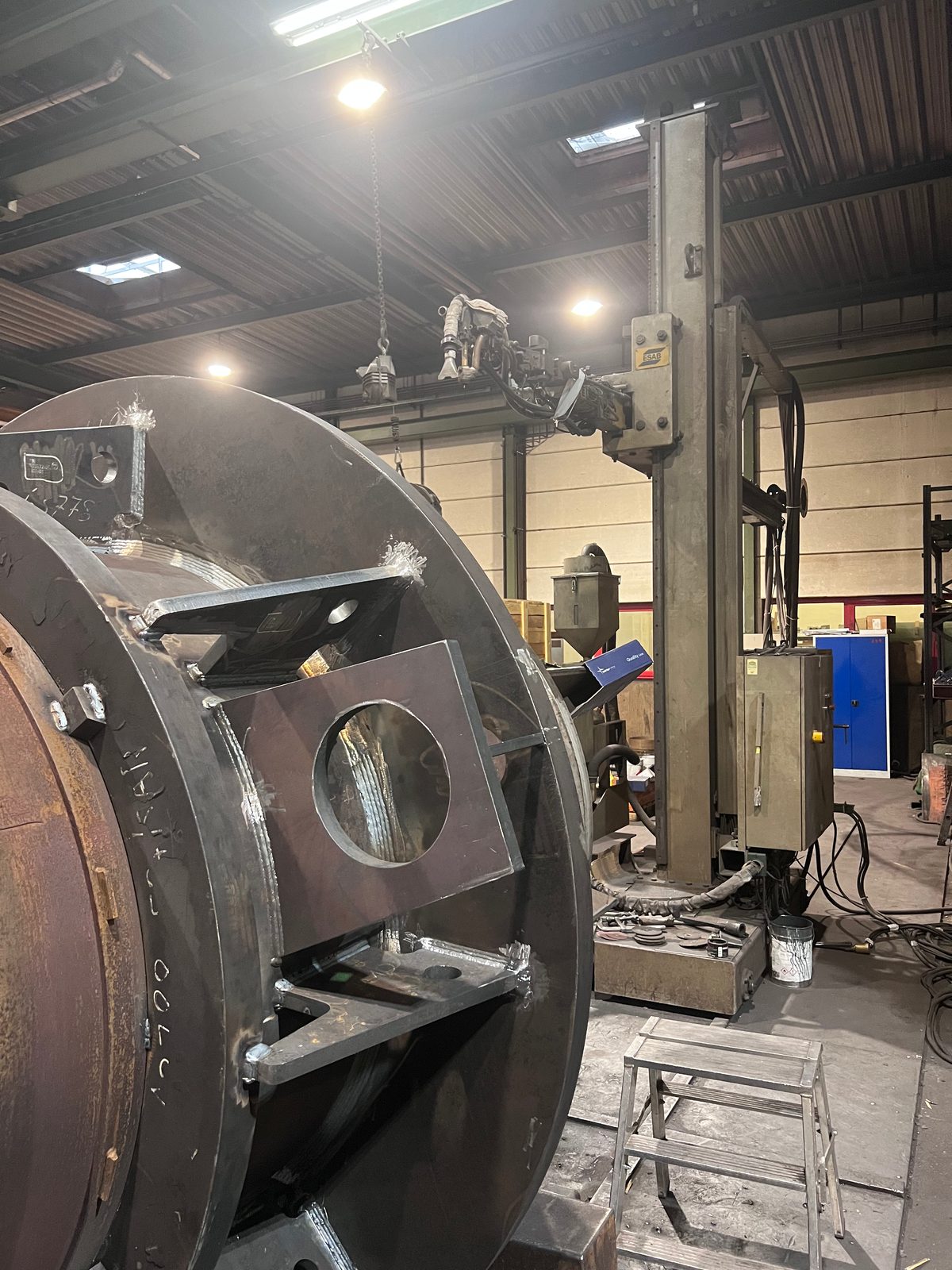
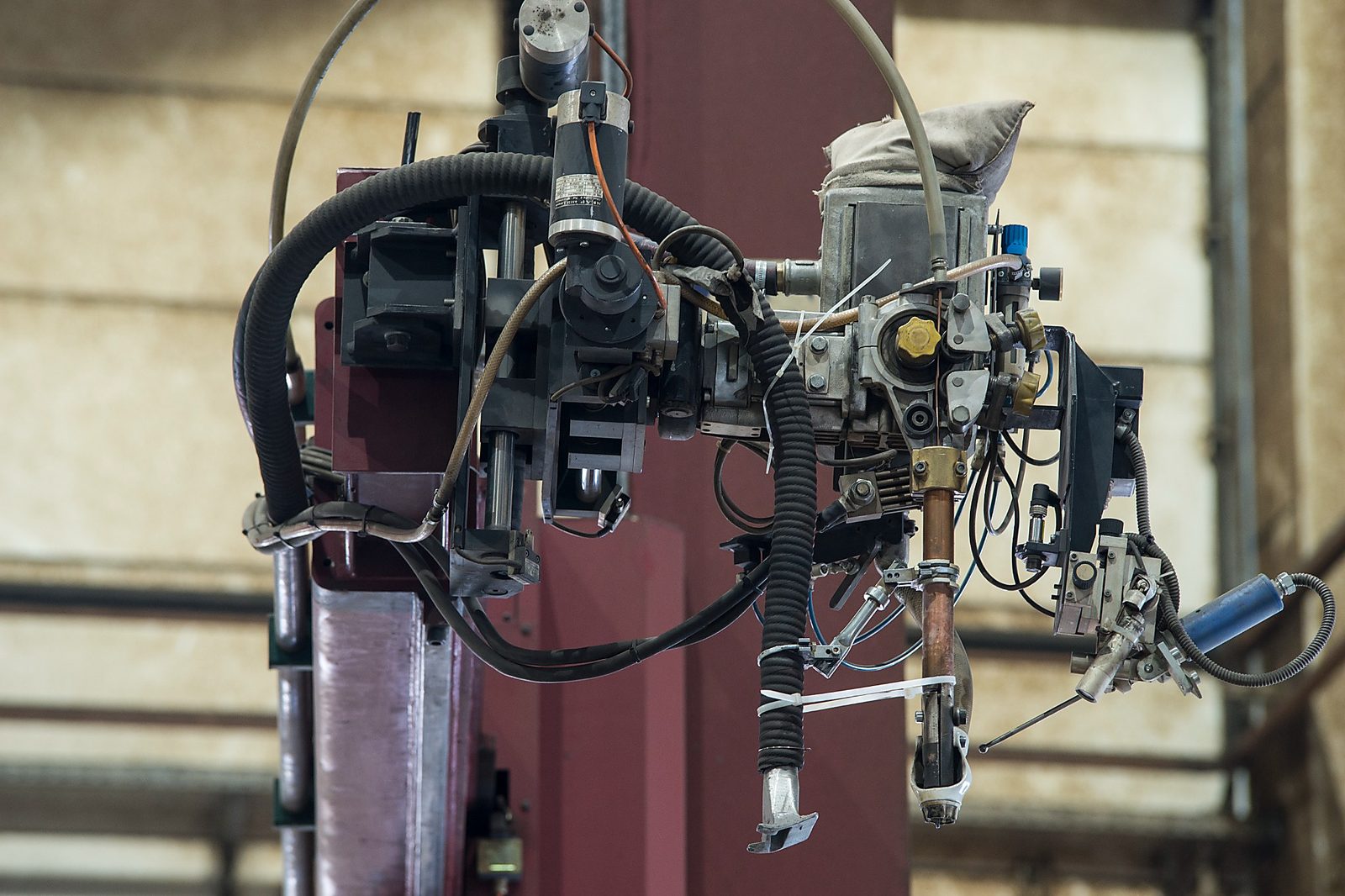
ESAB Welding Systems – Booms to 7 m, up to 1,250 A
The SAW installation at Bock is based on ESAB components with welding columns and booms providing a reach of up to 7 m. Welding current extends to 1,250 A – the prerequisite for deep penetration and high-strength seams on solid components.
Heavy components up to 50 t can be safely positioned and handled during welding via the 2×25 t crane system in the production facility. Large-format pipes, beams and welded structures with long seam segments can therefore be welded in a fully mechanized process.
Machine data
| Machine | Reach | Working height | Welding current | Wire diameter |
|---|---|---|---|---|
| ESAB ROMAR RM7070 SAR 400 · Submerged-arc welding column & boom | 7 m | 7 m | 1,250 A | up to 4 mm |
| ESAB CAB 300M · Submerged-arc welding column & boom | 4 m | 5 m | 800 A | up to 4 mm |
| ESAB MKP · Submerged-arc welding column & boom | 5 m | 5 m | 800 A | up to 4 mm |
When is Submerged Arc Welding the Right Process?
SAW is not the optimal process for every seam – it delivers its strengths where the following conditions apply:
- Long, straight seam runs (longitudinal and circumferential seams)
- High requirements for penetration depth and weld strength
- Heavy components where manual welding is insufficient in capacity
- Structural steel, high-strength structural steel, fine-grain steel and Hardox
- Large weld volumes with high deposition rate
For short seams, complex geometries or fillet welds, SAW is complemented by MIG/MAG or TIG welding. Process selection is based on component requirements – within a single structure, multiple processes can be combined.
Suitable Materials for Submerged Arc Welding
Bock uses predominantly European quality steels with traceable origin for SAW welding:
- Structural steel (S235, S355)
- Fine-grain and high-strength structural steel
- Hardox (wear-resistant steel for abrasively loaded components)
- Further structural steels to drawing or specification
Material quality and origin are documented through inspection certificates and material records where required by project or customer specifications.
Certified Welding Contractor – DIN EN 1090-2 EXC3, EN ISO 3834-2 and NDT
Bock Maschinenbau is a certified welding contractor to DIN EN 1090-2 EXC3 and EN ISO 3834-2. Complemented by a certified quality management system to DIN EN ISO 9001:2015, these standards form a binding quality framework for all welding operations: welding process qualifications, inspection requirements and documentation obligations are an integral part of production. Current certificates are available as PDF for clients with verification requirements.
Quality Assurance and Non-Destructive Testing
Weld seams are accompanied by appropriate quality assurance measures. Depending on component, material, weld requirements and customer specifications, visual inspection and non-destructive testing (NDT) methods may be applied.
- Visual Testing (VT), Liquid Penetrant Testing (PT) and Magnetic Particle Testing (MT) are available in-house with Level 2 qualification to DIN EN ISO 9712.
- Ultrasonic Testing (UT) is available on a project basis in-house through certified testing personnel.
This covers surface indications, cracks, near-surface irregularities and internal irregularities in suitable components and weld joints.
Inspection and documentation requirements are agreed on a project basis according to drawing, normative requirements and customer specifications.
CNC Machining, Shot Blasting, Painting and Assembly Where Required
Components produced by SAW welding frequently require further production steps. The following operations can be integrated into the project workflow as required:
- CNC Heavy Machining
- CNC heavy-part machining up to 50 t, portal milling up to 26,000 mm, vertical turning up to Ø 4,800 mm.
- Surface Preparation
- Shot blasting to Sa 2.5 in a large-format blast chamber.
- Corrosion Protection and Painting
- Industrial painting to EN ISO 12944 in a 25 × 7 × 6 m large-format spray booth.
- Assembly
- Project-specific pre-assembly or partial assembly of components.
Components can therefore be not only welded but also machined, surface-prepared, coated or pre-assembled within the same production facility – subject to agreement and project requirements.
Typical Applications for Submerged Arc Welding
SAW at Bock is applied where high seam quality, deep penetration and fully mechanized process control are required:
- Longitudinal and circumferential seams on pipes, hollow sections and vessels
- Load-bearing seams on heavy beams and welded structures
- Large weld segments with high deposition volume
- High-strength seams on Hardox and fine-grain structural steel
- Components for crane, plant and special vehicle engineering
SAW complements the process range for welded assemblies and heavy welded structures – not as a replacement for MIG/MAG or TIG, but as a specialised process for defined seam types and component classes.
Submerged Arc Welding – Why Bock
Bock Maschinenbau operates fully mechanized SAW welding in Lorch as part of a certified welding operation:
- Equipment
- ESAB welding system with booms up to 7 m reach and up to 1,250 A welding current
- Crane Capacity
- 2×25 t crane system – 50 t total lifting capacity for safe handling of large-format components
- Certification
- DIN EN 1090-2 EXC3, EN ISO 3834-2 and DIN EN ISO 9001:2015
- Material Expertise
- European quality steels including structural steel, fine-grain steel and Hardox
- Quality Assurance
- VT, PT and MT in-house Level 2 to DIN EN ISO 9712; UT available on a project basis
- Downstream Operations
- CNC machining, shot blasting, painting and assembly integrable within the same production facility
- Vessel-building supplier
- Long, load-bearing SAW seams for vessel and apparatus builders from the Stuttgart area and the entire DACH region – at our certified welding company in Lorch.
Your project — right from the region
Send us your enquiry for contract manufacturing, structural steel or custom machinery — we'll get back to you promptly.
Request Submerged Arc Welding
For an initial assessment, please provide your drawing or technical specification, material, seam geometry and any quality, inspection and documentation requirements. We will assess process suitability and prepare a project-specific quotation.