Steel fabrication for bridge construction & infrastructure: truss girders, plate girders & load-bearing structures

As a contract manufacturer in steel fabrication we supply bridge construction, tunnel construction and infrastructure projects with load-bearing welded structures — truss girders, plate girders, cross members and load-bearing structures up to 50 t part weight, welded and tested to DIN EN 1090-2 EXC3 in Lorch in the Stuttgart region.

Bridges, tunnels & civil engineering

Load-bearing steel structures for bridge, tunnel and infrastructure works — manufactured to drawing and structural specification.

Girders & trusses

Truss girders, welded plate girders and cross members in structural steel S235/S355 and fine-grain structural steel up to S1100.

up to 50 t · 26 m

Heavy, long components up to 50 t part weight and 26 m in length — safe handling on the crane system with 25 t.

Submerged arc welding for long seams

Long load-bearing longitudinal seams are produced by the submerged arc process — uniform, low-stress and documented over the full component length.

EN 1090-2 EXC3

Load-bearing welds to EXC3, the highest execution class certified in practice — plus EN ISO 3834-2 and NDT Level 2 in-house.

Your supplier for bridge, tunnel & infrastructure construction

Steel fabrication for bridge construction and infrastructure has to carry loads for decades: traffic loads change by the second, and wind, temperature range and weather are added. Every load-bearing weld therefore has to be designed for fatigue strength — and its quality must be verifiable without gaps. As a certified welding contractor we manufacture load-bearing steel structures for bridge, tunnel and infrastructure projects to your drawing and structural specification, welded to DIN EN 1090-2 EXC3.

The long load-bearing seams on plate and truss girders are welded by the submerged arc process: high deposition rate, uniform weld appearance and documented quality over the full girder length. Against distortion and residual stresses we use flame straightening and vibration stress relief; connection and functional faces as well as hole patterns are then produced on gantry mills up to 26 m component length.

From the flame-cut blank on the 20 × 3.5 m table up to 200 mm plate thickness through welding, straightening and CNC machining to shot blasting and industrial painting, everything is produced under one roof in Lorch in the Stuttgart region. That shortens lead times, avoids transport risks with heavy components and secures seamless material traceability to EN 10204.

Typical components for bridge, tunnel & infrastructure construction

We manufacture to drawing and structural specification — welded, straightened, machined and documented:

  • Bridge construction components — load-bearing segments and assemblies for steel bridge construction, SAW-welded and prepared for erection
  • Plate girders — welded girders to structural specification with documented web-to-flange seams
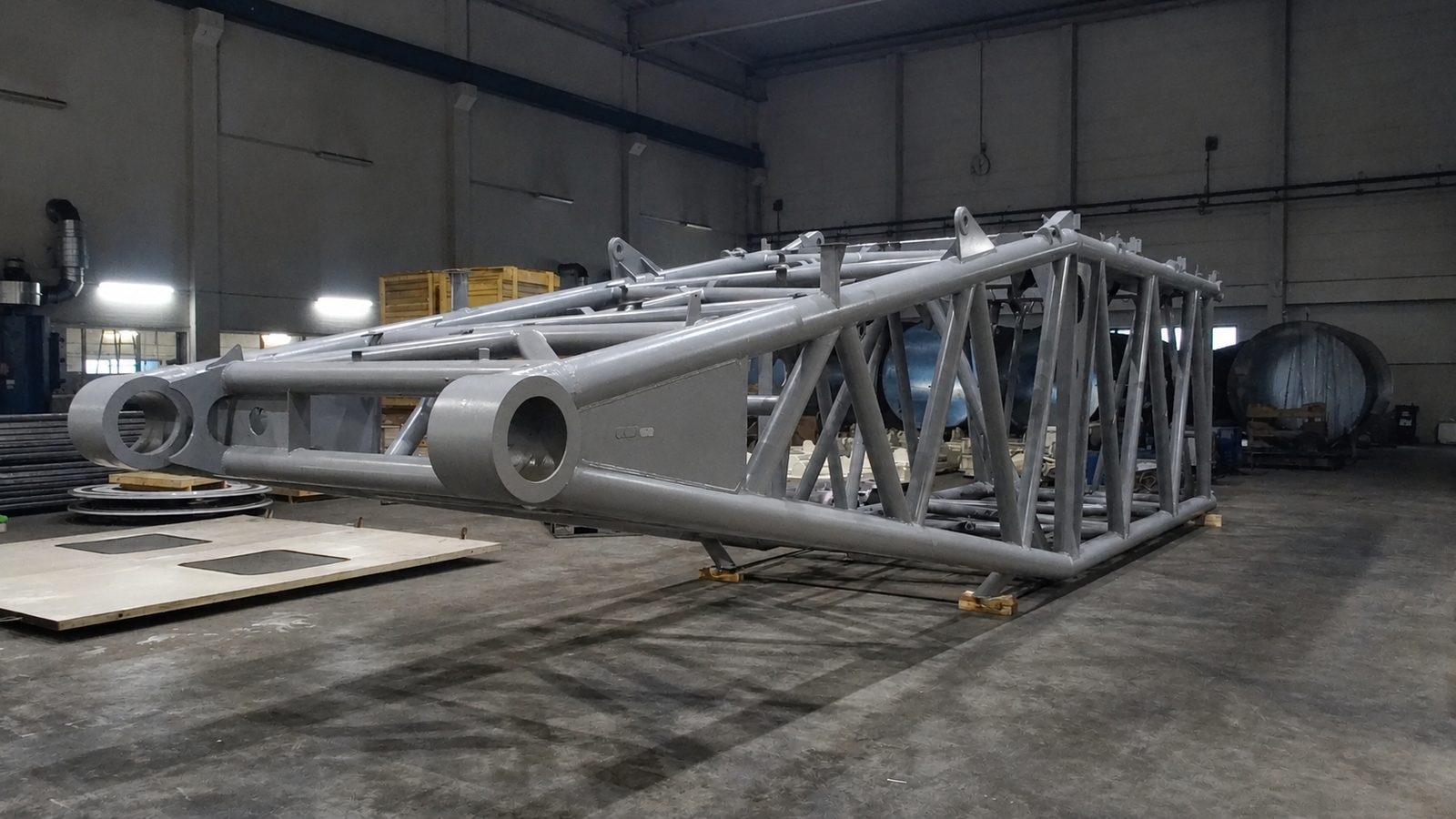
  • Truss girders and truss structures from section and plate blanks — welded and straightened to size
  • Cross members and cross girders for structures and erection work — with precisely matching hole and connection patterns
  • Load-bearing structures and load-bearing frames for infrastructure works — up to 50 t part weight
  • Tunnel construction components — steel components for tunnel construction, machined ready to install and with corrosion protection to EN ISO 12944

Further components for bridge, tunnel and civil engineering works are manufactured to drawing — simply send us your documents.

50 t Components up to
26 m Girder length up to
EXC3 Execution class
EN ISO 3834-2 Welding quality
63+ Years of steel fabrication experience

Materials & corrosion protection for a long service life

For bridge, tunnel and infrastructure components we process structural steel S235/S355 and high-strength fine-grain structural steel up to S1100 — from a stock of over 40 material grades, with a 3.1 mill certificate to EN 10204, from our own store and in exact saw or flame cutting.

Load-bearing welds are made to DIN EN 1090-2 EXC3 and EN ISO 3834-2, and we keep distortion under control with a coordinated welding sequence, flame straightening and vibration stress relief — so that long girders reach machining and erection dimensionally accurate.

Corrosion protection completes the process: shot blasting to Sa 2.5 and coating to EN ISO 12944 in our own plant, so that load-bearing components go to site protected — an essential factor for the service life of infrastructure works.

Materials at a glance
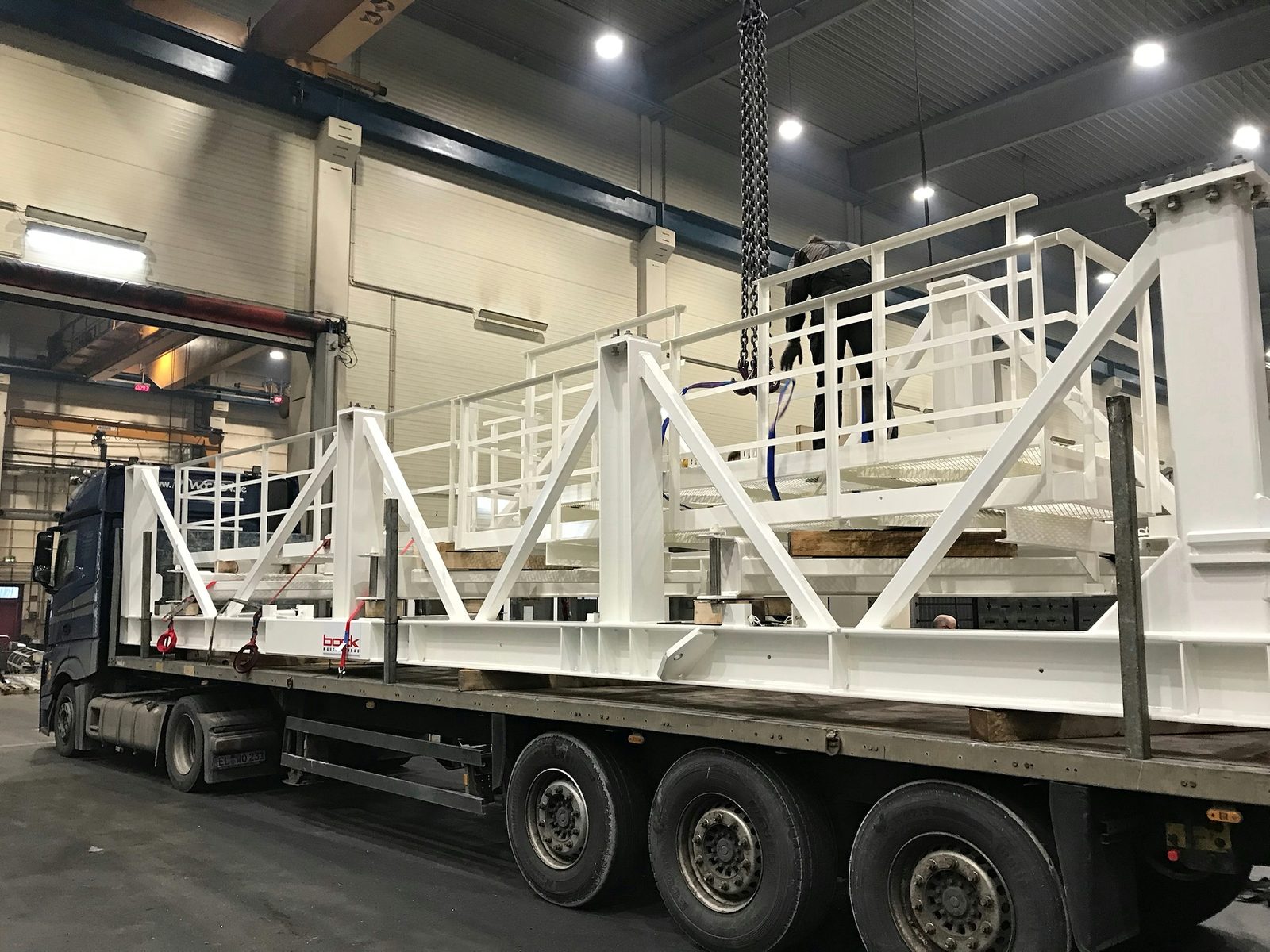
Steel frame truss construction – welded assembly in heavy steel fabrication to DIN EN 1090 at Bock Maschinenbau Lorch

Long load-bearing seams: submerged arc welding for bridge & infrastructure components

Bridge and tunnel components depend on the quality of their welds. The long, thick seams of load-bearing girders are welded by the submerged arc process — and then tested in-house.

Long longitudinal seams on plate girders

Submerged arc welding with a high deposition rate — uniform, reproducible weld appearance over the full girder length.

ESAB ROMAR RM7070 SAR 400 · Submerged-arc welding column & boom

Web-to-flange seams on bridge girders

Thick sections in fine-grain structural steel

Multi-pass submerged arc seams in fine-grain structural steel up to S1100 — with a coordinated welding sequence against distortion.

ESAB CAB 300M · Submerged-arc welding column & boom

Flange plates on cross members

Verifiable weld quality for EXC3

Welded to EN ISO 3834-2, tested with MT by our own Level 2 inspectors in-house and with UT at our plant by our cooperation partner — including documentation for your verification.

ESAB MKP · Submerged-arc welding column & boom

Load-bearing butt and fillet welds

Quality & documentation for load-bearing components

Load-bearing components for bridge, tunnel and infrastructure projects are manufactured to DIN EN 1090-2 EXC3 — the highest execution class certified in practice — and welded to EN ISO 3834-2 with comprehensive quality requirements. Every heat stays traceable without gaps through material marking to EN 10204 — from goods inwards to delivery.

Non-destructive testing in-house

Dynamically loaded welds on bridge and tunnel components require reliable test evidence:

  • Visual, dye penetrant and magnetic particle testing (VT/PT/MT) are carried out by our own inspectors with Level 2 to DIN EN ISO 9712 directly in our production — with no external waiting times.
  • Ultrasonic testing (UT) is carried out at our plant on a project basis by certified inspection personnel of our cooperation partner. Supplementary destructive tests such as tensile tests are arranged through accredited partner laboratories.

We match the scope of testing and documentation to your specification — from the welding log to the 3.1 mill certificate for your structural documentation.

Why Bock as your supplier in infrastructure & bridge construction

EXC3 for load-bearing components
Certified to DIN EN 1090-2 EXC3, the highest execution class certified in practice — plus EN ISO 3834-2 for welding quality.
Heavy & long
Components up to 50 t part weight and 26 m in length — safely handled on the crane system with 25 t.
Long seams, little distortion
Submerged arc welding for load-bearing longitudinal seams plus flame straightening and vibration stress relief against distortion and residual stresses.
Testing & documentation in-house
VT/PT/MT by our own Level 2 inspectors to DIN EN ISO 9712, UT at our plant by our cooperation partner, welding logs and a 3.1 mill certificate to EN 10204.
Since 1963
Over 63 years of heavy steel fabrication — today with more than 100 specialists on 14,000 m² of production space in Lorch in the Stuttgart region.

Frequently asked questions — infrastructure & bridge construction

Does Bock manufacture steel structures for bridge construction and infrastructure to drawing as a contract manufacturer?

Yes. We manufacture truss girders, plate girders, cross members and load-bearing structures to your drawing and structural specification — welded to DIN EN 1090-2 EXC3, the highest execution class certified in practice, and EN ISO 3834-2.

Which materials does Bock process for bridge and infrastructure components?

Structural steel S235/S355 and high-strength fine-grain structural steel up to S1100, and stainless steel where required — with a 3.1 mill certificate to EN 10204 from our own stock, flame-cut up to 200 mm plate thickness.

Up to what size and weight are bridge construction components manufactured?

Up to 50 t part weight and 26 m component length. Handling is done by our crane system with 25 t; machining takes place on gantry mills in the same format.

How are load-bearing welds tested and documented?

By visual, dye penetrant and magnetic particle testing (VT/PT/MT) by our own Level 2 inspectors to DIN EN ISO 9712 in-house; ultrasonic testing (UT) is carried out at our plant by our cooperation partner — documented with welding logs for your EXC3 verification and structural documentation.

Does Bock also handle corrosion protection for infrastructure components?

Yes. We blast to Sa 2.5 and coat to EN ISO 12944 in our own plant — load-bearing components leave production ready to install with durable corrosion protection.

Does Bock also supply steel fabrication and infrastructure projects outside the Stuttgart region?

Yes. Manufacturing takes place in Lorch in the Stuttgart region; we supply steel fabricators, main contractors and plant builders throughout Germany and in the DACH region. Heavy components are loaded by the crane system and heavy-duty forklifts up to 16 t.

Enquire about load-bearing steel structures for your infrastructure project

Send us your drawings and structural specifications for truss girders, plate girders, cross members or tunnel construction components — we will assess feasibility, material availability and schedule and prepare a no-obligation quote.

Certified to DIN EN 1090-2 EXC3 · 3.1 mill certificate to EN 10204.