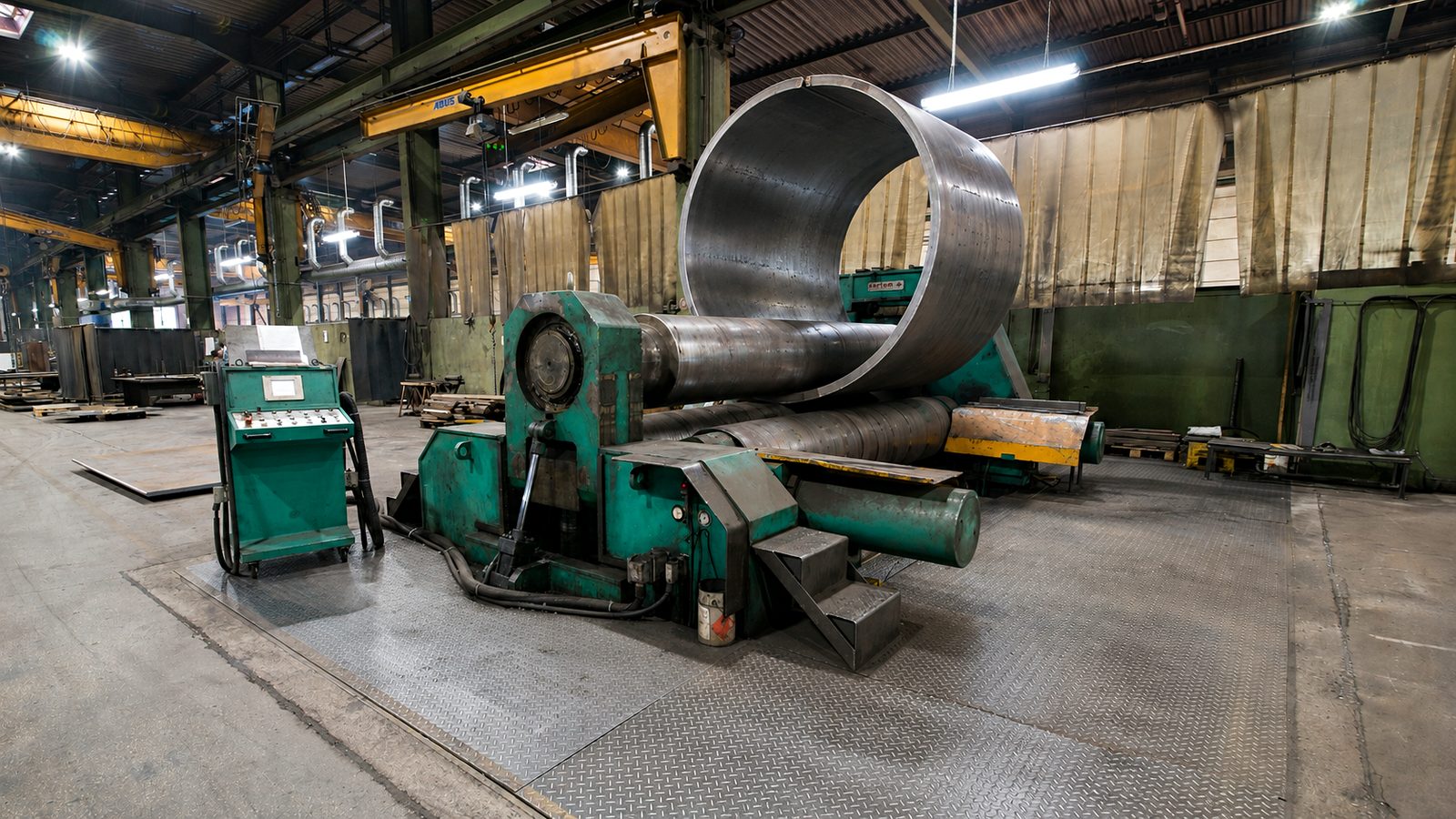
Precisely bend large sheets and heavy steel plate – up to 1,000 t press force on a 6,100 mm working width, cold forming of structural steel, fine-grain steel and Hardox in Lorch.
Hydraulic press brake for heavy plate with high bending resistance.
Bend large sheets and long bent parts in a single stroke.
2×25 t crane system for safe handling of large-format and heavy components.
European quality steels up to Hardox 400/500 and S1100.
Cold forming without thermal distortion and without a heat-affected zone – higher strength, less testing effort.
Welding, CNC machining, shot blasting and painting within the same facility.
In press brake bending (die bending), a sheet is bent between punch and die under press force. Bend angle, position of the bend line and the sequence of bends are executed on the hydraulic press brake. The process enables precise bent parts with linear bend contours – from simple L- and U-profiles to multi-stage bend geometries.
At Bock, press brake bending is used primarily for large-format and heavy steel plate that subsequently goes into welded assemblies or heavy welded structures. Press brake bending is a preparatory production step – bent parts are then welded, machined, blasted or painted.
Bent parts from structural steel, fine-grain steel and Hardox are manufactured to drawing or specification. Plate is bent up to 40 mm in thickness – how much of that is achievable in an individual case is determined jointly by the material, the bend length and the component geometry. For thick plate, complex bend geometries or special material requirements, feasibility is therefore discussed with the customer in advance.
The best weld is no weld. Every bend replaces a welded joint — and with it a potential weak point in the component. That is why modern designs deliberately favour bending over welding, producing parts that are stronger, lighter and more economical to manufacture.
At Bock, bending and welding processes are combined under one roof: wherever bending is structurally feasible, it replaces the weld — and wherever joining is required, it is carried out certified to DIN EN 1090-2 EXC3. The result is components with a minimal number of welds, high strength and reproducible quality.
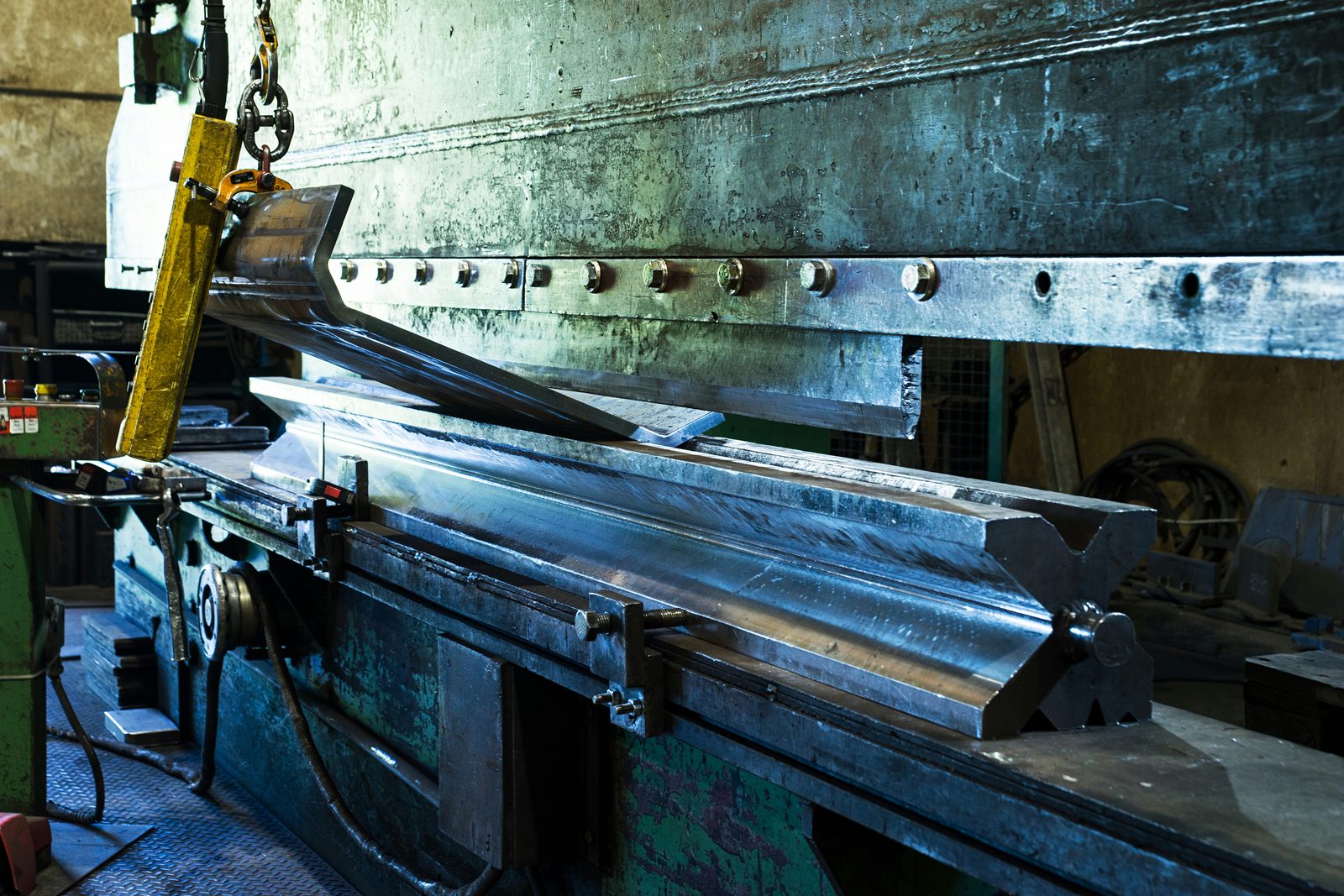
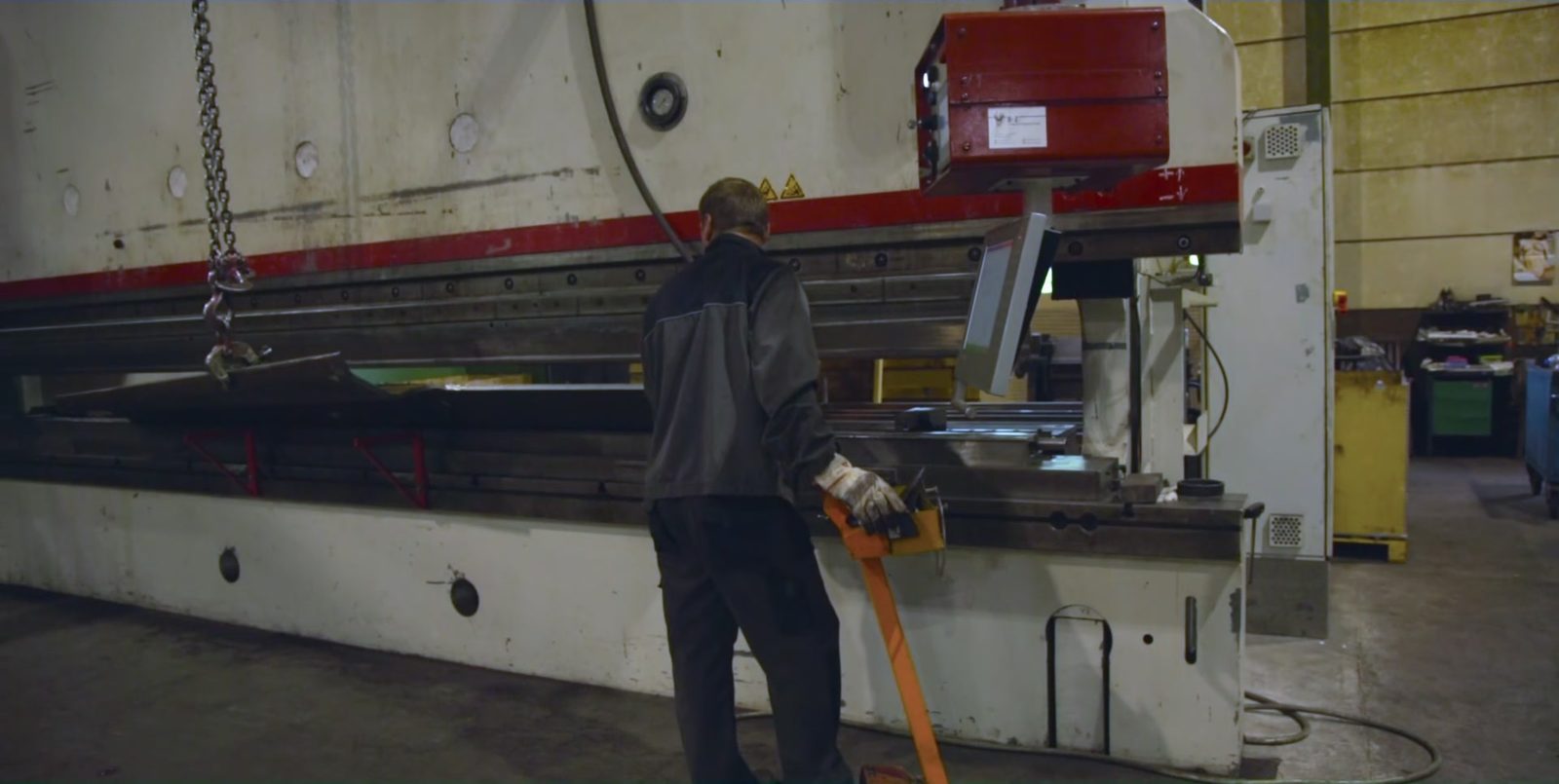
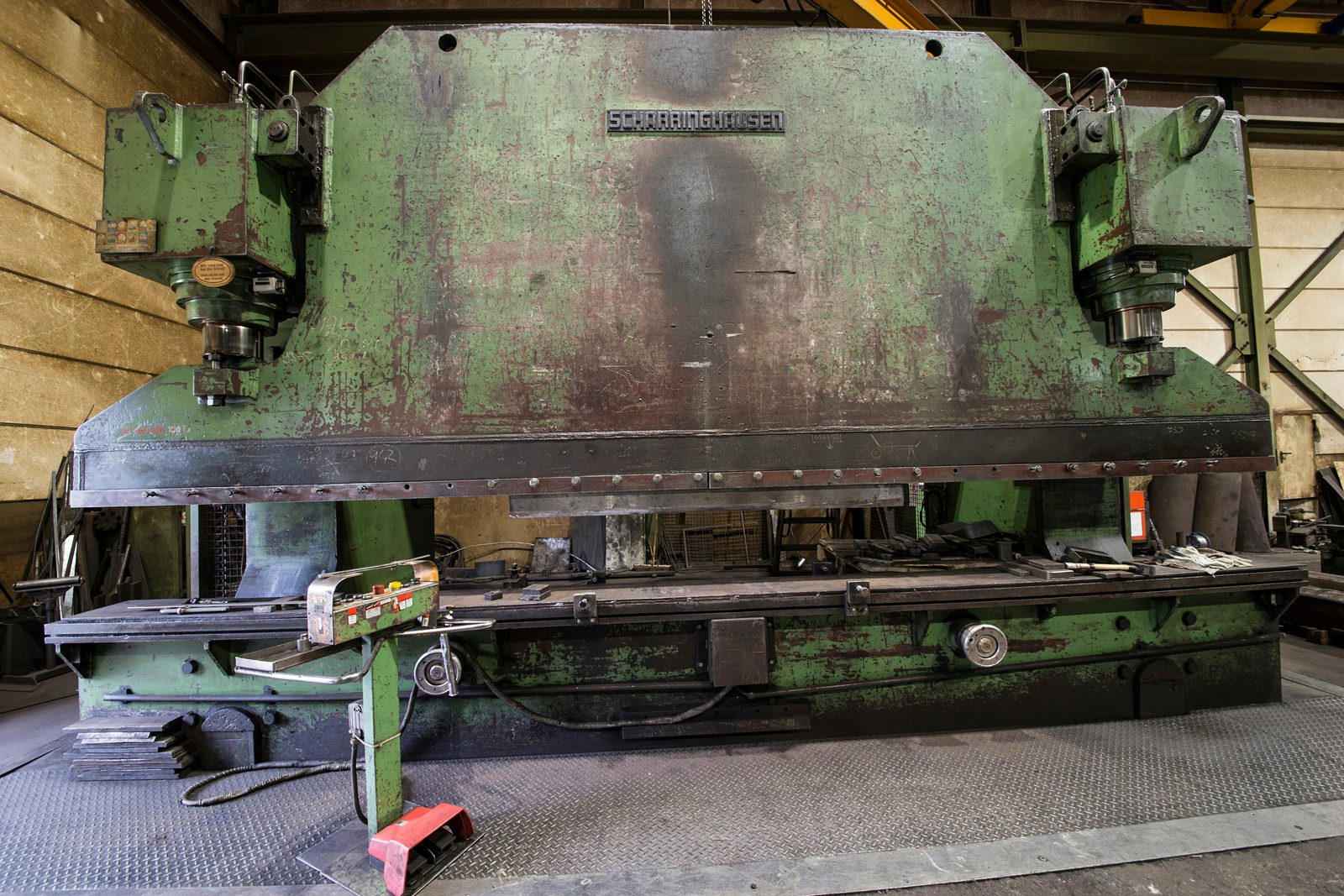
Two hydraulic press brakes are available at Bock: a Weinbrenner with up to 1,000 t pressing force and a Scharringhausen with 550 t — both over a 6,100 mm working width. This makes it possible to bend large plates and heavy steel plates that standard press brakes are not designed for.
Heavy components and large-format bent parts can be positioned and safely handled via the 2×25 t crane system in the production facility. This also enables the bending of plate that requires special handling due to its dimensions or weight.
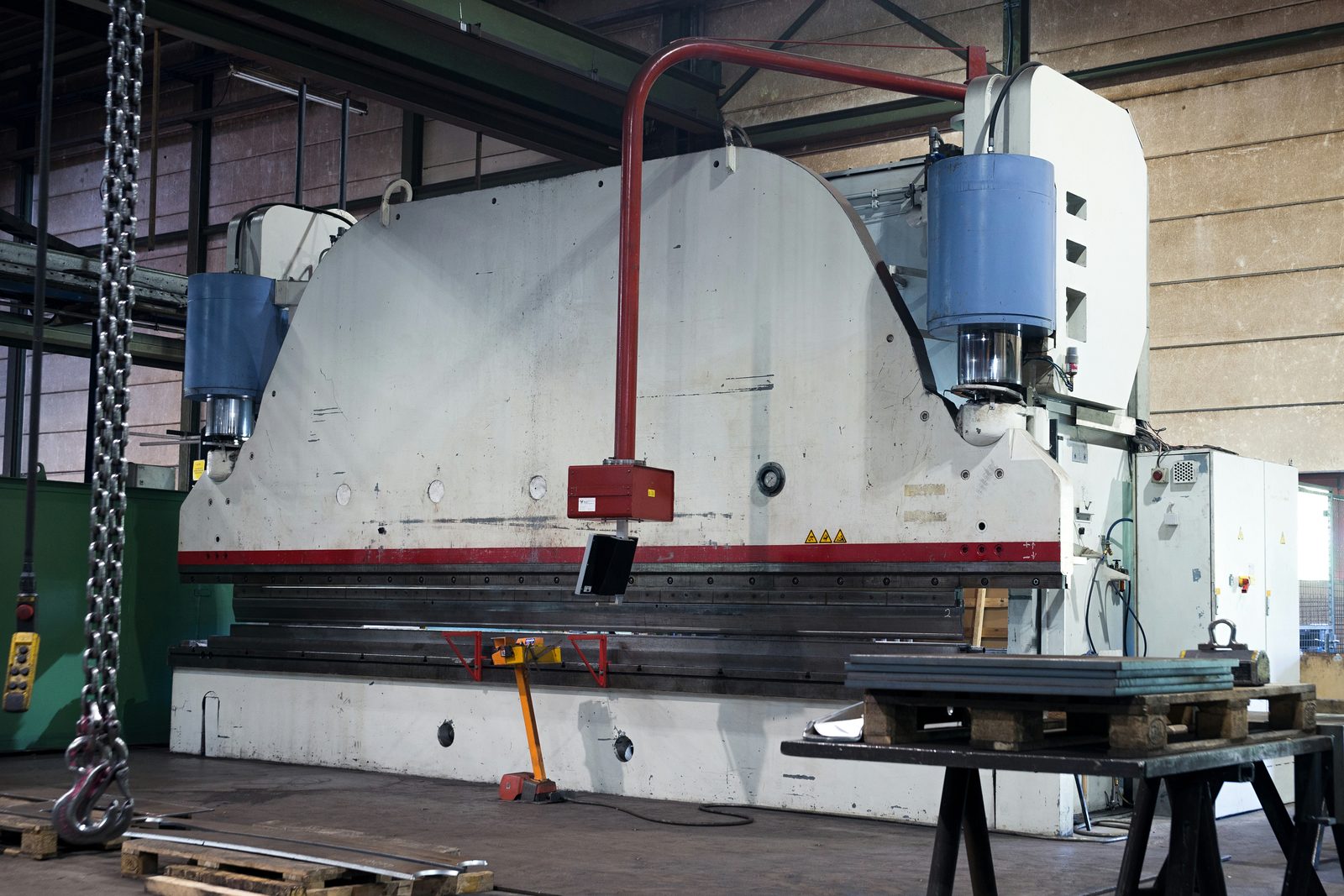
| Machine | Press force | Bending length |
|---|---|---|
| Weinbrenner · Press brake | 1,000 t | 6,100 mm |
| Scharringhausen · Press brake | 550 t | 6,100 mm |
Press brake bending is particularly suited to the following requirements and component types:
For cylindrical or radius-based forms, plate rolling is the more appropriate process. Press brake bending and plate rolling can be combined within the same production facility – process selection depends on component geometry.
Bock uses predominantly European quality steels with traceable origin for press brake bending:
Material quality and origin are documented through inspection certificates and material records where required by project or customer specifications.
Bent parts are manufactured to drawing or technical specification. Bend angles, dimensional accuracy and bend line positions are determined by customer requirements. For particular accuracy or quality requirements, feasibility is discussed in advance.
Bock Maschinenbau operates a certified quality management system to DIN EN ISO 9001:2015. Press brake production is embedded within this quality framework – documentation obligations and inspection requirements are agreed on a project basis.
As a certified welding contractor to DIN EN 1090-2 EXC3 and EN ISO 3834-2, bent parts are frequently used as a preparatory production stage for certified welded assemblies – the entire production process remains within a certified quality framework.
Bent parts produced by press brake bending frequently require further production steps. The following operations can be integrated into the project workflow as required:
Bent parts can therefore be not only formed but also welded, machined, surface-prepared, coated or pre-assembled within the same production facility – subject to agreement and project requirements.
Press brake bending at Bock is applied where large-format or heavy bent parts are needed as a preparatory stage for complex assemblies:
Press brake bending complements the production range for welded assemblies and heavy welded structures – as the necessary preparatory forming step for bent parts from heavy steel plate.
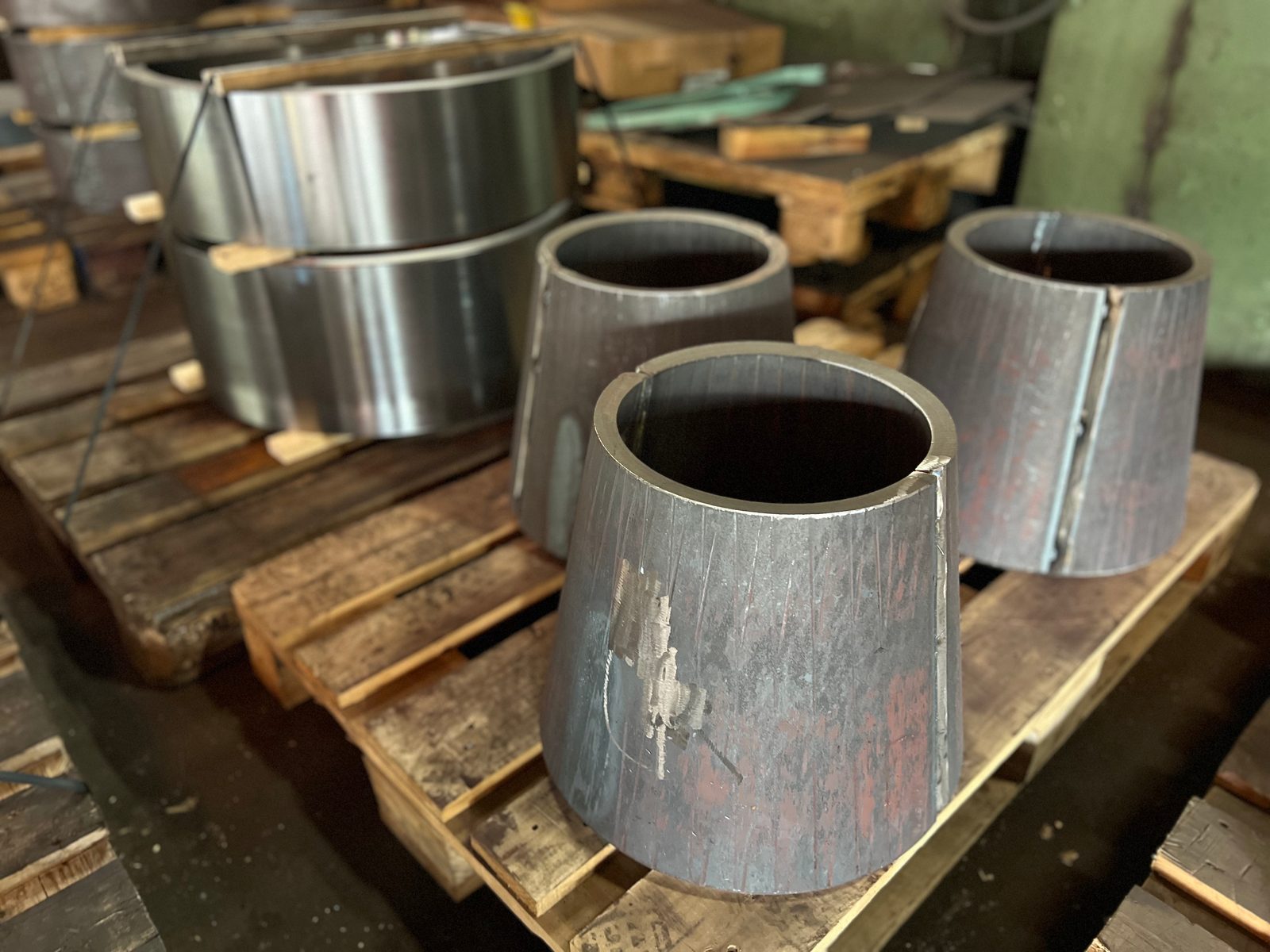
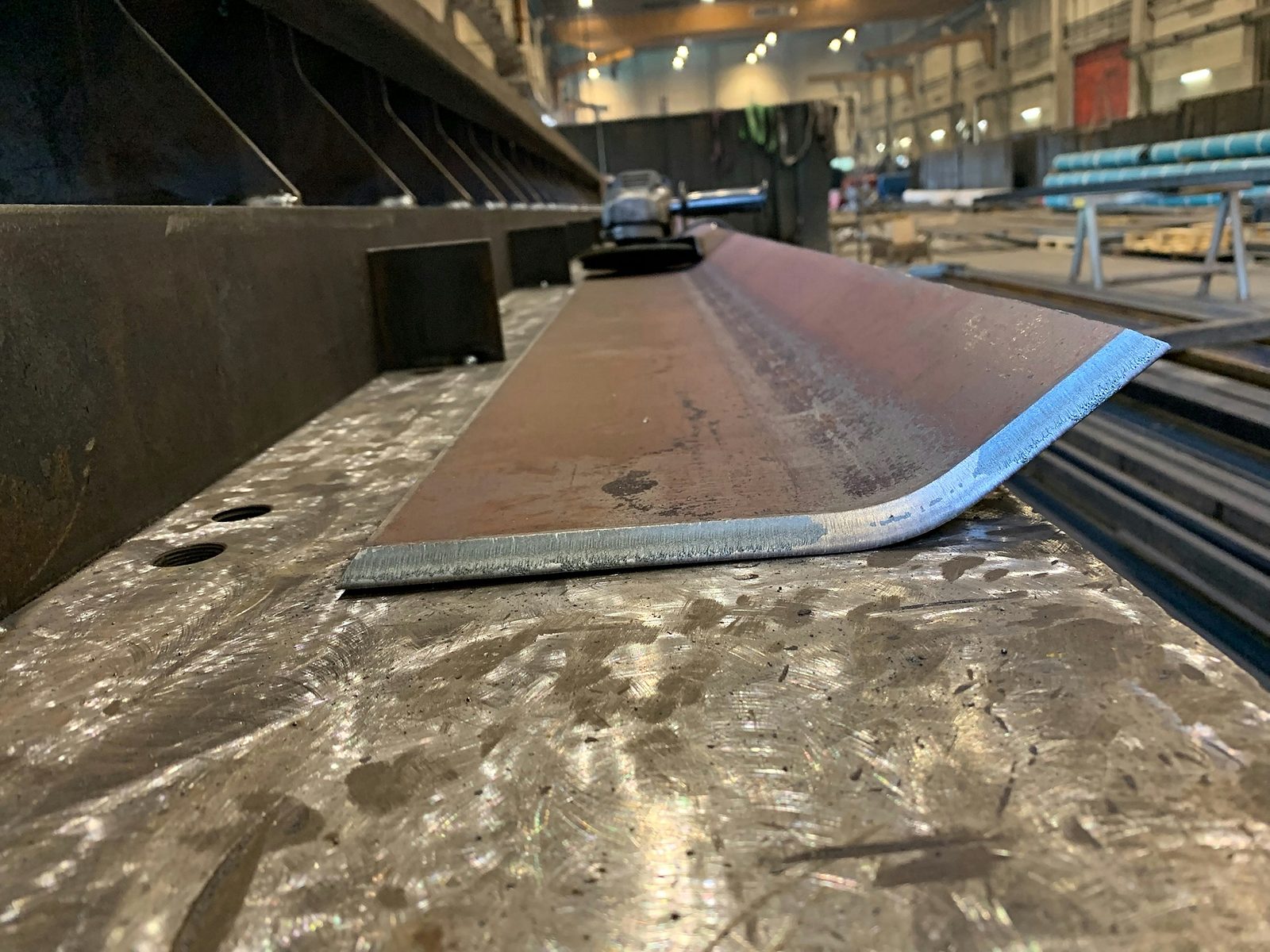
Real bent parts from our production in Lorch – from thick-walled Hardox shells to U-bent shells and troughs and bent brackets.
Bock Maschinenbau operates press brake bending in Lorch as part of a complete production and quality process:
Vessel, apparatus and vehicle builders from the Stuttgart area and the DACH region have large plates up to 6,100 mm press-braked at our plant in Lorch – including Hardox and high-strength fine-grain steels.
Plate is bent up to 40 mm in thickness, based on structural steel – how much of that is achievable in an individual case is determined jointly by the material, the bend length and the component geometry. For Hardox and fine-grain structural steel the achievable thickness is lower; feasibility is therefore agreed in advance on the specific part.
Two hydraulic press brakes: a Weinbrenner with up to 1,000 t and a Scharringhausen with 550 t, both over a 6,100 mm working width. Large-format and heavy bent parts are positioned via the 2×25 t crane system in the production hall.
Yes. Structural steel, fine-grain structural steel up to S1100, Hardox 400/500 and corrosion-resistant stainless steel are bent. Where required by project or customer specifications, material quality and material origin are documented through records and inspection certificates.
Press brake bending produces linear bend contours – L-, U-, Z- and box sections, large-format angles and multi-stage bend geometries to drawing. Cylindrical or radius-based shapes are produced by plate rolling, which can be combined with press brake bending in the same plant.
Yes, where it is structurally possible. A bent corner remains homogeneous base material without a heat-affected zone, and with the weld, weld inspection (VT, PT, MT) and the associated documentation effort are eliminated; where joining is required, welding is carried out certified to DIN EN 1090-2 EXC3.
For an initial assessment, please provide your drawing or technical specification, material, sheet thickness, bend geometry and quantity. We will assess feasibility and prepare a project-specific quotation.