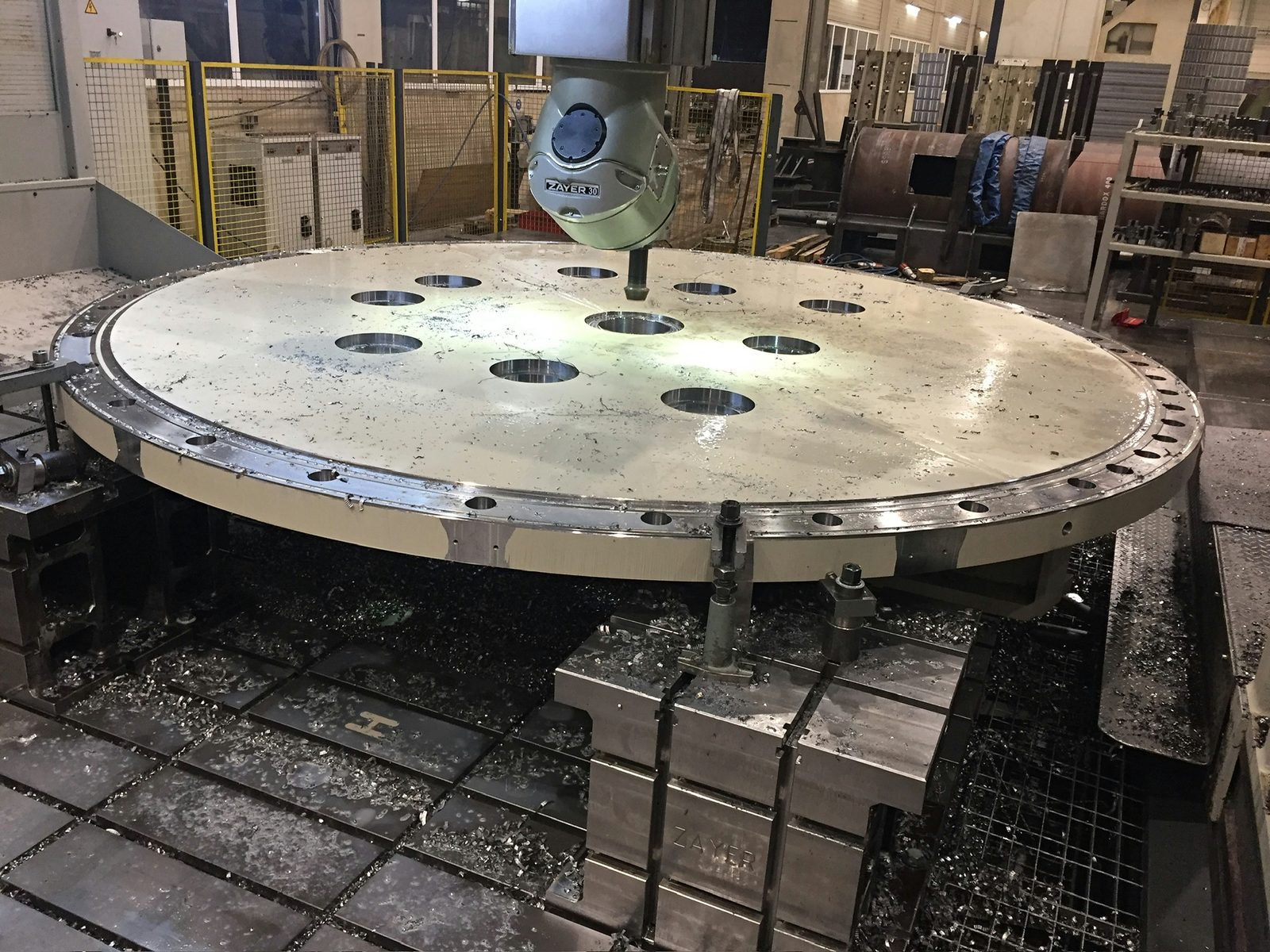
Flat clamping surfaces
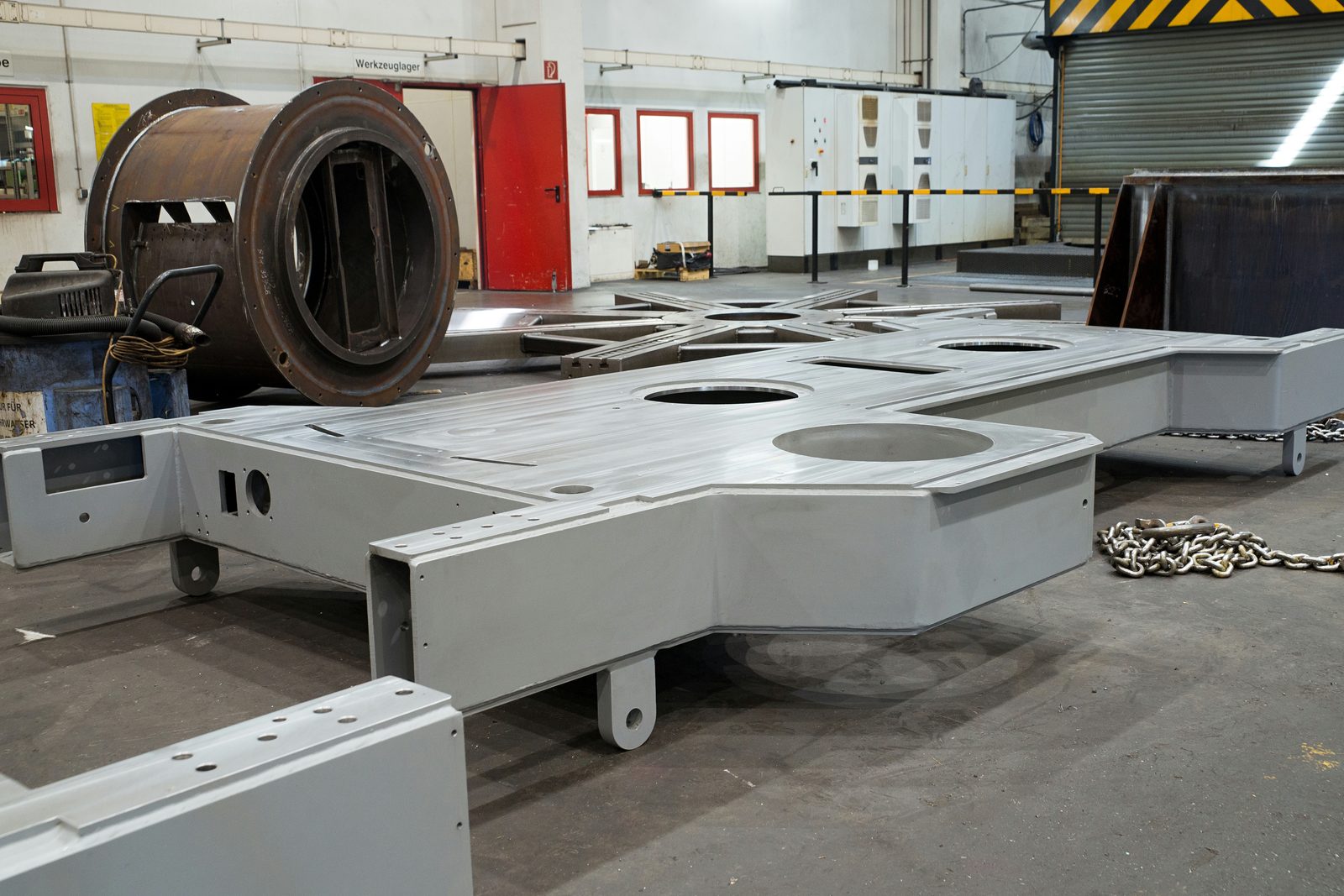
Base plates and beds are face-milled in a single set-up — flat, square clamping patterns for reproducible test set-ups.
Test rig base frame, clamping surface fully machined
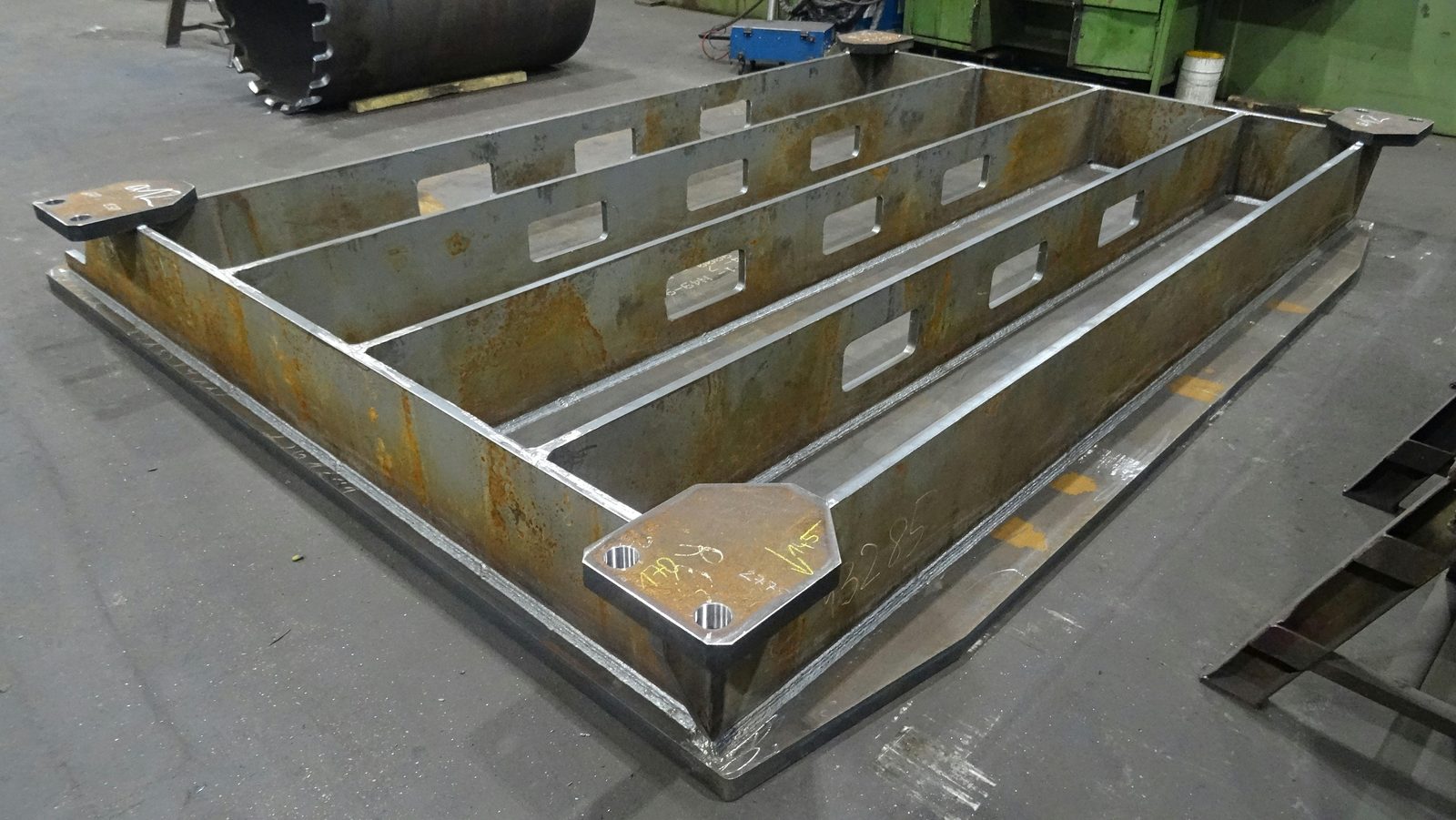
Test rig manufacturing in steel, since 1963 in Lorch near Stuttgart: welded and machined test rig base frames, vibration frames and heavy machine base frames — stiff, dimensionally accurate and stress-relieved by vibration, certified to DIN EN 1090-2 EXC3.
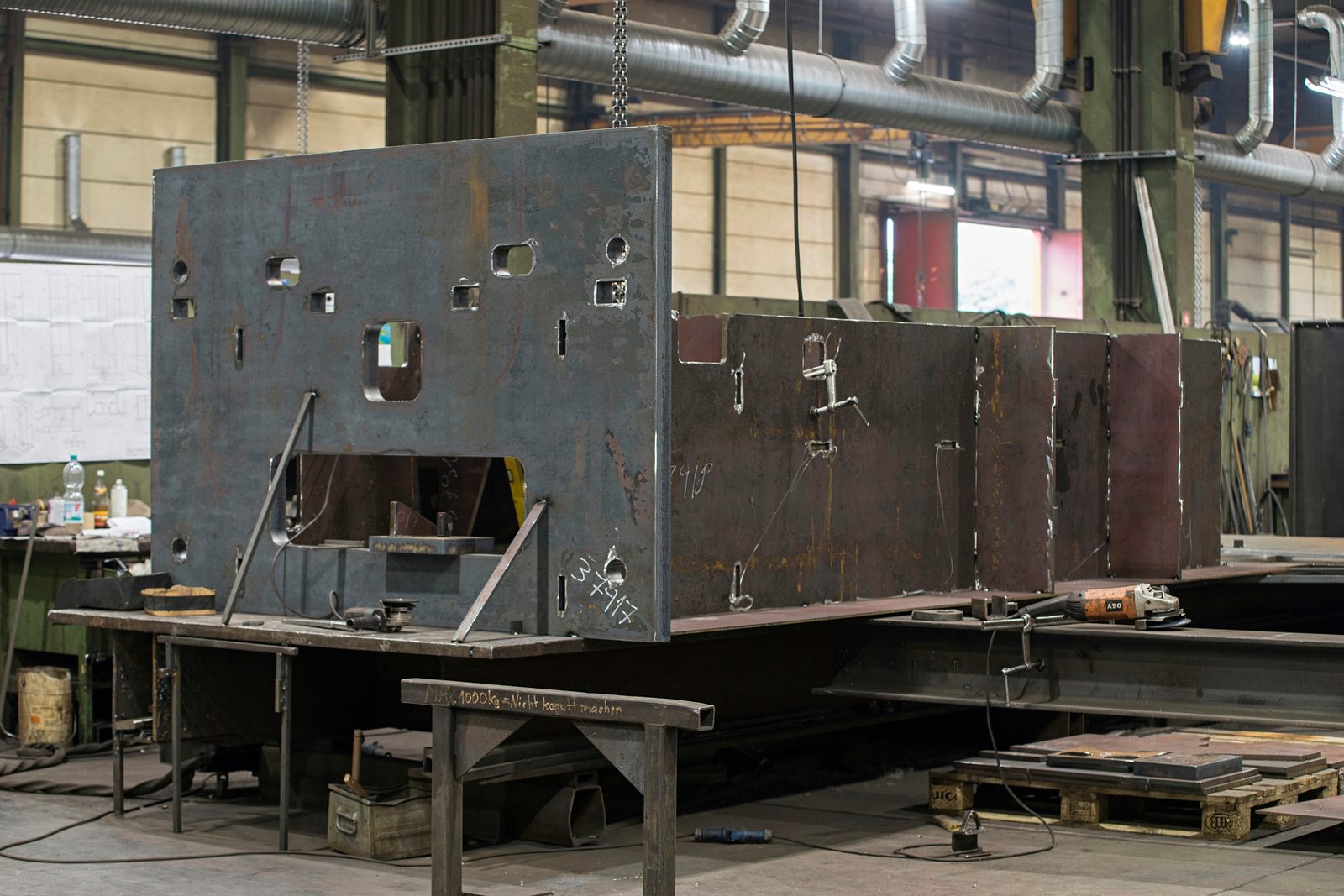
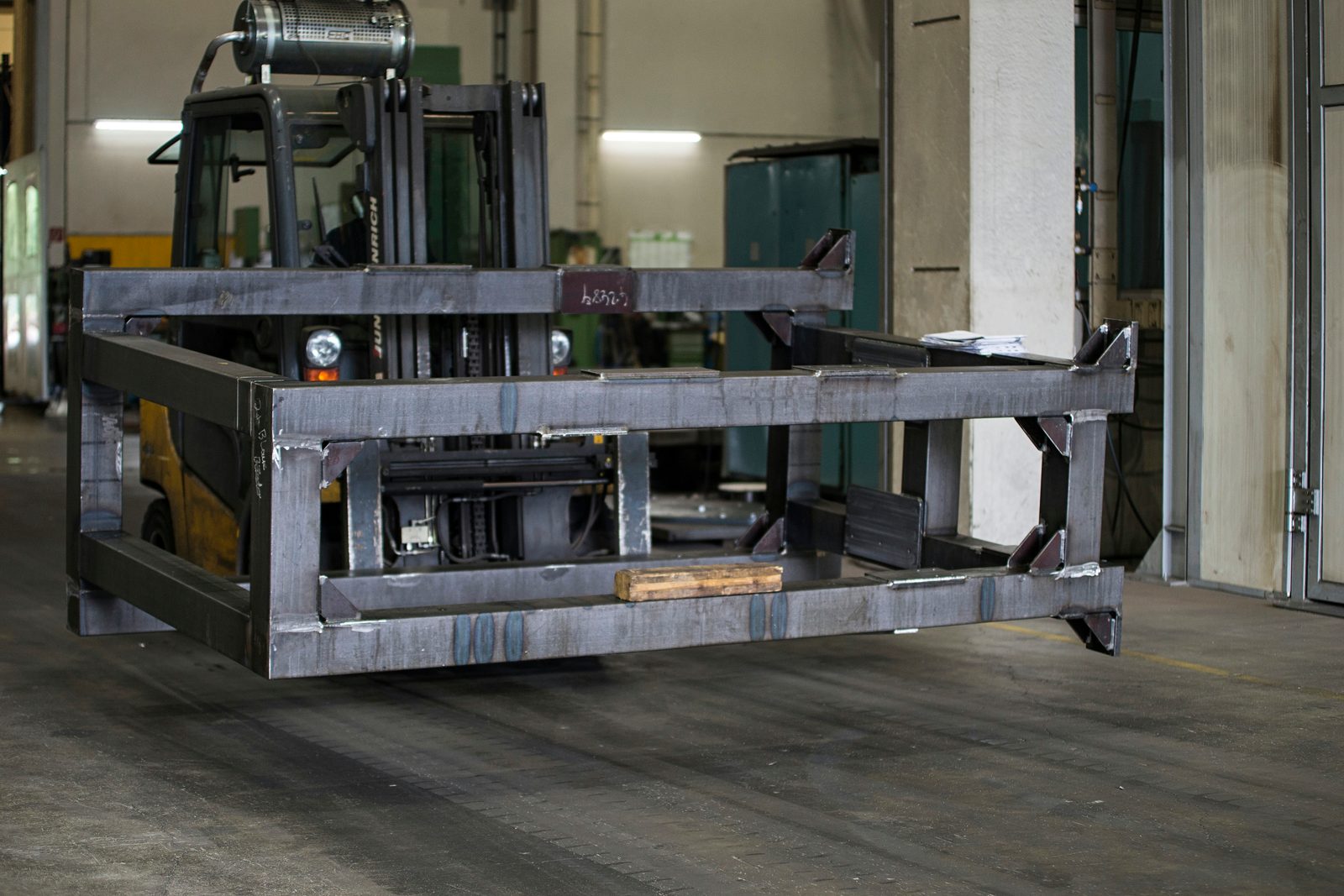
Welded test rig base frames, vibration frames and machine base frames to drawing.
In-house vibration stress relief reduces residual stresses — the geometry stays stable under load.
CNC large-part machining on gantry milling machines up to 26 m — precise clamping patterns and fits.
Heavy, large frames — safely handled by the 25 t crane system.
Load-bearing welded structures to the highest execution class certified in practice.
Test rigs and test frames have to stay stiff, low in vibration and permanently dimensionally accurate under changing and dynamic loads: any compliance in the base frame goes straight into the measurement, any residual stress from welding keeps working in the frame later on. As a contract manufacturer working to drawing, we produce welded and machined assemblies designed for exactly these requirements — from the stiff base frame to the precisely machined clamping pattern.
The key is the low-stress process chain: welded with low distortion to DIN EN 1090-2 EXC3, then vibration stress relieved to reduce residual stresses in a targeted way — only after that comes dimensionally accurate CNC finish machining. This keeps flatness, fits and hole patterns stable even when the test rig is dynamically loaded for years.
From the flame-cut blank through welding, vibration stress relief and CNC large-part machining to shot blasting and industrial painting, everything is created under one roof on 14,000 m² in Lorch near Stuttgart. That shortens lead times, avoids interfaces between several suppliers and secures seamless material traceability to EN 10204.

We manufacture to drawing and customer specification — as single parts or in small series:
We manufacture further components for the test bay and for trials to drawing — simply send us your documents.

For stiff frames we rely on structural steel S235 and S355, for weight-optimised structures on fine-grain structural steel up to S1100. Pressure chamber components are made on request from pressure vessel steel P355GH, components exposed to corrosion from stainless steel or duplex. In total, over 40 material grades are available — every heat with a 3.1 mill certificate to EN 10204 and seamless marking down to the installed part.
The depth of manufacture stays in-house: oxy-fuel cutting on 20 × 3.5 m up to 200 mm, sawing and press braking up to 1,000 t, welding to EN ISO 3834-2, vibration stress relief, CNC large-part machining on gantry milling machines up to 26 m and vertical turning up to Ø 4,800 mm — finally shot blasting and industrial painting to your specification.
Test rig base frames and machine beds are only as good as their finish machining. On two Zayer gantry milling machines we machine welded, vibration stress relieved frames up to 26 m in length — flat, square and to fit.

Flat clamping surfaces
Base plates and beds are face-milled in a single set-up — flat, square clamping patterns for reproducible test set-ups.
Test rig base frame, clamping surface fully machined
Hole and thread patterns on a grid
Fitted holes, threads and mating faces in one set-up — less re-clamping, tighter positional tolerances.
Fixture frame with a thread grid for changing set-ups
Heavy frames handled safely
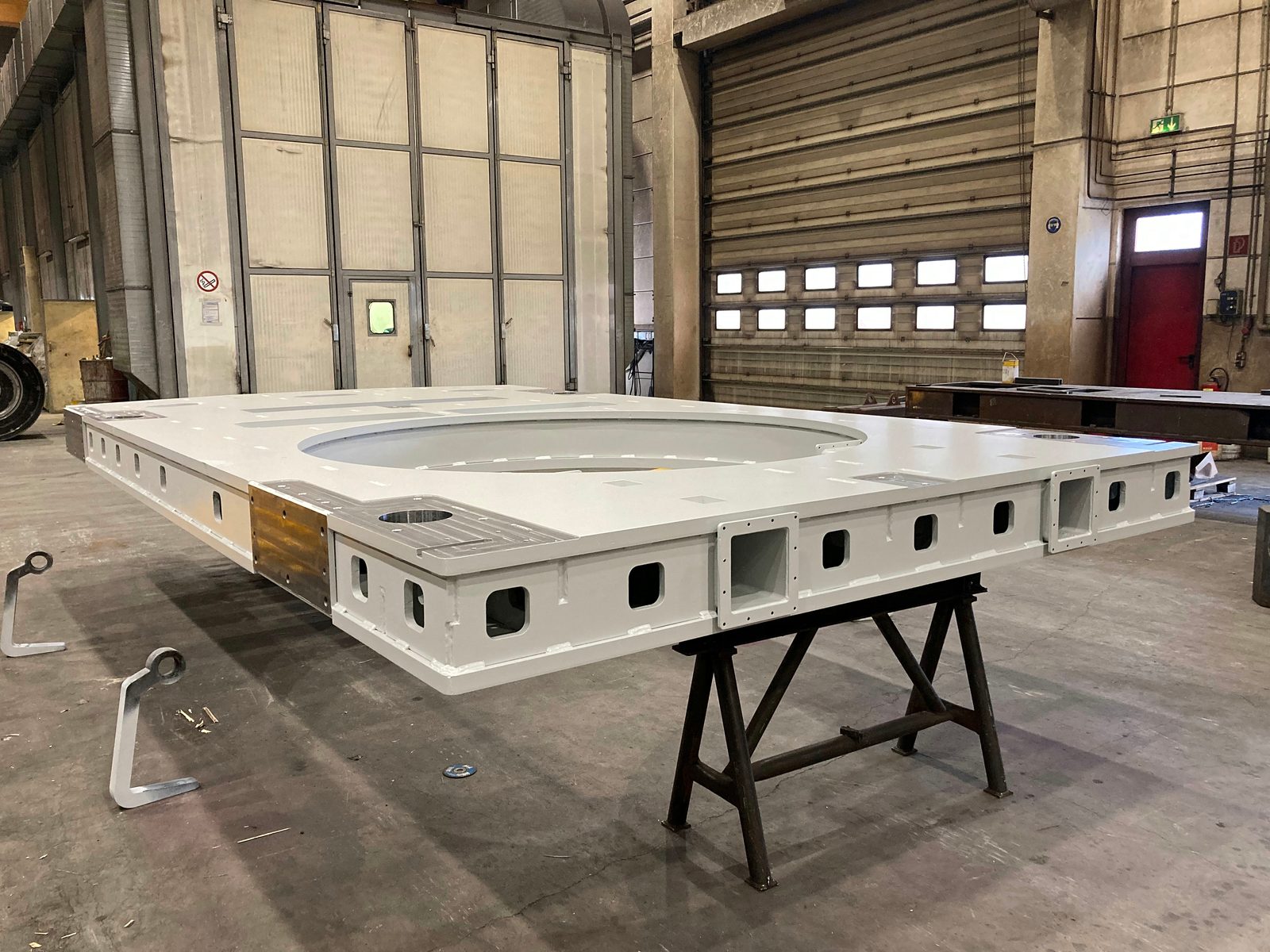
Part weights up to 50 t — the 25 t crane system lifts welded base frames straight onto the machine table.
Machine base frame, machined ready to install and inspected
Load-bearing frames and base frames are welded to DIN EN 1090-2 EXC3 — the highest execution class certified in practice — with comprehensive welding quality to EN ISO 3834-2. For pressure chamber components we are certified to AD 2000 HP 0; for re-stamping materials to EN 10204 we are authorised by GSI SLV München.
On dynamically loaded test frames in particular, seam quality determines service life. That is why we test load-bearing seams directly in the plant:
We define the scope of testing and documentation with you for each assembly — from the weld seam record to the complete documentation package with 3.1 mill certificates.

Yes. We manufacture test rig base frames, vibration frames, machine base frames and pressure chamber components for test rigs and testing technology to your drawing — welded to DIN EN 1090-2 EXC3, stress-relieved by vibration and CNC machined to size. As a contract manufacturer we supply ready-to-install assemblies, not series products.
Through low-distortion welding sequences, vibration stress relief to reduce residual stresses and subsequent CNC large-part machining on gantry milling machines up to 26 m — this keeps fits and clamping patterns precise even under dynamic load.
Up to 50 t part weight and 26 m component length. The 25 t crane system handles heavy base frames safely at every production step in Lorch.
Structural steel S235/S355, fine-grain structural steel up to S1100, stainless steel and duplex as well as pressure vessel steel P355GH for pressure chamber components — over 40 grades in total, every heat with a 3.1 mill certificate to EN 10204.
We test load-bearing seams in-house by visual, dye penetrant and magnetic particle testing (VT/PT/MT) with our own inspectors at Level 2 to DIN EN ISO 9712; ultrasonic testing (UT) is carried out at our plant by our cooperation partner. Documentation follows your requirement — from the weld seam record to the complete documentation package with 3.1 mill certificates.
Yes. Manufacturing takes place exclusively in Lorch near Stuttgart; we deliver to test rig builders, test bays and testing facilities throughout Germany, Austria and Switzerland.
Send us your drawings — we check feasibility, materials and schedules for stiff, dimensionally accurate assemblies and prepare a no-obligation quote.
Certified to DIN EN 1090-2 EXC3 · 3.1 mill certificate to EN 10204.