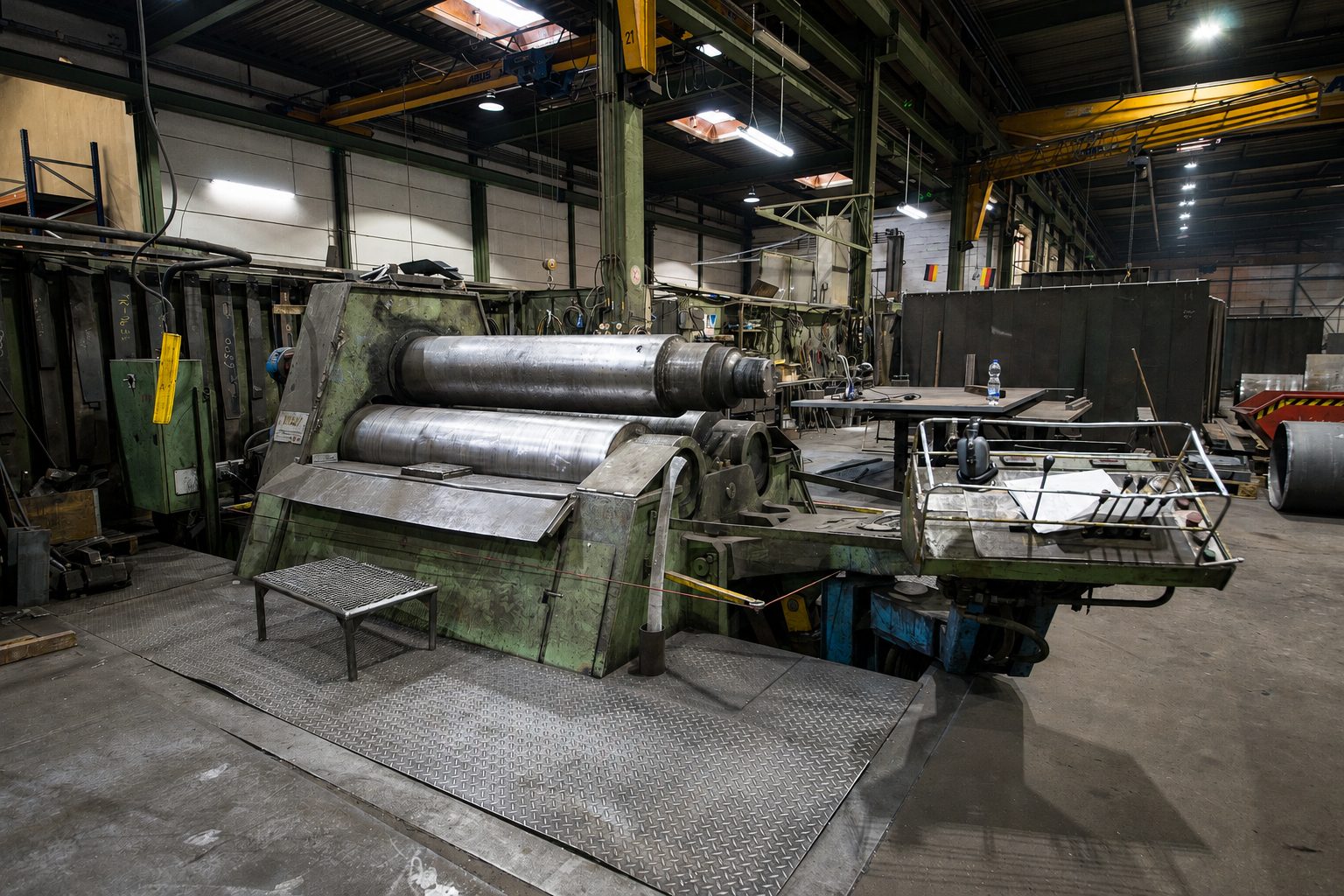
Small & thick-walled
Tight radius at high wall thickness — the demanding combination.
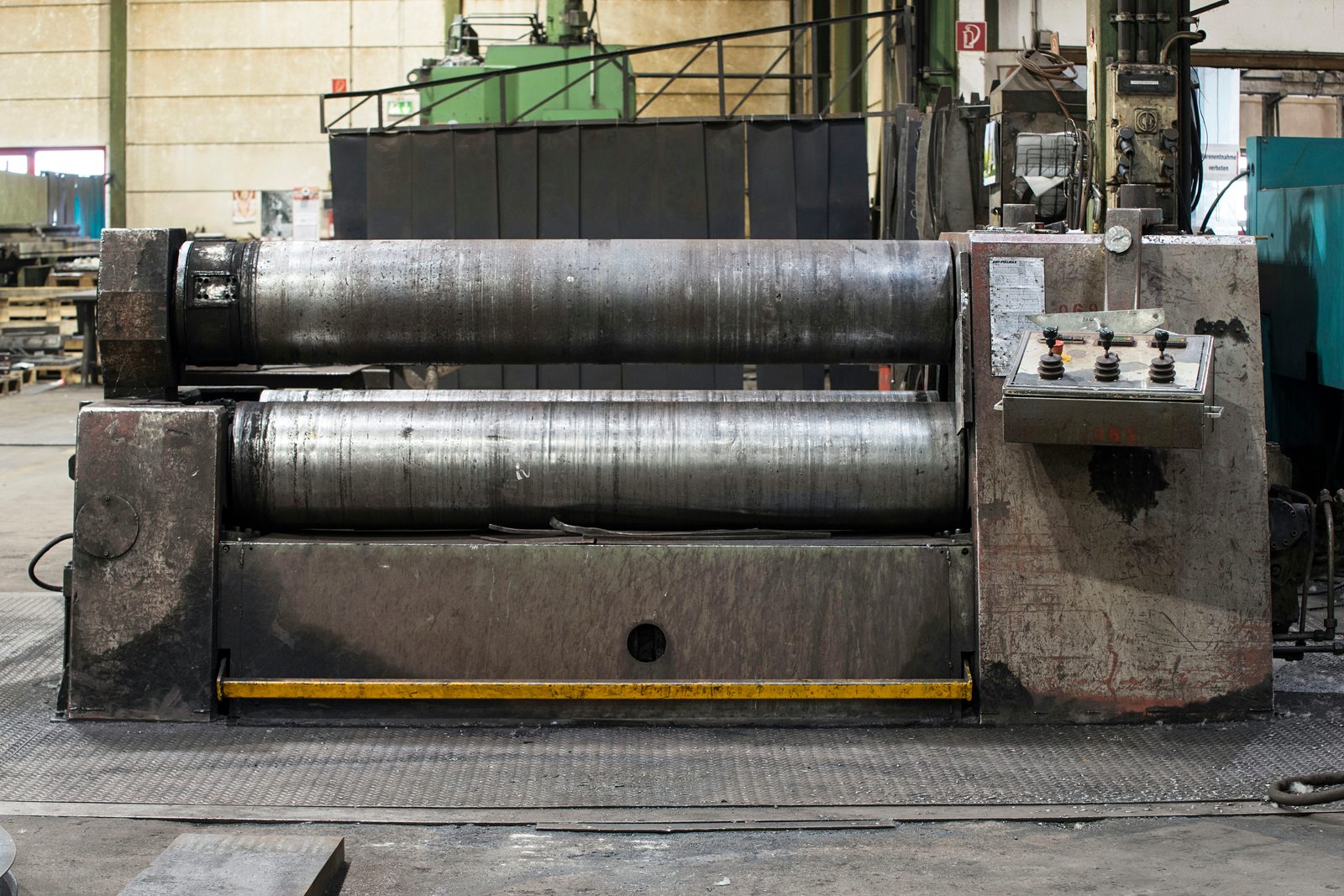
Davi 2048S · Plate rolling machine
e.g. compact, thick-walled pipe bodies, rings and bushings
plate rolling Hardox contract manufacturing. Bock Maschinenbau offers plate rolling and profile rolling up to 120 mm plate thickness and Ø 8,000 mm. Steel, Hardox, stainless steel and fine-grain structural steels are formed into cylinders, cones and special shapes to drawing. Contract manufacturing in Lorch, Germany.
Rolling of cylinders, pipes, rings and shells depending on machine, material and component geometry.
Material thicknesses from thinner plates to heavy plate; maximum values depend on the material.
Rolling lengths up to 3,150 mm for large-format plate blanks and heavy formed parts.
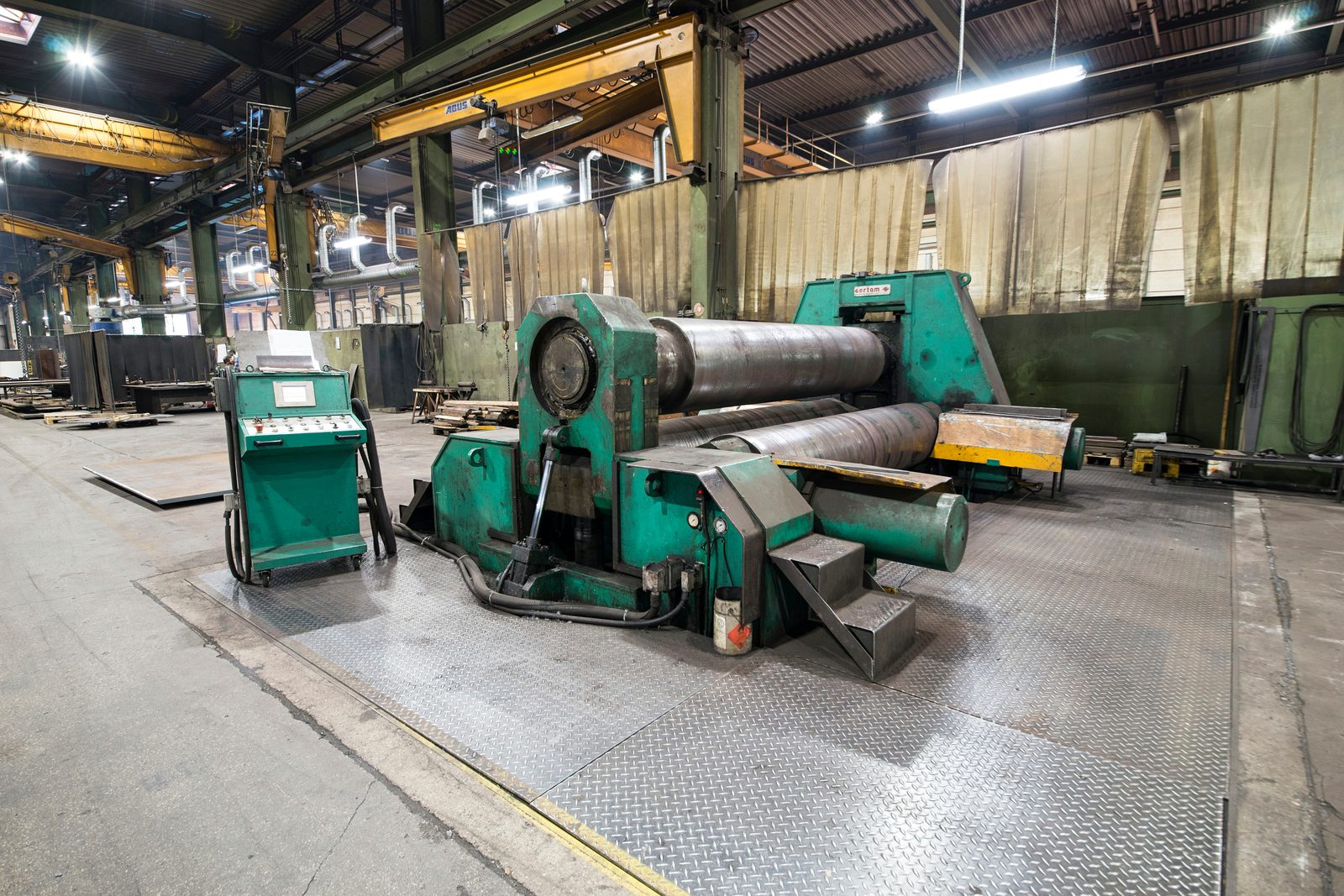
Four 3-roll bending machines covering different diameter, thickness and length ranges.
Welding, CNC machining, shot blasting and painting can follow without an external interface.
Diameter, roundness, seam positions and documentation are agreed and inspected per project.
Plate rolling at Bock is performed using heavy 3-roll bending machines. Plate thicknesses up to 120 mm for S235 can be rolled. For higher-strength steels such as Hardox and fine-grain structural steel, the maximum plate thickness reduces according to material yield strength.
Diameters up to Ø 8,000 mm are achievable. Cylinders, half-shells, cones and special shapes to drawing are the standard service. The in-house material store and 2×25 t crane system enable safe handling of heavy blanks.
Rolled components proceed directly to the welding fabrication line – everything from a single source in Lorch.
The rolling result is verified to drawing: diameter, roundness and seam positions are checked with calibrated measuring equipment. For high-precision cylinders and special shapes, dimensional reports are prepared and included in the scope of delivery.
Rolled parts in Hardox and fine-grain structural steel require adapted bending parameters, as these materials show a higher degree of springback. Thanks to many years of experience with these materials, Bock reliably achieves tight bending radii and close tolerances even in special steels.
After rolling, components can be welded, machined, shot-blasted and painted directly – all in the same facility in Lorch. Contract manufacturing is carried out to DIN EN ISO 9001:2015 with complete material traceability and documented quality assurance.
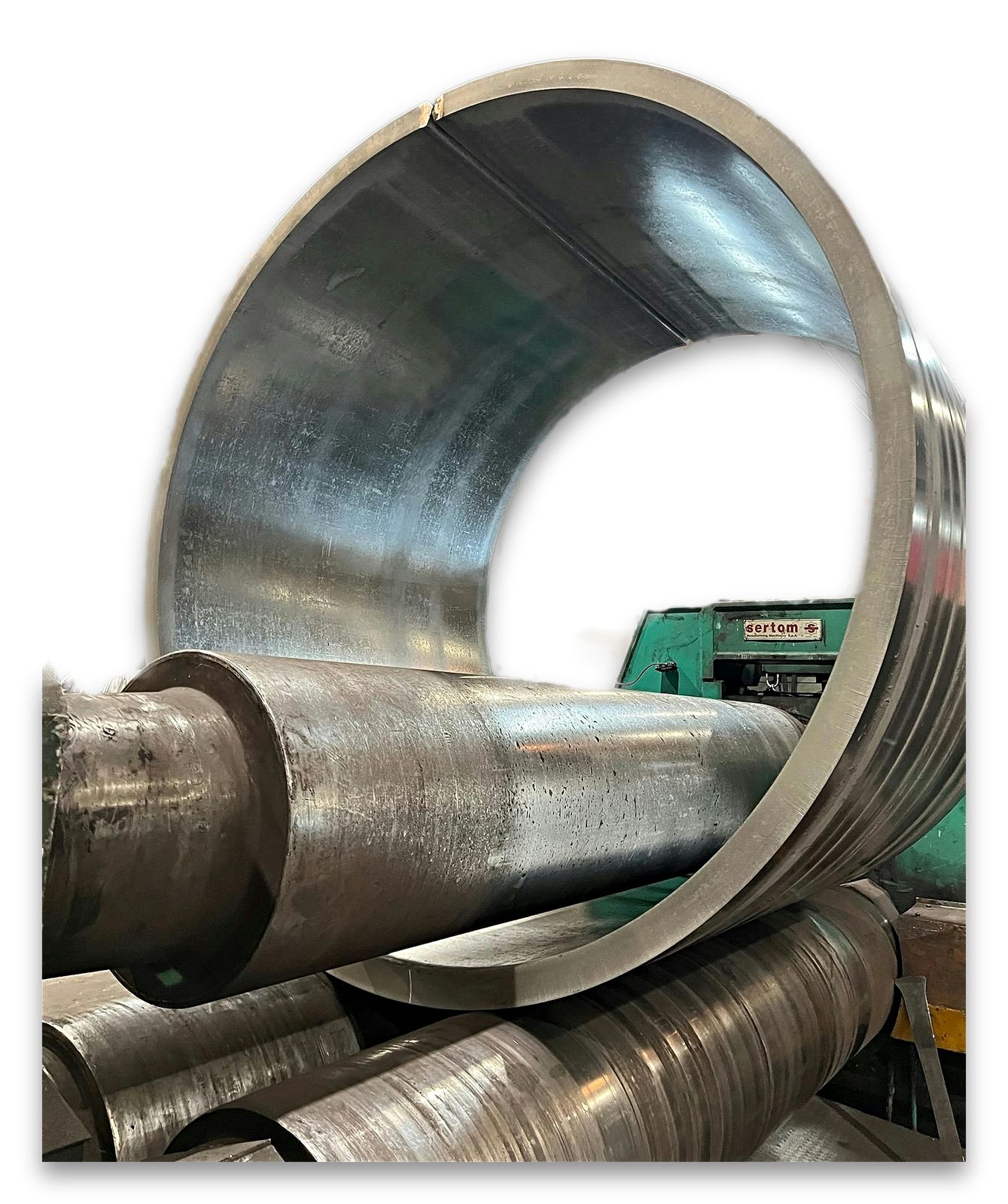
Inner diameter, plate thickness and roll length determine the feasibility check. Several 3-roll bending machines are available at the Lorch site:
| Machine | Inner diameter Ø | Plate thickness | Roll length | Top roll Ø |
|---|---|---|---|---|
| Sertom · Plate rolling machine | Ø 400–8,000 mm | 8–120 mm | up to 3,050 mm | Ø 300 / 450 / 650 mm |
| SMT-Pullmax Kumla · Plate rolling machine | Ø 400–6,000 mm | 4–60 mm | up to 2,000 mm | Ø 375 mm |
| Davi 2048S · Plate rolling machine | Ø 340–6,000 mm | 8–80 mm | up to 2,000 mm | Ø 305 / 460 mm |
| Wilhelmsburger DWV · Plate rolling machine | Ø 300–5,000 mm | 4–30 mm | up to 3,150 mm | Ø 275 / 345 mm |
Several machines have interchangeable top rolls and therefore cover several working ranges – the row then lists every available diameter, smallest first. The values depend on the machine and material. For Hardox, stainless steel or fine-grain structural steel we assess springback, radius, roundness and tolerance per project based on your drawing.
The four machines above deliberately have different optimal working ranges. Together they cover Ø 300 to 8,000 mm and 4 to 120 mm plate thickness — from the thin-walled small cylinder to the XXL shell, in steel, fine-grain structural steel, stainless steel and Hardox. That way no component falls between the machines — here is the right roll for each task.
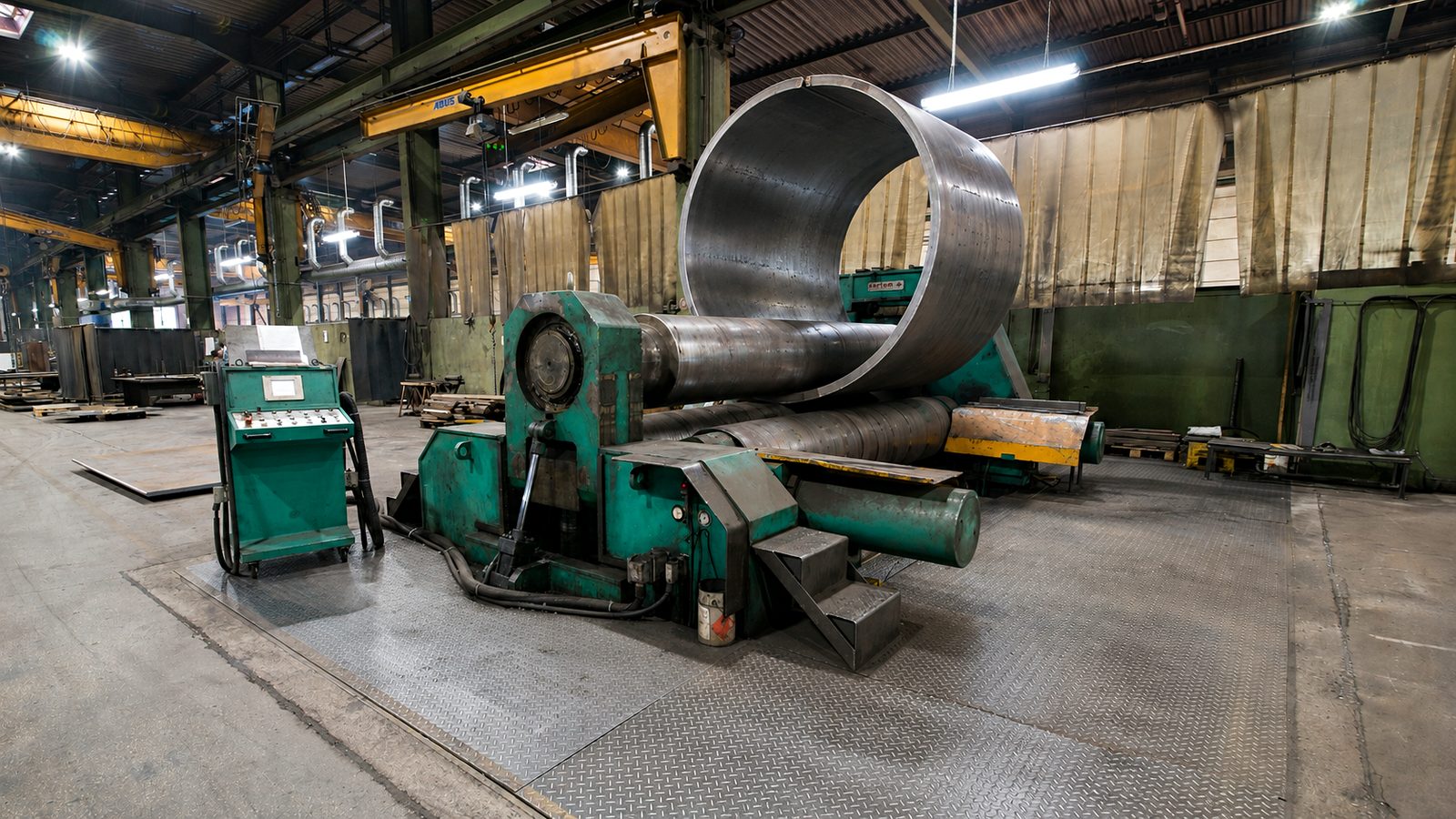
Small & thick-walled
Tight radius at high wall thickness — the demanding combination.
e.g. compact, thick-walled pipe bodies, rings and bushings
Large & heavy (XXL)
Largest diameter meets the thickest heavy plate.
e.g. silo shells, vessel courses and hoppers up to Ø 8,000 mm
Thin-walled & long
Fine plates over the full pass length, at the smallest diameter.
e.g. long, thin-walled cylinders and small rings
Large & medium-heavy
Large diameter at medium wall thickness — the flexible all-rounder.
e.g. vessel shells and courses in the medium thickness range
Plate rolling (bending) is a cold-forming process: the plate runs between three rolls and is progressively shaped to the desired curvature by their infeed. A few process details are decisive for a dimensionally accurate, round result:
We coordinate infeed, pre-bending and springback compensation per project based on your drawing – material, diameter, wall thickness and tolerance determine the parameters. For high-precision cylinders and special shapes, roundness and diameter are checked with calibrated measuring equipment and documented.
The following materials are processed in plate rolling:
Material certificates are provided on request or in line with the project requirement.
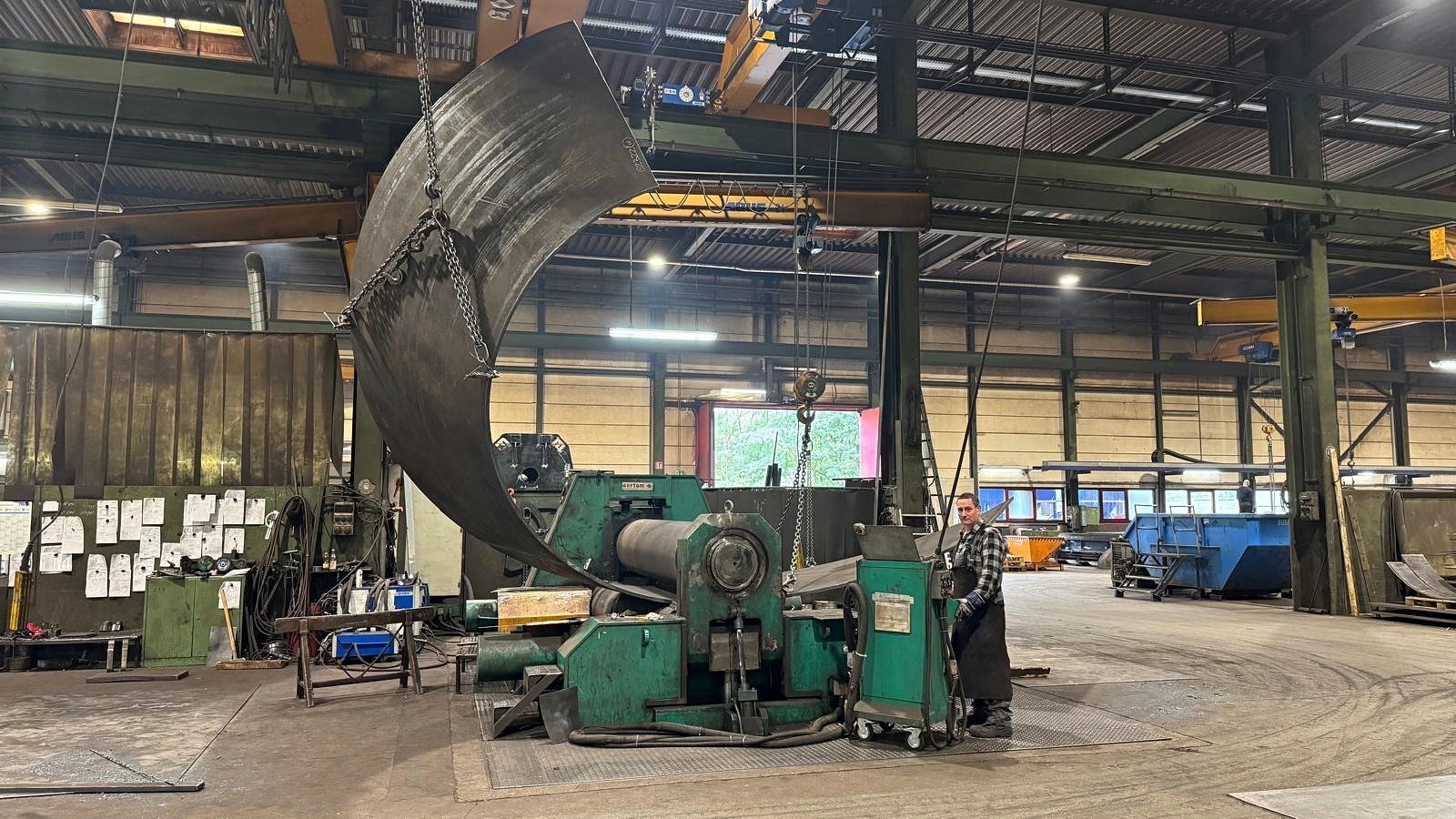
Plate rolling and profile rolling are used for:
Rolled components are welded, machined and surface-treated directly on site. Rolling is followed immediately by welding, shot blasting and painting – without external logistics. The 2×25 t crane system enables safe handling of heavy plates and large-format cylinders across all manufacturing areas. For pressure vessels, silo construction and wear protection systems, components are manufactured to drawing. Plate thicknesses up to 120 mm and diameters up to 8,000 mm are possible, even for high-strength materials such as Hardox and fine-grain structural steel. Quality documentation and material certificates to DIN EN ISO 9001:2015 are available for all order types. Contract manufacturing without minimum quantities for individual parts and small batches. Customer-supplied plates are processed on request. Short transition to welding and surface treatment in the same facility.
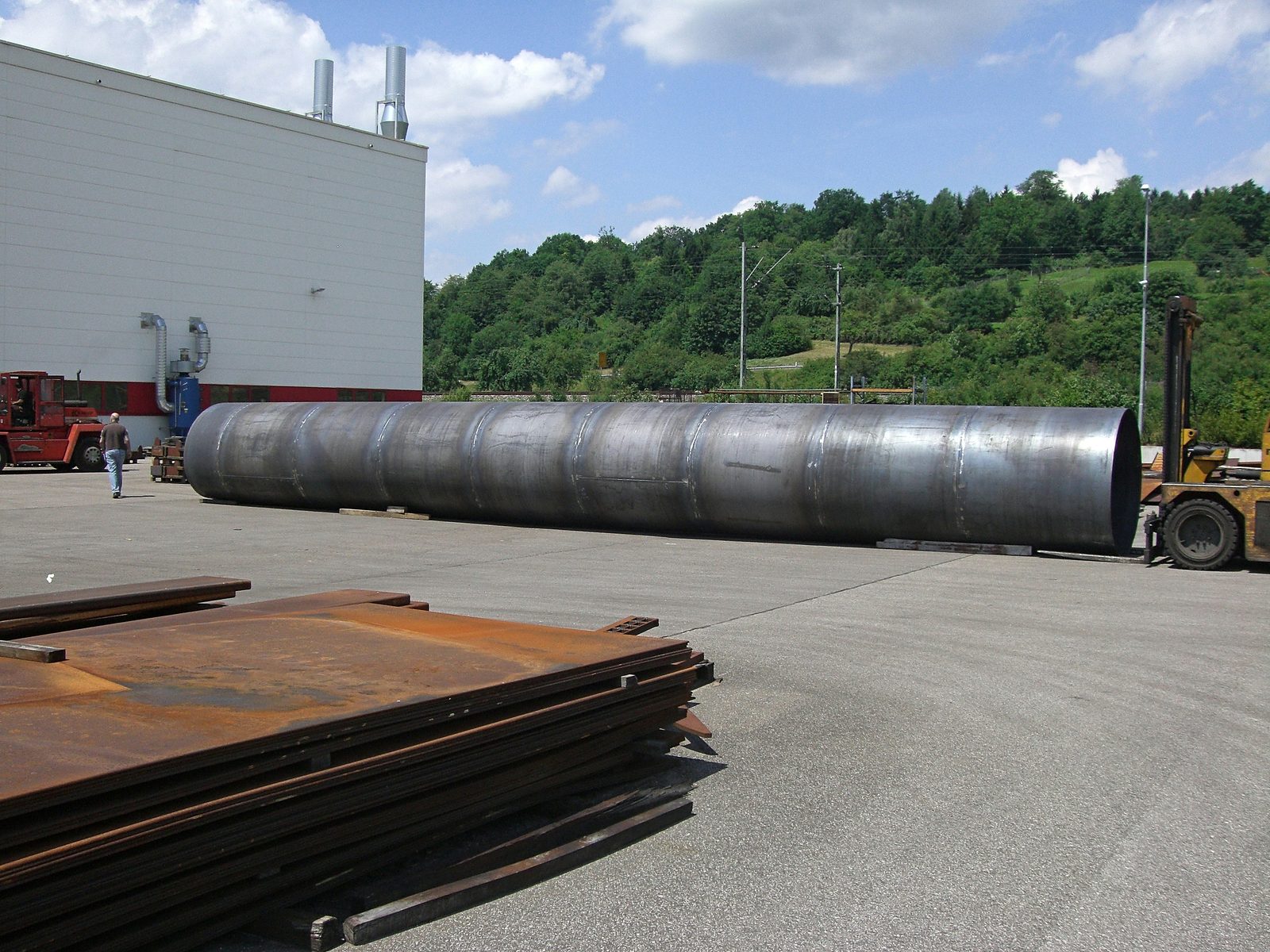
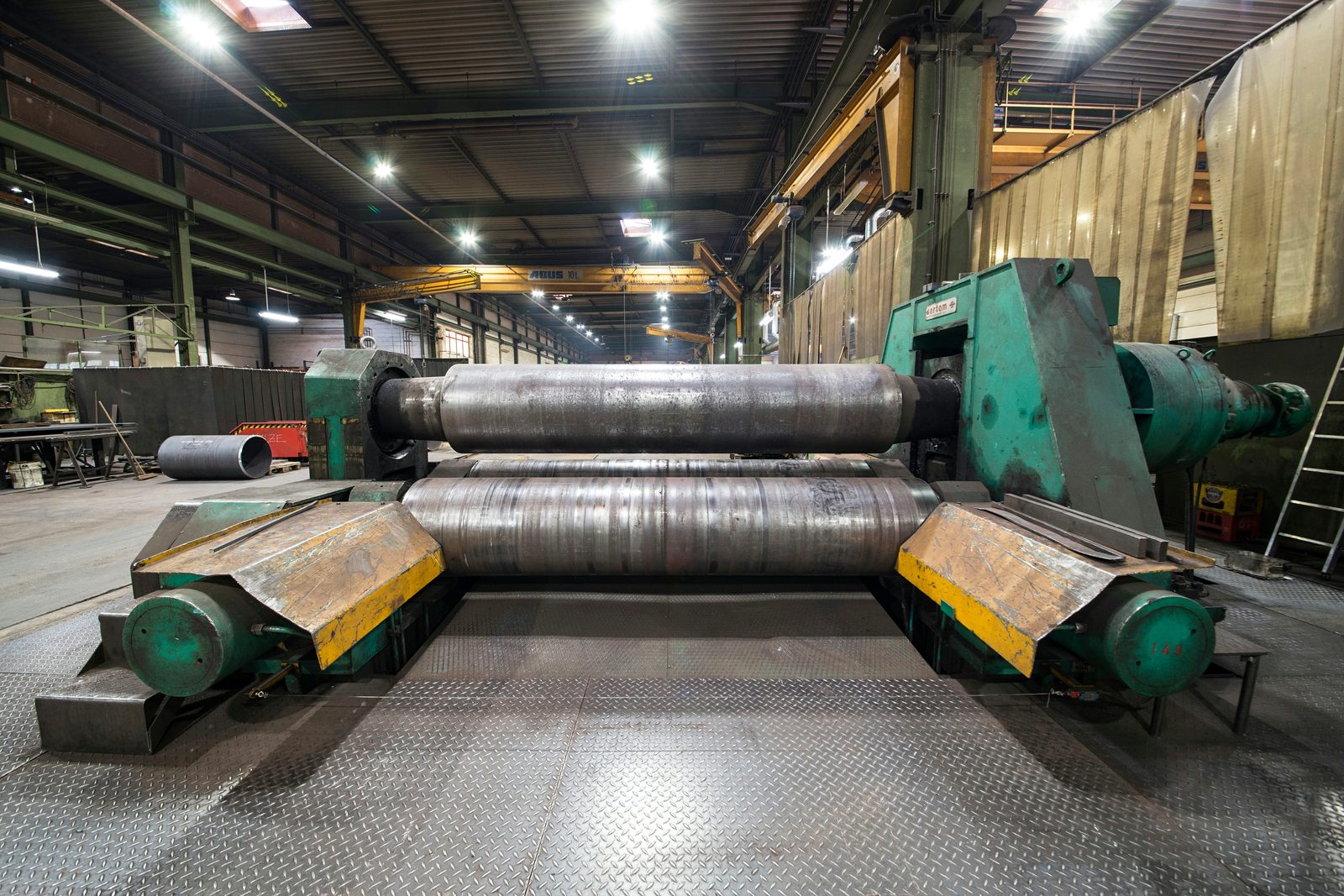
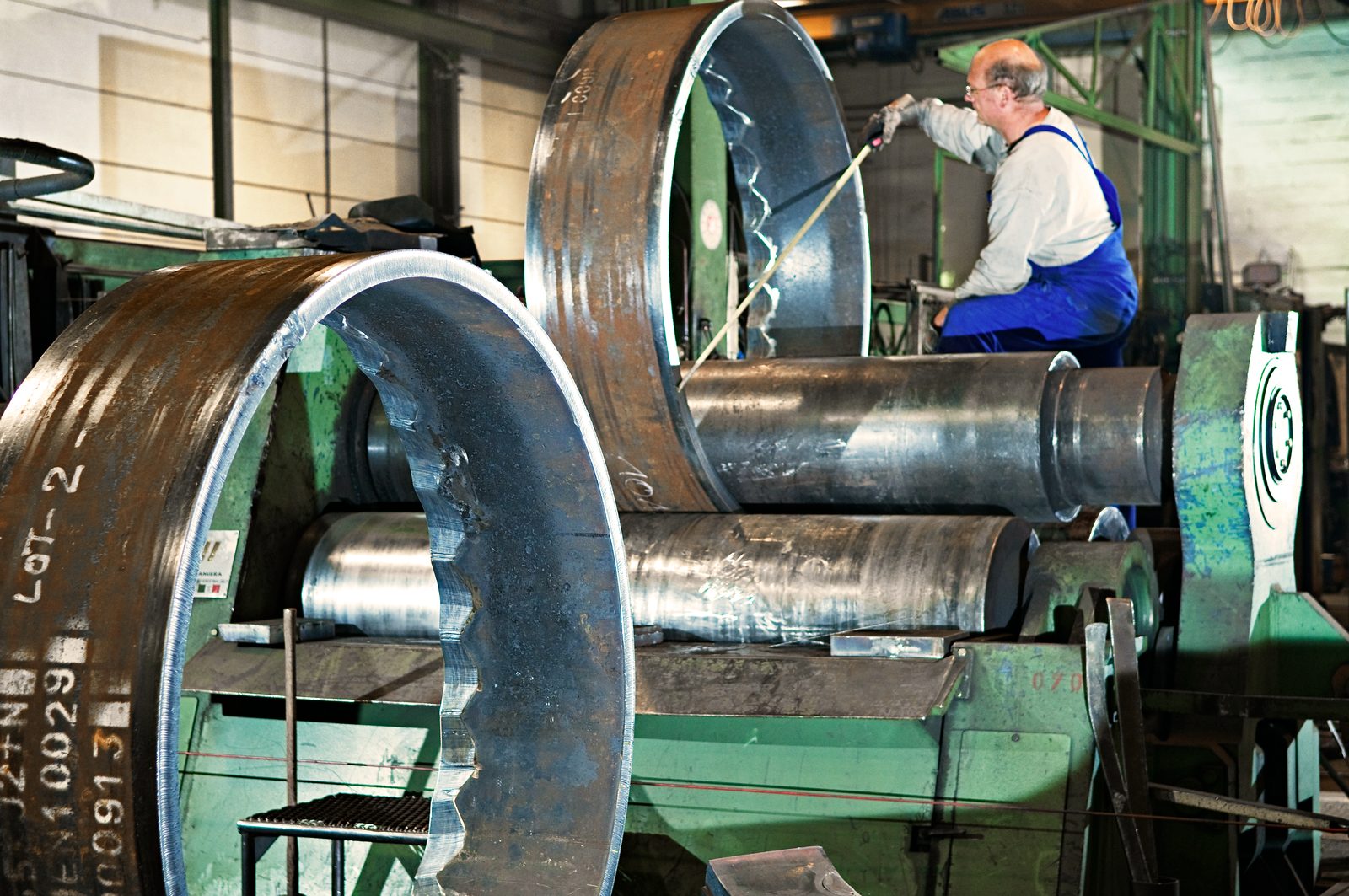
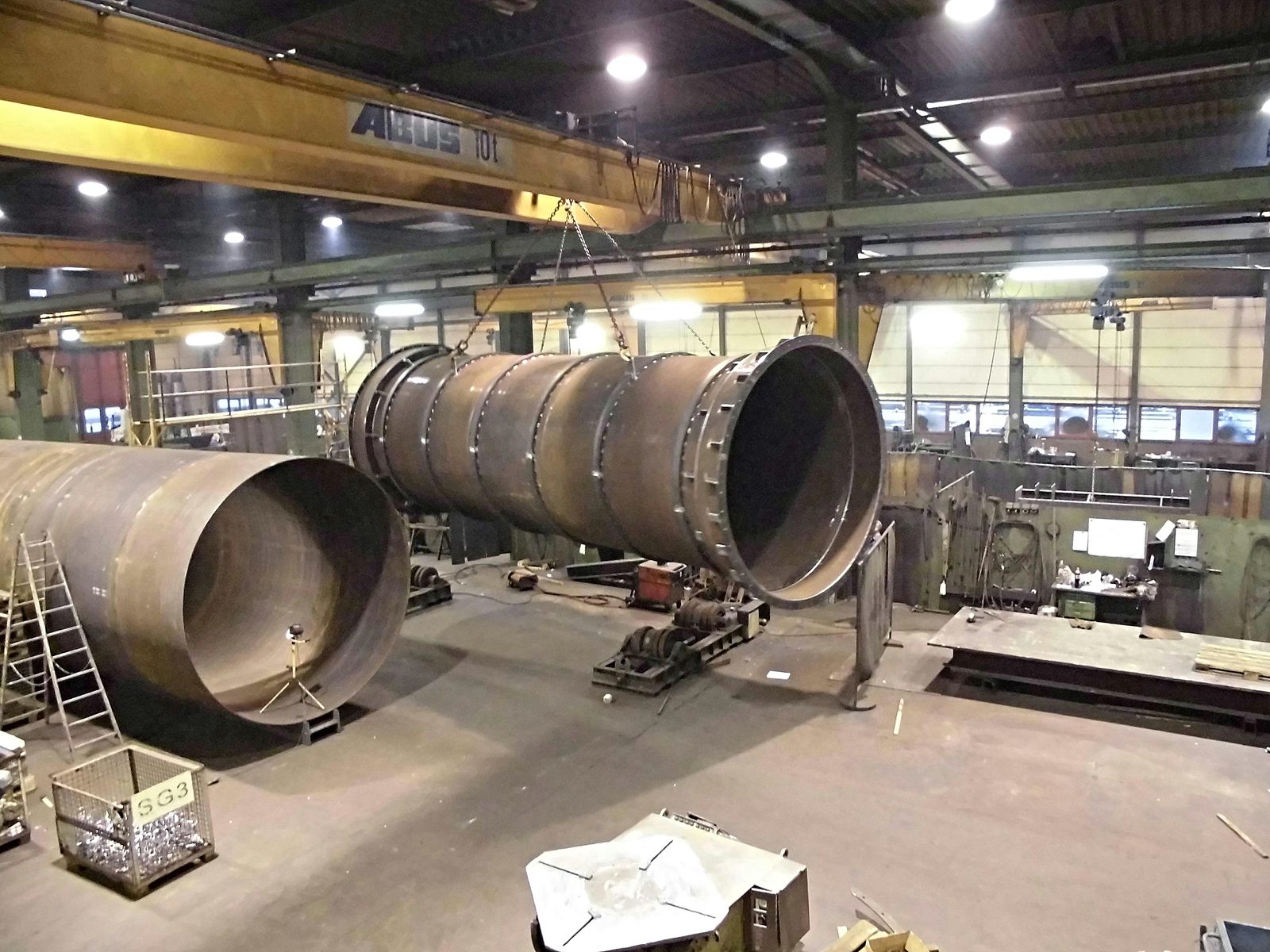
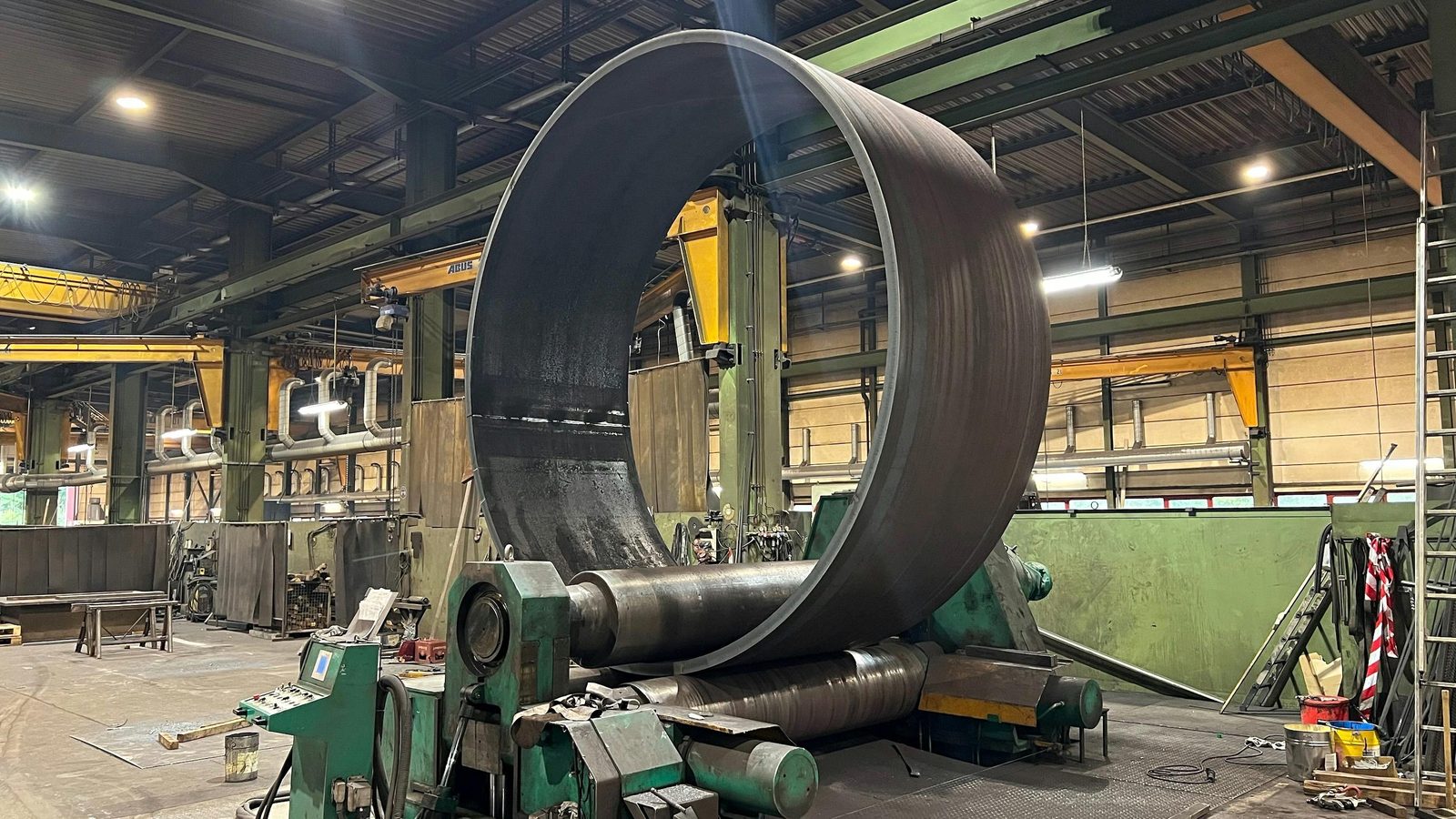
Real shots from our production in Lorch: the thick-walled shell on the rolls, cylinders, cones and rings in stainless and structural steel – and a 22 m pipe standing ready for shipment on the trailer.
Rolled components can be carried forward in the same facility. This reduces interfaces and makes procurement more plannable for buyers:
Depending on the project, individual parts, small batches and customer-supplied plates are processed. Material certificates, inspection reports and quality documentation are agreed per project.
Bock Maschinenbau offers plate rolling as an integrated step of contract manufacturing:
Vessel, apparatus and pipe builders from the Stuttgart area and the entire DACH region have us roll shells, cones and cylinders up to Ø 8,000 mm here in Lorch – including in stainless steel and Hardox.
We roll diameters up to Ø 8,000 mm and plate thicknesses up to 120 mm (S235). For higher-strength steels such as Hardox and fine-grain structural steel, the maximum thickness reduces according to the strength. Four 3-roll plate bending machines cover the range from Ø 300 mm.
Depending on the machine, we roll from Ø 300 mm. The smallest achievable diameter is determined by the roll diameter – for compact, thick-walled parts we use the machine designed for this.
Yes. With obliquely fed rolls we produce truncated cones and conical courses – not just cylindrical shapes. We likewise roll rings, half-shells and pipe bends to drawing.
Fine-grain structural steel and Hardox spring back more after rolling. We compensate for this with adapted infeed (over-bending) and check radius, roundness and tolerance per project – so tight tolerances are reliably maintained even with special steels.
Without pre-bending, a straight remnant would remain at the start and end. We pre-roll the edges so that cylinders and courses close dimensionally accurate all around and can be cleanly welded.
Yes. On request or in line with the project requirement, we provide material certificates to EN 10204. Manufacturing is carried out to DIN EN ISO 9001:2015 with complete material traceability.
Send us your drawing, material, diameter, wall thickness and quantity. We will assess feasibility and provide a project-specific quotation.