Component Assembly up to 50 t – In-House Assembly in Lorch
Welded, straightened and machined components are joined at Bock into the complete assembly – aligned, measured and handed over ready for dispatch. Pre-assembly, partial or complete assembly as agreed, at our Lorch plant — Ostalbkreis, Stuttgart region, southern Germany.
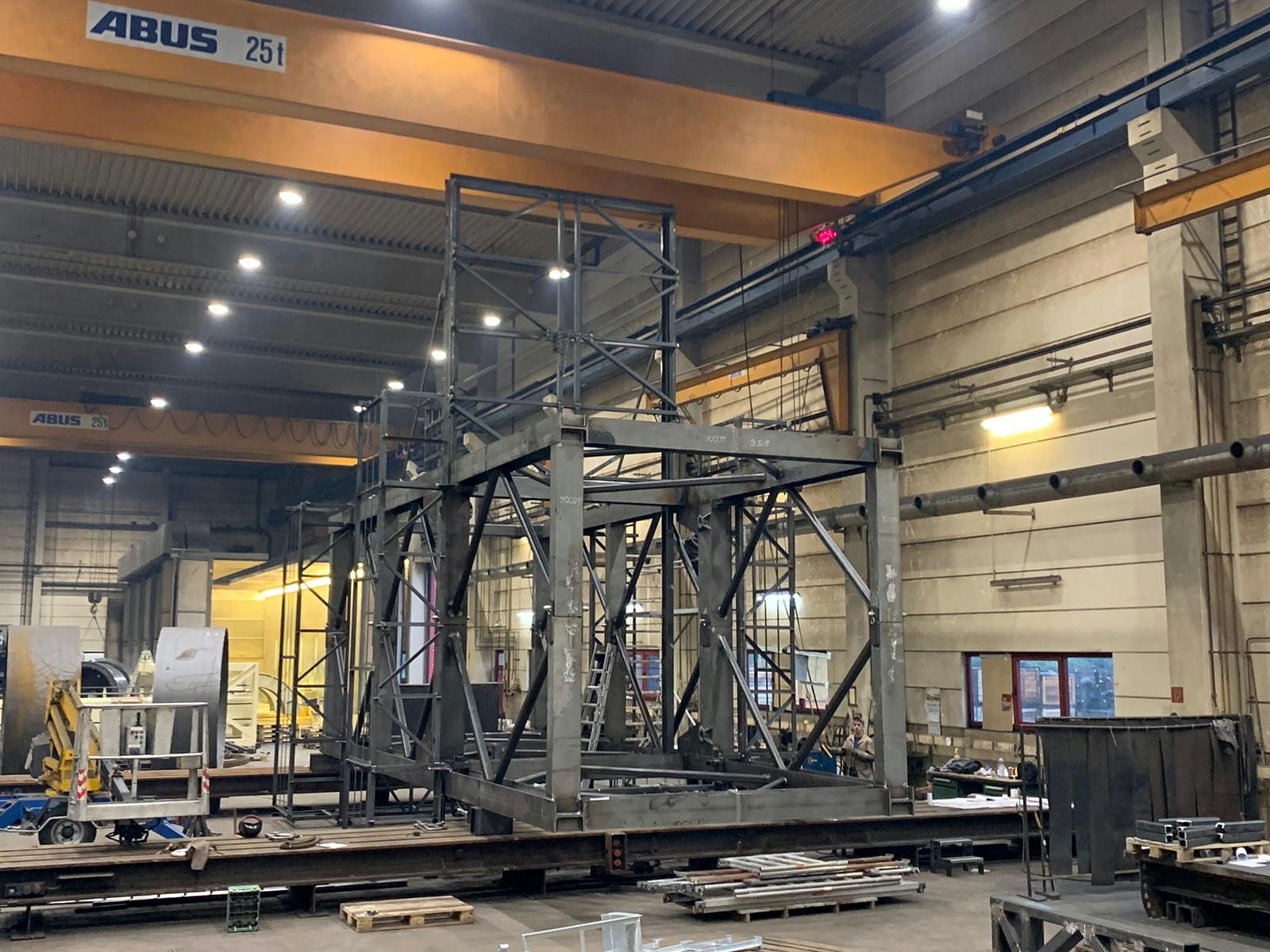
2×25 t overhead travelling crane in tandem operation – components from a few kilograms up to 50 t are handled and positioned.
DIN EN 1090-2 EXC3
Certified for the execution of load-bearing steel components, plus EN ISO 3834-2 and DIN EN ISO 9001:2015.
Components held in joining position
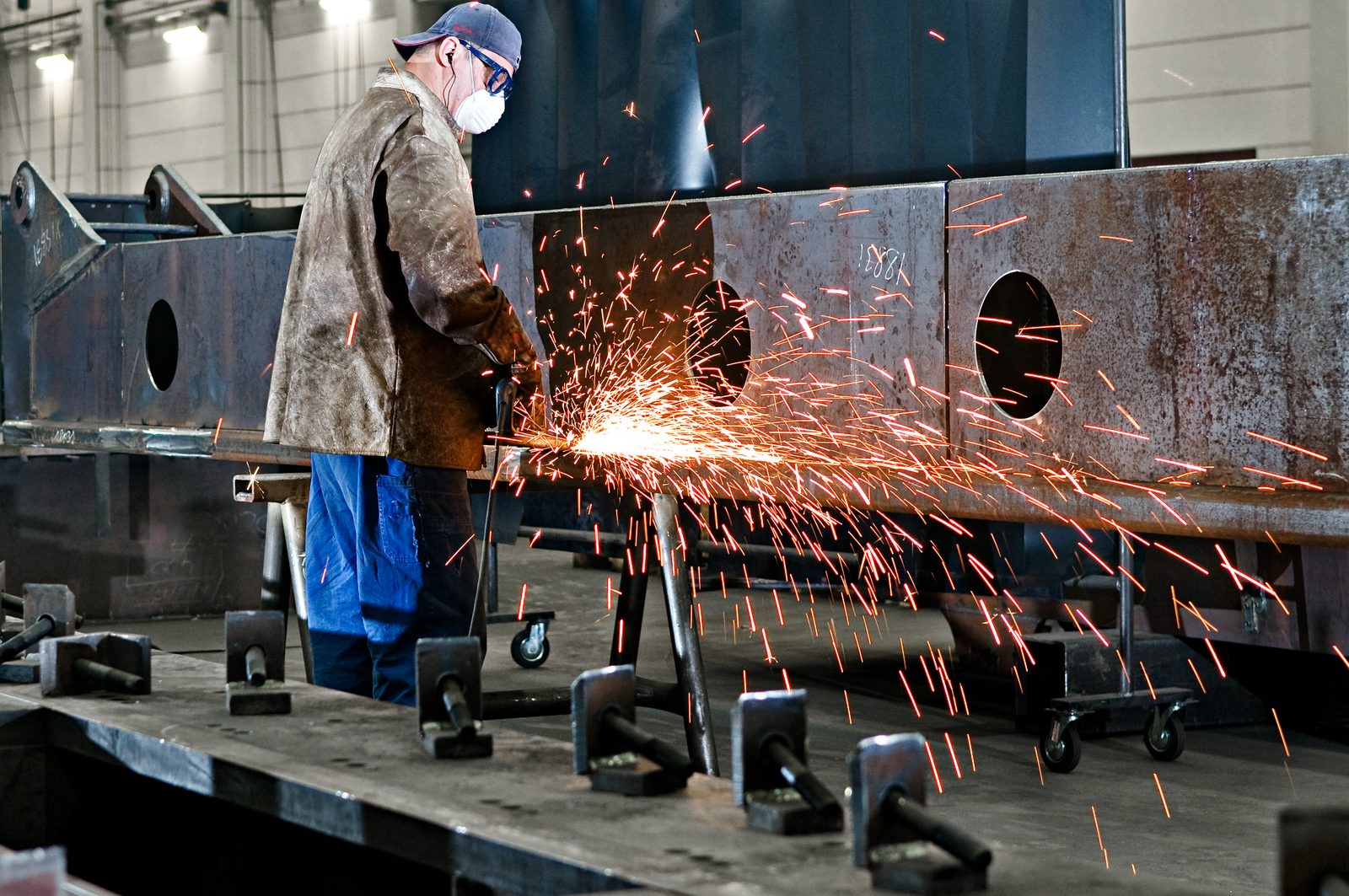
Six welding turning rolls for cylindrical components from Ø 150 to 7,500 mm, four welding and assembly positioners, one load turning device.
Aligned and measured
Assemblies are aligned before final joining and measured with calibrated measuring and test equipment; dimensional reports project-specific.
Assembly depth as agreed
Pre-assembly, partial assembly or complete component assembly – the scope of supply is defined before the order is placed.
Upstream stages in the same plant
Cutting, welding, straightening, machining, blasting and painting on 14,000 m² at one site.
Component assembly to drawing and parts list
By component assembly we mean joining finished individual parts into a complete assembly: welded components, machined parts, plates, sections and standard parts are brought together to drawing and parts list, aligned, measured and secured.
Assembly takes place at our plant in Lorch. Crane systems, welding turning rolls, positioners and the downstream operations machining, straightening, blasting and painting are all in the same building – between the steps the assembly changes the bay, not the company.
Joining is done by bolting, pinning and welding: bolted connections with threads from M2 to M60, pin and articulated joints, bearings and bearing seats. Interference-fit joining, in which the shaft is sub-cooled before insertion, is carried out project-specifically by agreement.
The normal case is an order with our own manufacturing share: we produce the load-bearing parts ourselves and integrate customer-supplied add-on parts, bought-in components and sub-assemblies built by us into the assembly. Which parts you supply and which we manufacture is defined before the order is placed.
We assemble from batch size 1. Single items, prototypes, assemblies and small batches are handled alike; there are no minimum quantities.
Steel fitting and jig building – adapting, drilling, tapping, deburring as well as building clamping, welding and assembly aids – are the craft basis of this assembly and are described on a separate page.
Pre-assembly, partial assembly or complete assembly – you define the depth
How far the assembly goes is defined per order. Three levels are common:
Pre-assembly
joins individual groups, tacks and measures them before they go into final welding or machining. The assembly is first joined only at points and then measured; only when the position is right is it finally connected.
Partial assembly
completes the assembly up to a defined scope and hands it over in that state – for example when add-on parts are to be fitted at the place of use or the transport dimensions are limited.
Complete component assembly
joins welded and machined components into the complete assembly: bearings and bearing seats, pin and articulated joints, bolted connections with threads from M2 to M60, plus supports, brackets, stairways and handrails – aligned, measured and handed over ready for installation.
Whether an assembly is delivered pre-assembled, partially assembled or fully assembled is set out in the order. Our prices are ex works Lorch; installation and commissioning at the customer's site are not included and require an express agreement.
Aligning, measuring and holding in joining position
Whether a heavy steel assembly can be assembled is decided before the first connection – by the question of whether the component can be held in joining position, aligned and re-measured. Permanently installed equipment is available in Lorch for exactly that:
Two overhead cranes of 25 t each, in tandem operation up to 50 t – plus bridge cranes with 10 t and 3.2 t as well as wall-mounted jib cranes with 7 m reach at the workstations
Six welding turning rolls for cylindrical components from Ø 150 to 7,500 mm – they hold components up to 60 t rotatable in joining position
Four welding and assembly positioners with a load capacity up to 2,000 kg and clamping plates up to 1,250 × 1,250 mm; one unit with a Ø 1,070 mm clamping table tilts up to 135°
One load turning device for components up to 5 t for the controlled turning of assemblies
One MAFI transport trailer with a 2,500 × 8,000 mm load area and forklifts up to 16 t for in-house transport between production, post-treatment and assembly
Aligning and measuring with a levelling instrument and calibrated measuring equipment – dimensions are marked on the component, pin and articulated joints set accordingly
This brings every joint into an accessible position instead of having to make it overhead or in a constrained position. On heavy assemblies this determines dimensional accuracy and the weld quality of the subsequent welding work.
The fit into which we assemble is created in the same plant
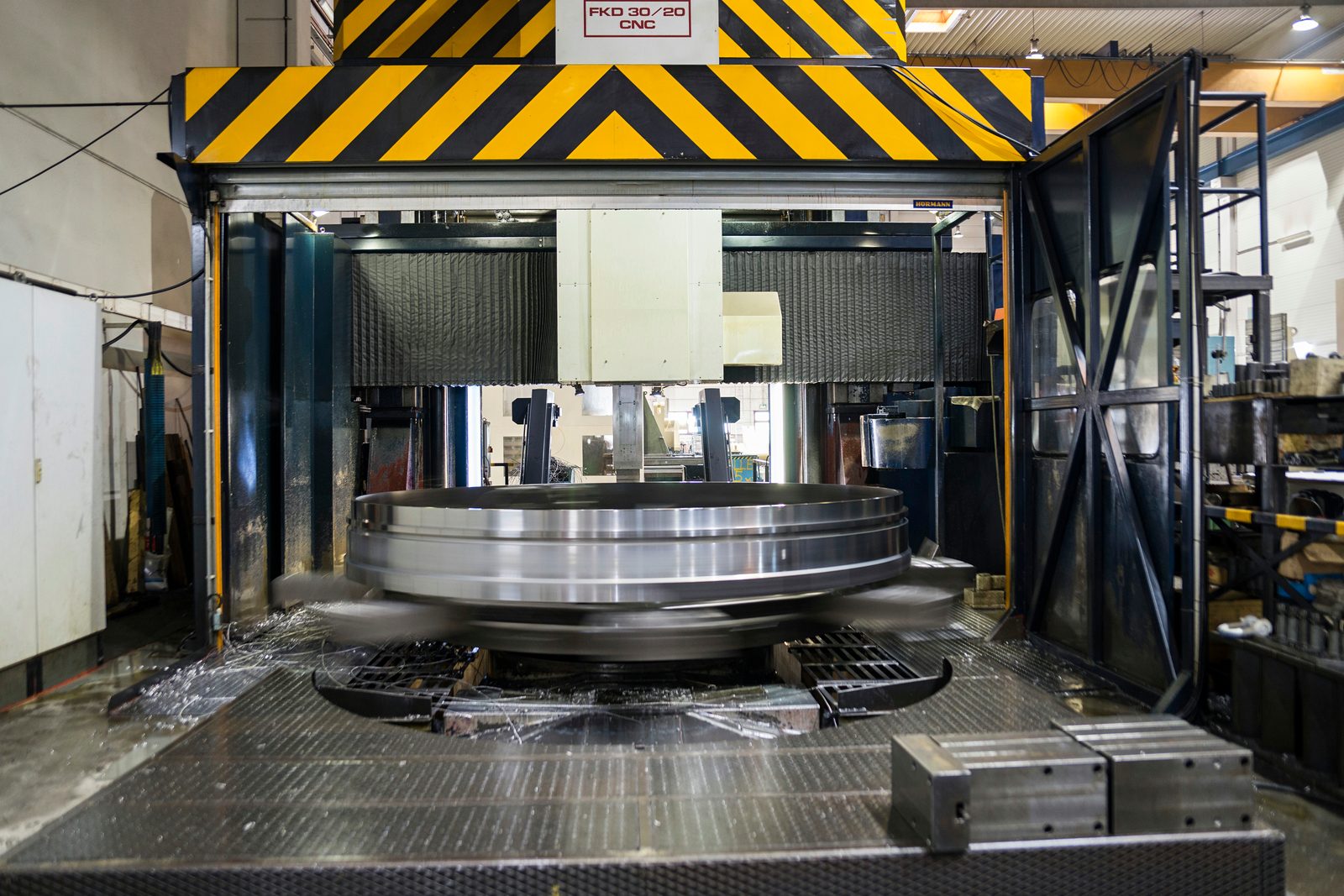
Whether an assembly goes together is decided before assembly – at bearing seats, fitting holes and connection faces. At Bock these faces are produced on CNC horizontal boring mills with 3,500 mm × 2,500 mm × 1,200 mm travel and a 360° rotary table, on the vertical turning lathe up to Ø 4,800 mm and on the gantry milling centres up to 26 m component length.
We produce hole patterns and fastening threads from M2 to M60 with radial drilling machines with up to 3,000 mm reach, even far inside large-area components – where later rework on the assembled unit would no longer be accessible. We also carry out rework and drilling on bought-in or customer-supplied components.
Testing takes place before the unit goes into assembly: visual testing, penetrant testing and magnetic particle testing by our own inspectors to DIN EN ISO 9712 (Level 2) directly in the plant, without external scheduling chains. Because machining and assembly are in the same company, a deviation can still be corrected in the setup instead of being compensated for in the assembly.
What happens after assembly is defined with the order. These steps are available in-house and can be integrated into the assembly:
Straightening and stress relieving
corrects welding distortion by flame straightening and reduces residual stresses by vibration stress relief (VSR) – both before machining or before final assembly, without external logistics.
Non-destructive testing
covers visual testing (VT), penetrant testing (PT) and magnetic particle testing (MT) in-house with Level 2 qualification to DIN EN ISO 9712; ultrasonic testing (UT) project-specifically in the plant by certified testing personnel of our cooperation partner.
Dimensional check and documentation
covers aligning and measuring with calibrated measuring equipment; we provide dimensional reports, material certificates and inspection certificate 3.1 to EN 10204 on a project basis.
Blasting and painting
is carried out as shot blasting to Sa 2,5 and industrial painting to EN ISO 12944 in a booth measuring 25 m × 7 m × 6 m – depending on the component before or after assembly, so that functional and mating faces stay free.
Packing and loading
covers palletising, cribbing with timber beams and shipping frames, wrapping to customer specification, load securing by lashing, chocking and bracing as well as loading up to 50 t – including preparation for abnormal-load and heavy transport.
The scope of supply is defined before the order is placed: you receive the assembly raw-joined, tested, coated or packed ready for dispatch. Delivery ex works Lorch or carriage paid.
Certified execution – EXC3 covers the joined component, not just the weld
Bock Maschinenbau is certified for the execution of load-bearing steel components to DIN EN 1090-2, execution class EXC3 (certification body DVS ZERT), and meets the quality requirements for fusion welding to DIN EN ISO 3834-2. The scope of the standard is the execution – it does not end at the individual weld but covers the joined component. Complemented by certified quality management to DIN EN ISO 9001:2015, this is the framework in which load-bearing assemblies are assembled at Bock. For clients with a documentation obligation, the current certificates are available as PDFs.
Quality assurance on the assembled unit
On an assembled unit it is not only the individual weld that counts, but also the position of the parts relative to one another. Alignment and dimensions are therefore checked on the component before it is finally connected. Depending on component, material, weld class and customer specification, visual inspections and non-destructive test methods are additionally used.
Visual Testing (VT), Liquid Penetrant Testing (PT) and Magnetic Particle Testing (MT) are available in-house with Level 2 qualification to DIN EN ISO 9712.
Ultrasonic Testing (UT) is available on a project basis in-house through certified testing personnel of our cooperation partner. Volumetric testing (radiographic testing RT, ultrasonic testing UT) is, insofar as commissioned, provided by qualified partners.
This covers surface indications, cracks, near-surface irregularities and internal irregularities in suitable components and weld joints.
Testing and documentation requirements are agreed project-specifically to drawing, standard requirement and customer specification. We provide material certificates and inspection certificates on request or in accordance with the project requirement.
At Bock we mainly assemble heavy, multi-part assemblies from steel, crane and plant engineering:
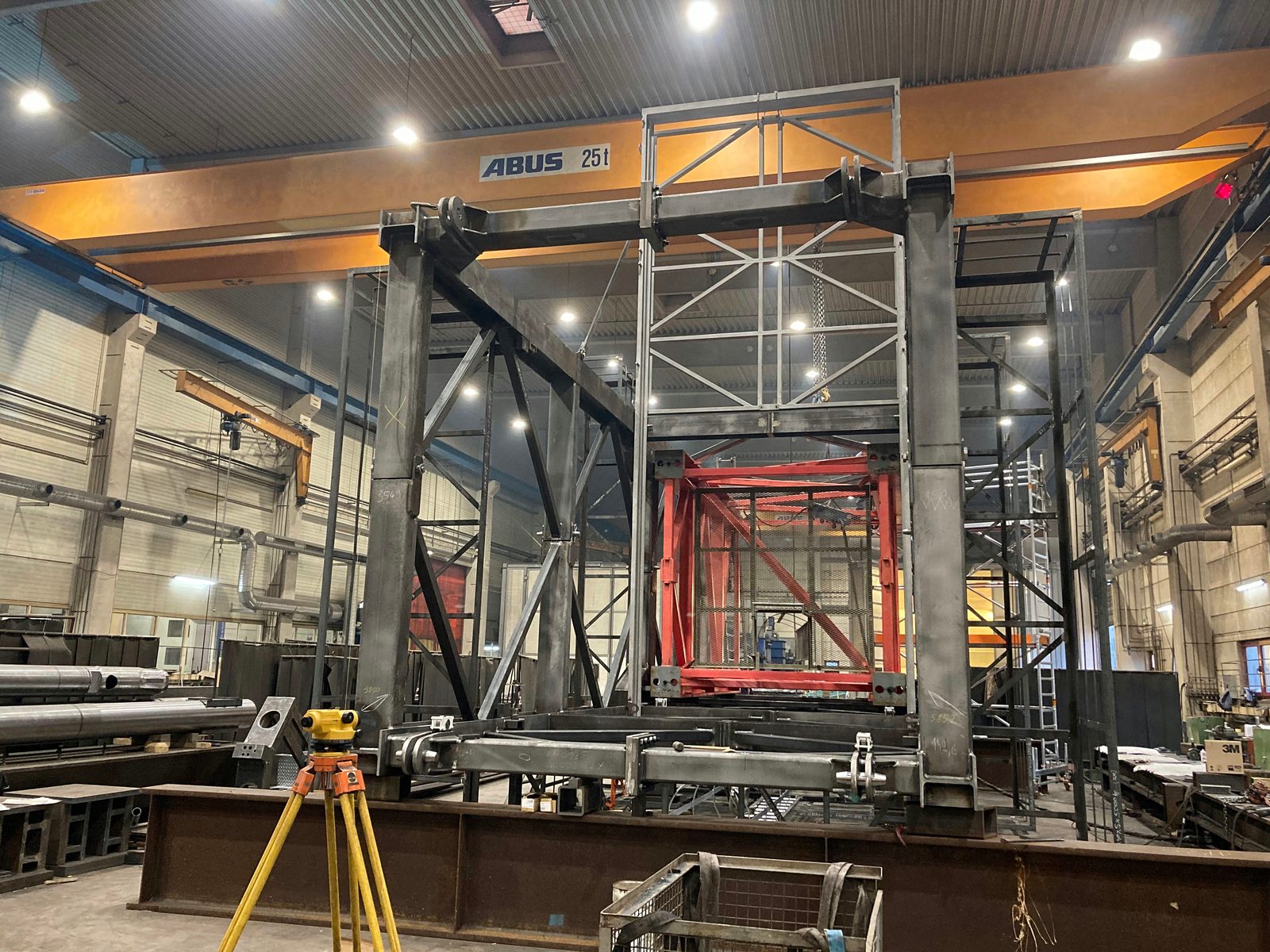
Crane jibs, portal frames and load-bearing steel structures – box columns, cross-braced lattice towers, eye plates with pins and articulated link plates
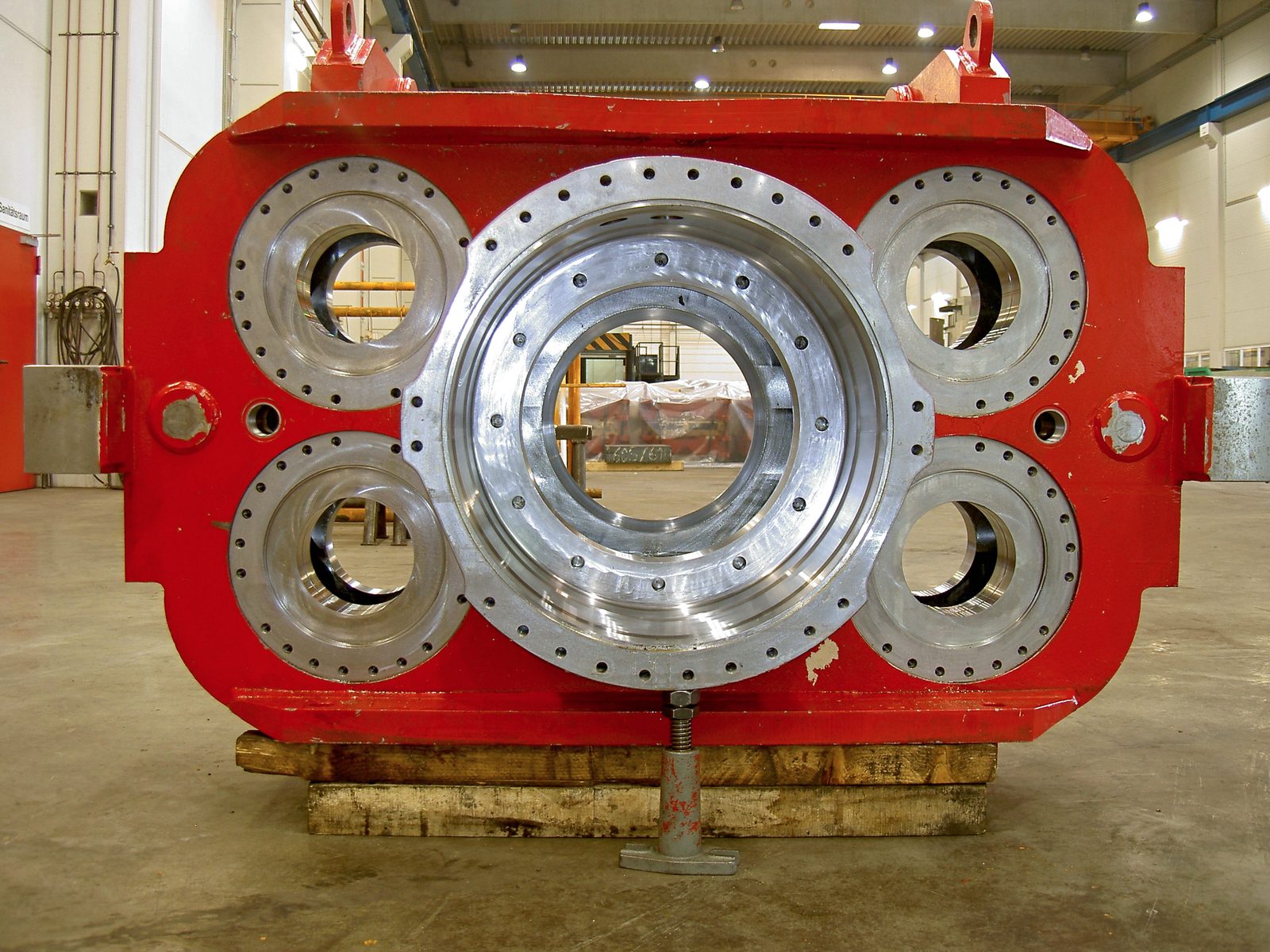
Drum assemblies for hoisting and plant engineering – drum shells completed with ring gear, bearing block and base plate
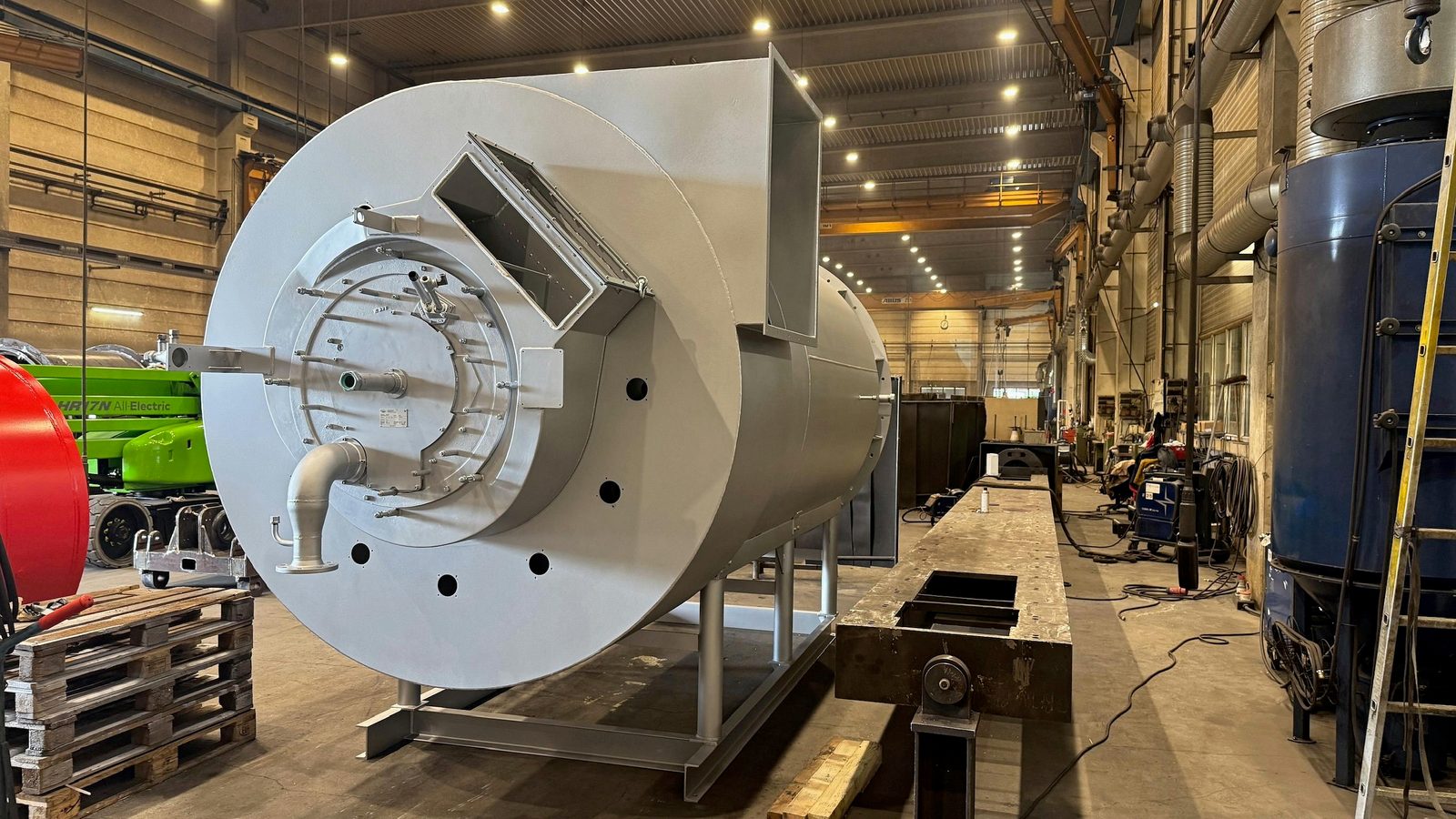
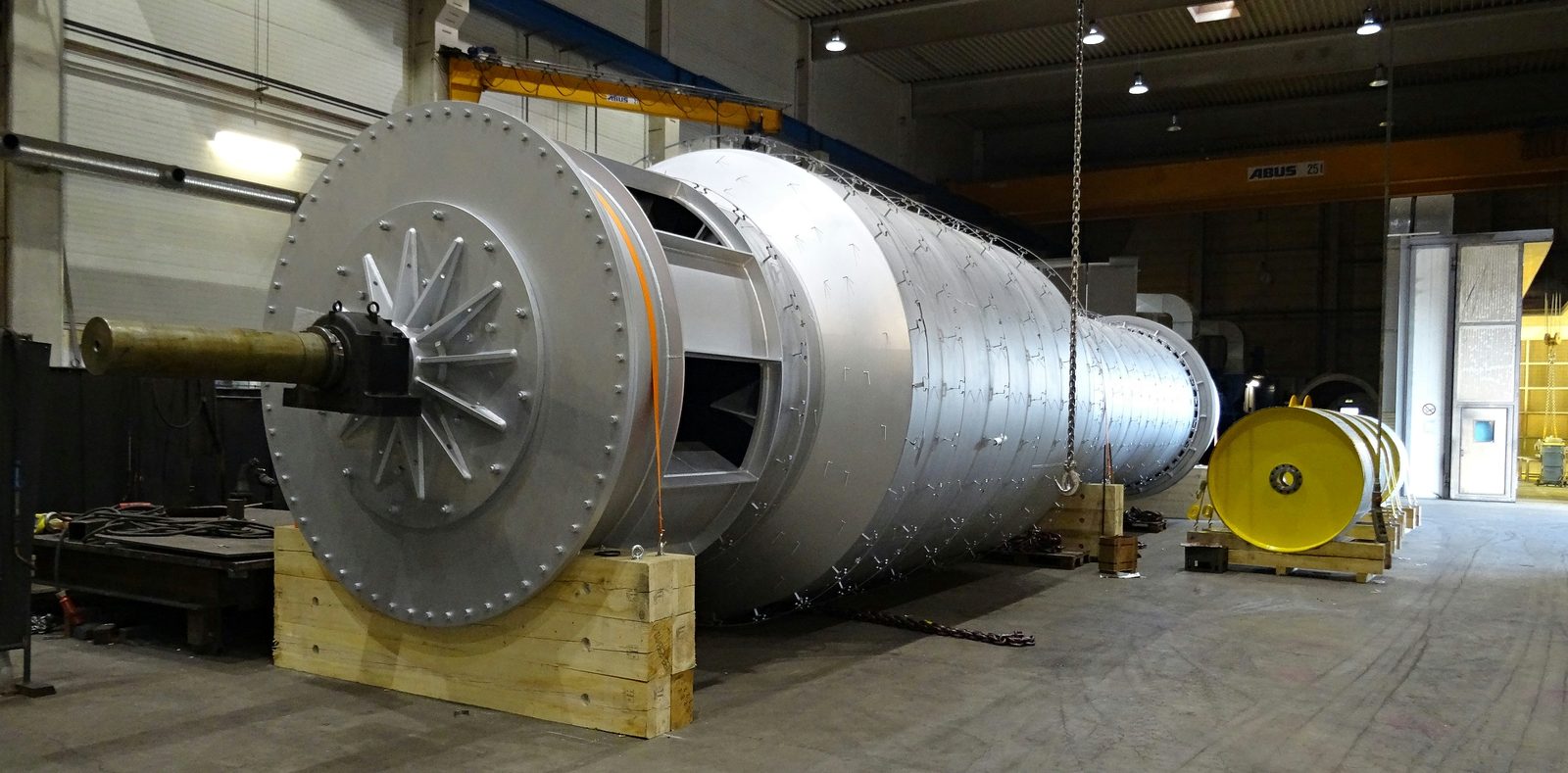
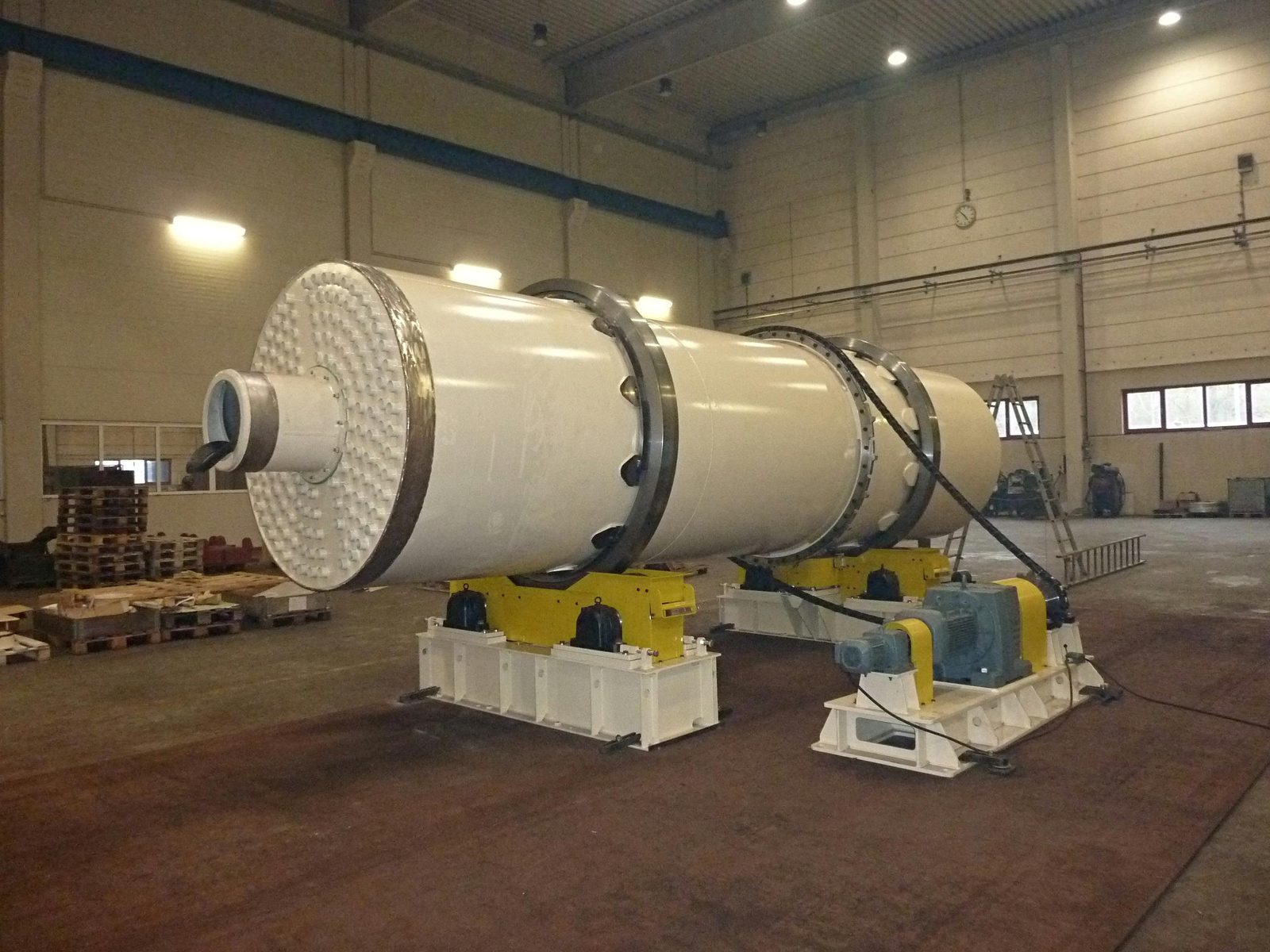
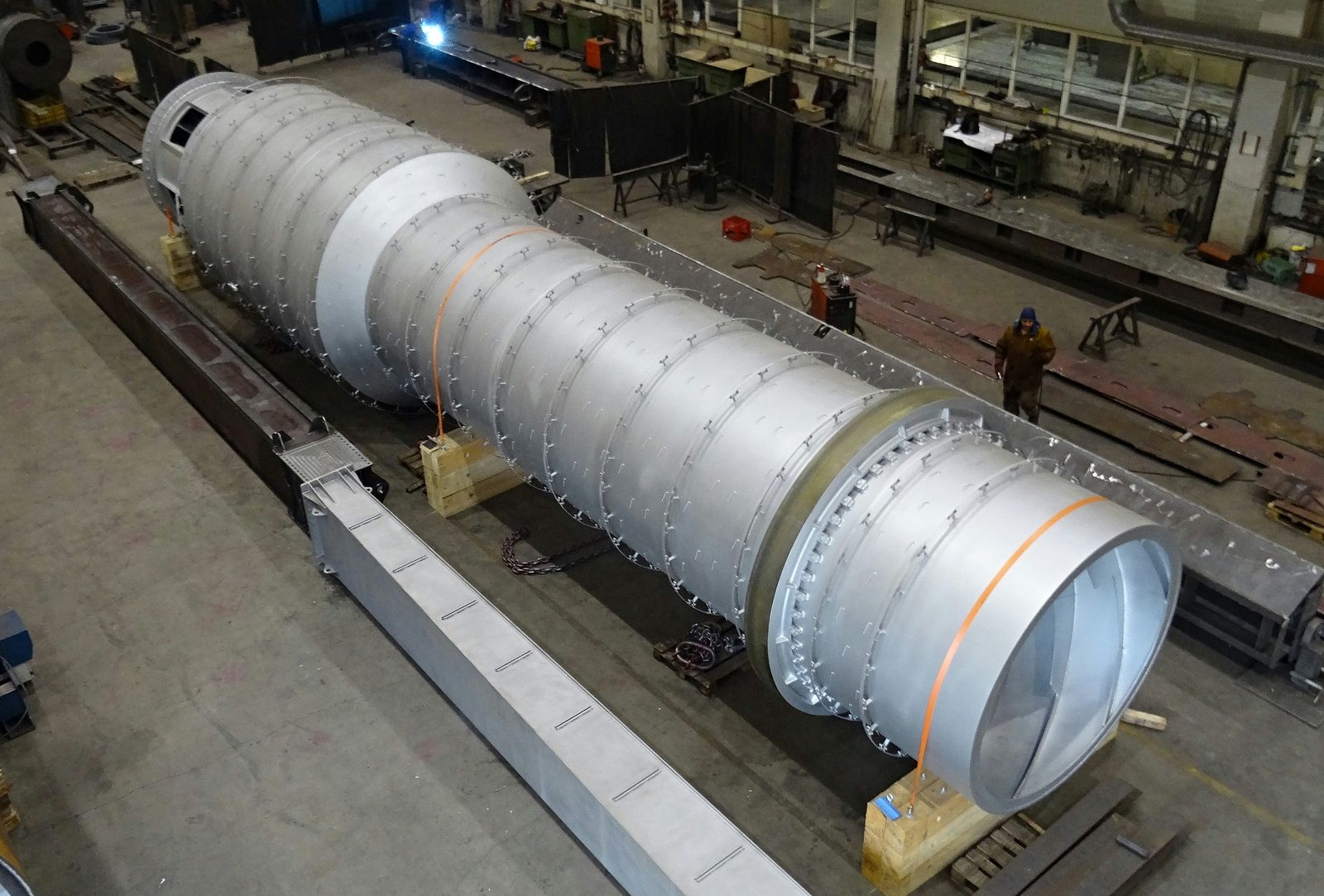
Rotating drums for drying and cooling bulk material as a completely welded and assembled large unit
Vessel and apparatus assemblies – from the single vessel course to the assembled large unit such as a rotary drum dryer or rotary kiln segment
Frames, girders, housings and machine frames for special-purpose machinery
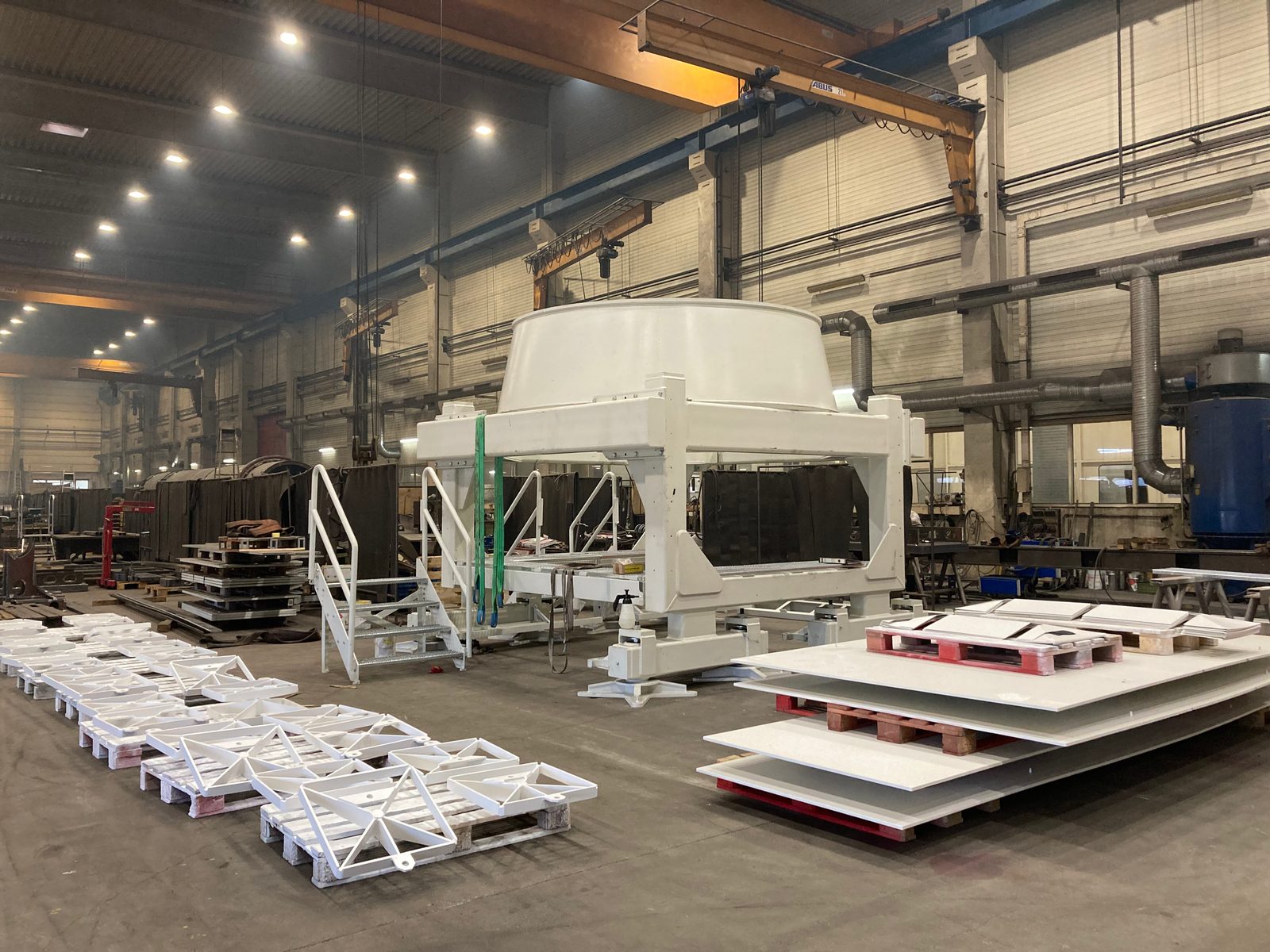
Assemblies for a large astronomical telescope – precision steelwork with levelling feet, integrated stairway and handrail, painted and commissioned ready for dispatch
Pipe systems and structural connections
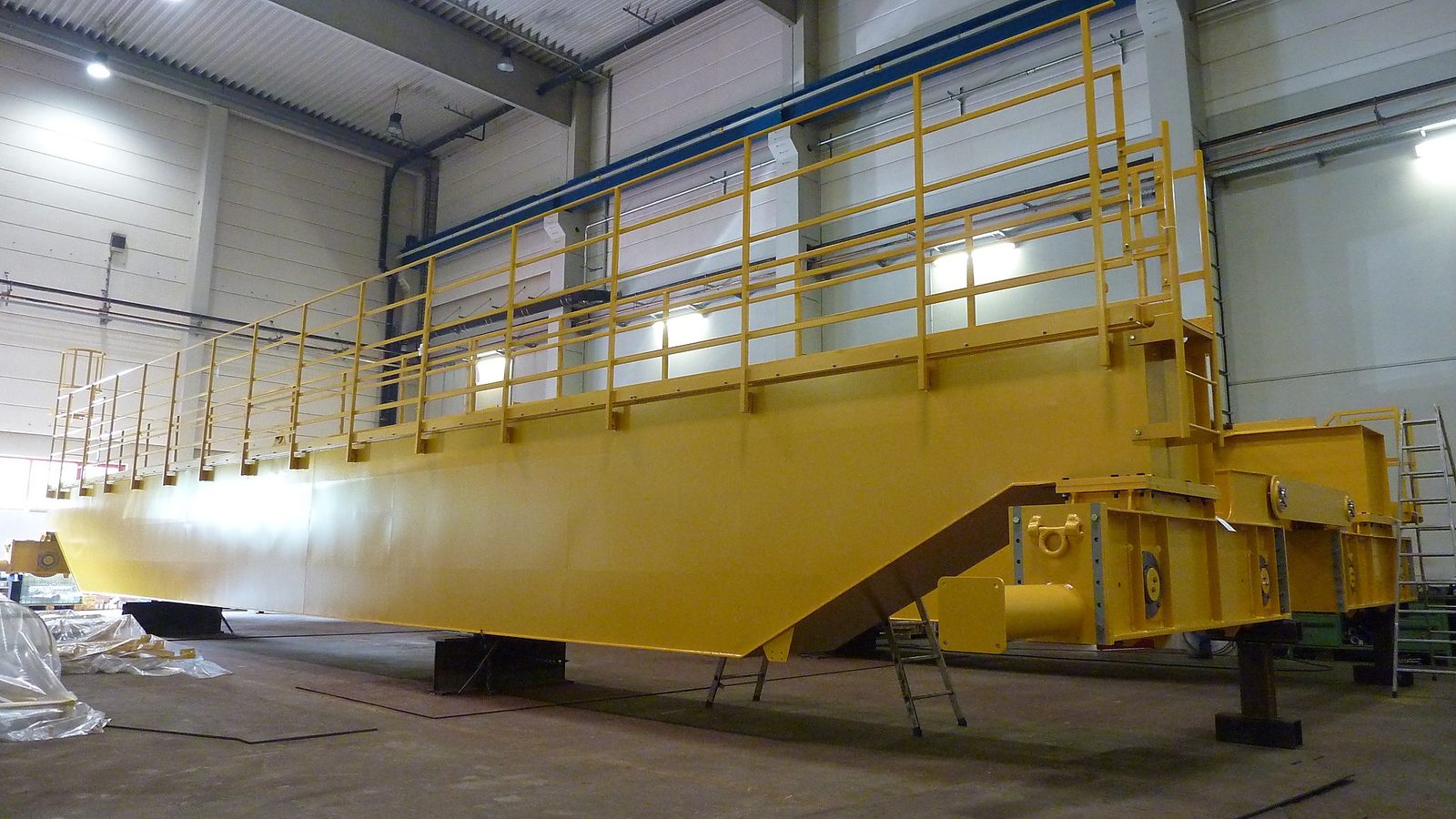
Special containers up to 50 t, manufactured entirely in Lorch, blasted, painted and prepared for delivery
We handle repair and conversion work on existing steel structures separately – there the condition survey comes first, not the parts list.
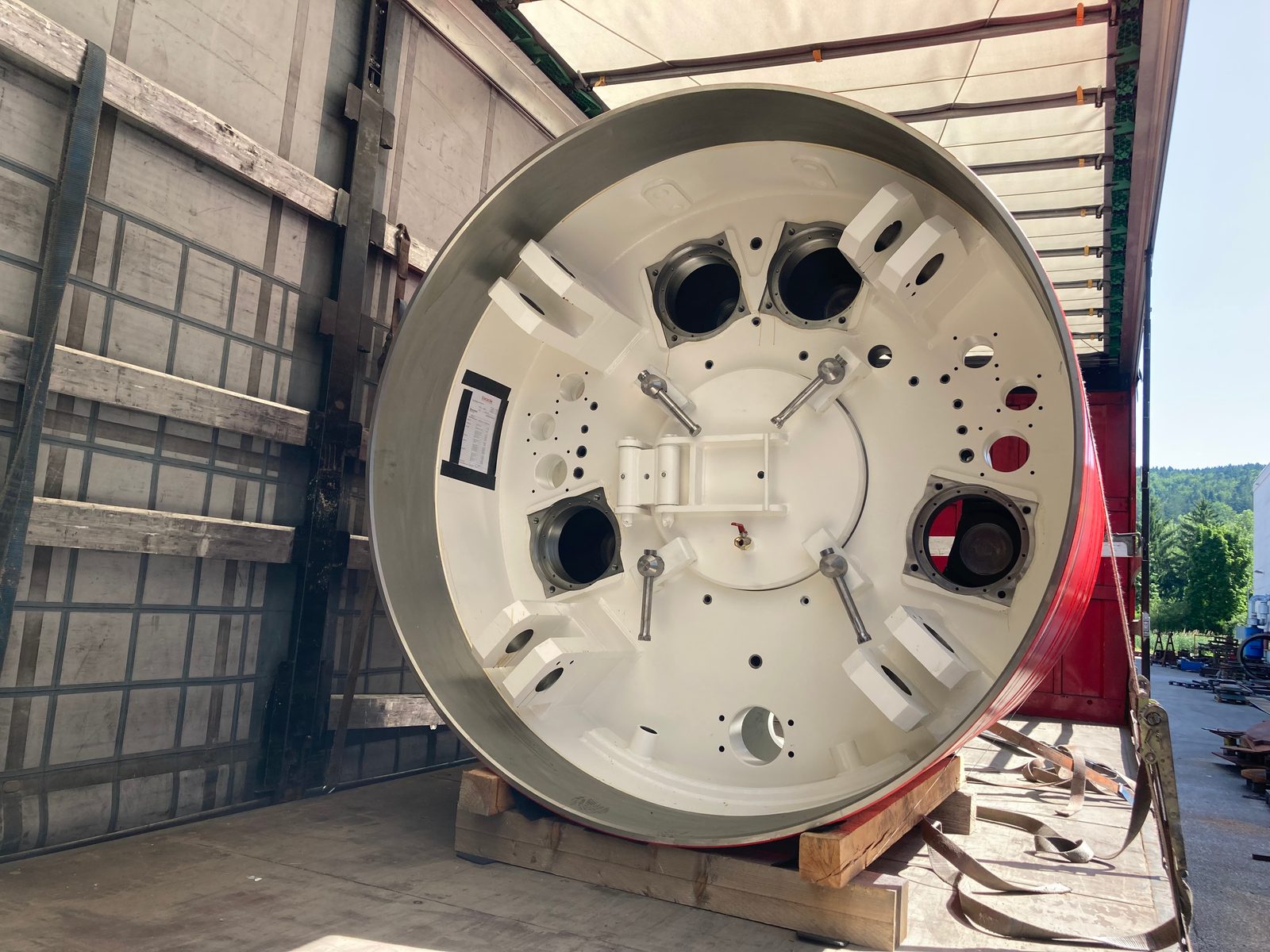
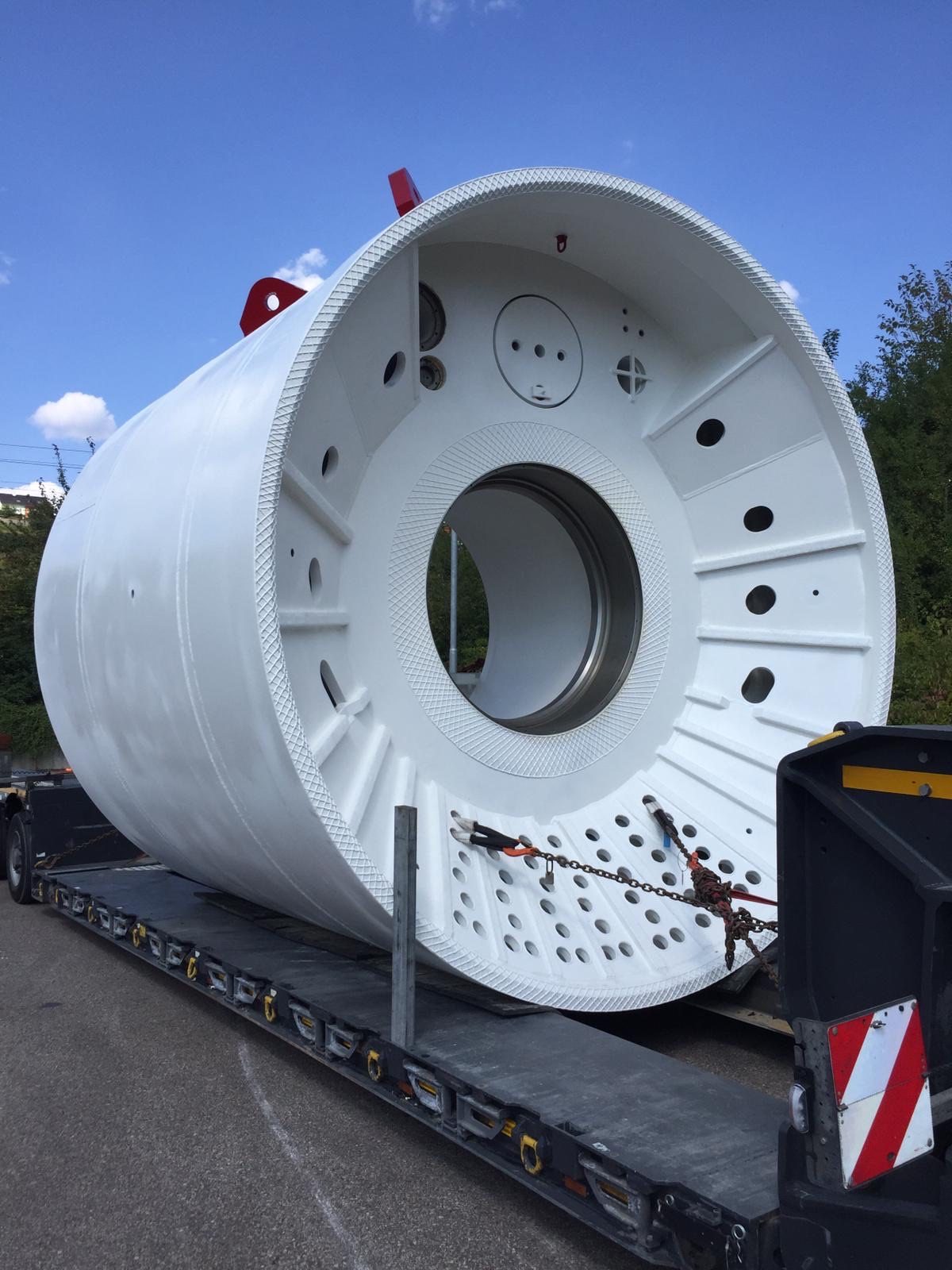
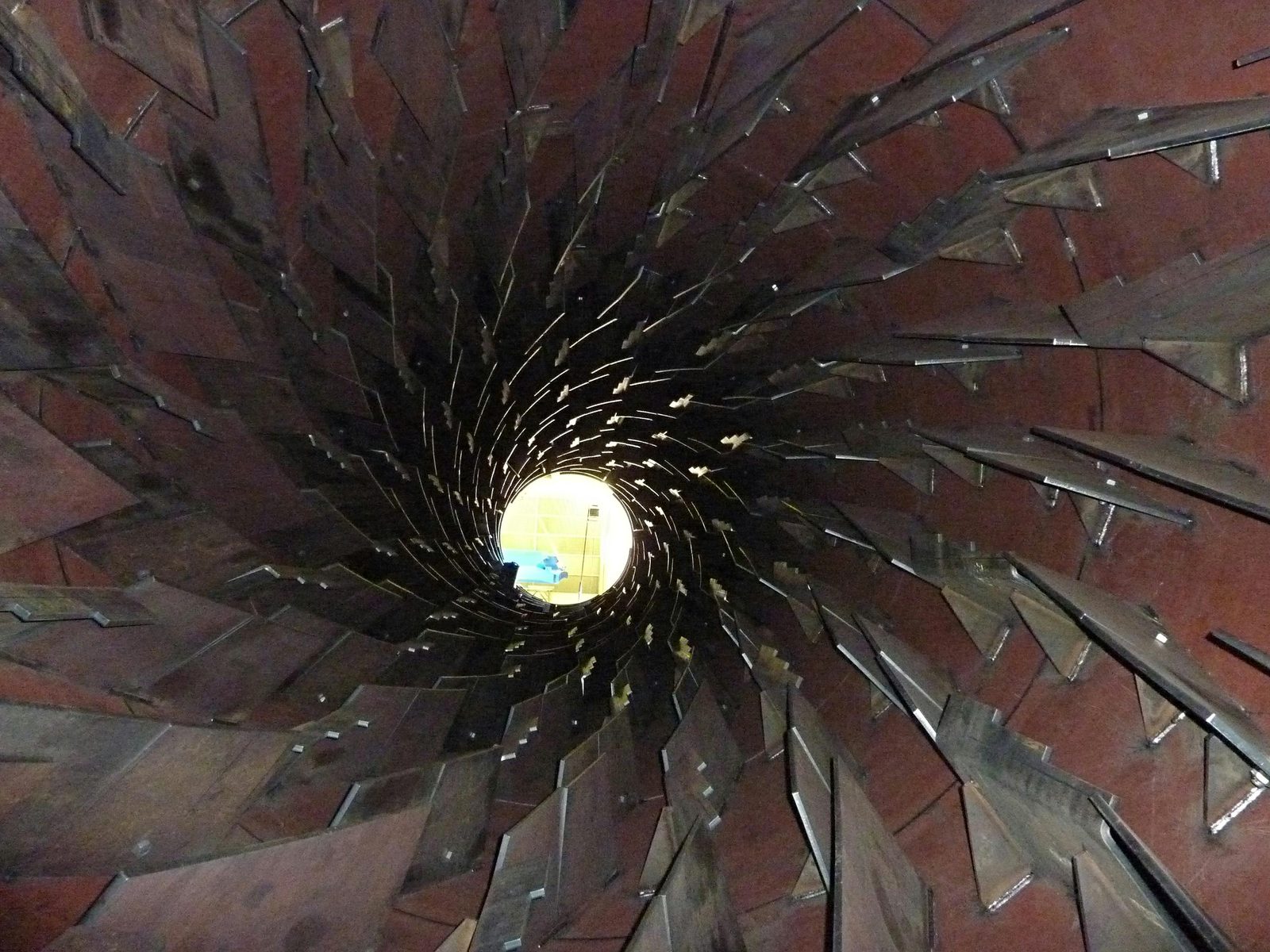
Three views into assembly: a rotary kiln on the welding turning rolls – the red indications on the welds come from the penetrant testing carried out on the component before further build-up – and the same component twice, the drum shell before assembly with its turned outer surface, hole pattern and flange bolt circle, and after assembly and painting completed with ring gear, bearing block and base plate.
Interference-fit joining – four views from assembly
Four views of an interference-fit joining operation: the sub-cooled, frost-covered shaft on the crane hook above the rope drum, the closed layer of frost with the key inserted, the entry into the hub bore – and the joined shaft in the primed drum end plate. A process we carry out project-specifically by agreement.
Component assembly at Bock – why
Bock has been manufacturing in Lorch for 63 years and assembles where the welding and machining is done:
Joining position instead of constrained position
Six welding turning rolls, four positioners and one load turning device bring every joint into an accessible position.
Handling up to 50 t
2×25 t overhead travelling crane in tandem operation, forklifts up to 16 t for in-house transport.
Fit from the same plant
Bearing seats, fitting holes and threads up to M60 are produced on our own boring mills – not at a supplier.
Tested before assembly
VT, PT and MT by our own inspectors to DIN EN ISO 9712 Level 2, before the assembly goes together.
Assembly depth as agreed
Pre-assembly, partial assembly or complete assembly – the scope of supply is defined before the order is placed.
Ready for dispatch ex works
Palletised, cribbed, secured and prepared for abnormal-load or heavy transport – ex works Lorch or carriage paid.
Frequently asked questions about component assembly
Which assembly levels are distinguished in component assembly?
A distinction is made between pre-assembly, partial assembly and complete component assembly; which level applies is set out in the order. Pre-assembly first joins individual groups at points, measures them and connects them permanently only once the position is right; partial assembly completes the assembly up to a defined scope, for example when add-on parts are to be fitted at the place of use or the transport dimensions are limited. Complete component assembly hands over the assembly aligned, measured and ready for installation.
Are installation and commissioning at the customer's site included in component assembly?
No. Assembly takes place at the Lorch plant and prices are ex works Lorch; installation and commissioning at the customer's site are not included and require an express agreement.
Are customer-supplied add-on parts and bought-in components integrated into the assembly?
Yes. The normal case is an order with our own manufacturing share: Bock manufactures the load-bearing parts itself and integrates customer-supplied add-on parts, bought-in components and sub-assemblies built in-house into the assembly. Which parts are supplied and which are manufactured is defined before the order is placed; rework and drilling on bought-in or customer-supplied components are also carried out.
Which connections are made in component assembly?
Joining is done by bolting, pinning and welding – with bolted connections using threads from M2 to M60, pin and articulated joints, as well as bearings and bearing seats. Interference-fit joining, in which the shaft is sub-cooled before insertion, is carried out by Bock project-specifically by agreement. Bearing seats, fitting holes and threads up to M60 are produced beforehand on our own boring mills in the same plant.
The scope of supply is defined before the order is placed: raw-joined, tested, coated or packed ready for dispatch, ex works Lorch or carriage paid. Dimensional reports, material certificates and inspection certificate 3.1 to EN 10204 are provided on a project basis; loading is carried out up to 50 t, including preparation for abnormal-load and heavy transport.
Structural Metalworker / Fitter (m/f/d)
Open position
Structural Metalworker / Fitter (m/f/d) — As a Structural Metalworker or Fitter (m/f/d), you will carry out fitting and assembly tasks on steel assemblies and special-purpose machinery structures at our site in 73547 Lorch, near Schwäbisch Gmünd, Baden-Württemberg.
Send us your drawing or 3D model, parts list and the desired assembly depth. We take on pre-assembly, partial or complete assembly – with components welded and machined in the same plant.