Crane capacity 50 t

2×25 t crane system in tandem lift – turning and positioning even with an unfavourable centre of gravity.

SAW longitudinal seams, boom up to 7 m

Fully automated ESAB systems for deep, high-strength seams on large-format structures.

Distortion control in-house

Flame straightening and vibratory stress relieving directly after welding – no furnace size limit, no external logistics.

Final machining in one piece

Portal milling up to 26,000 mm and vertical turning up to Ø 4,800 mm – without splitting the structure.

DIN EN 1090-2 EXC3

The highest execution class for load-bearing structures, including weld verification and documentation.

Heavy-load handling throughout the plant

Over 50 crane installations, including 37 wall-mounted jib cranes, plus heavy-duty forklifts up to 16 t.

Welded Structures to Drawing – Focus on Dimensions and Load Capacity

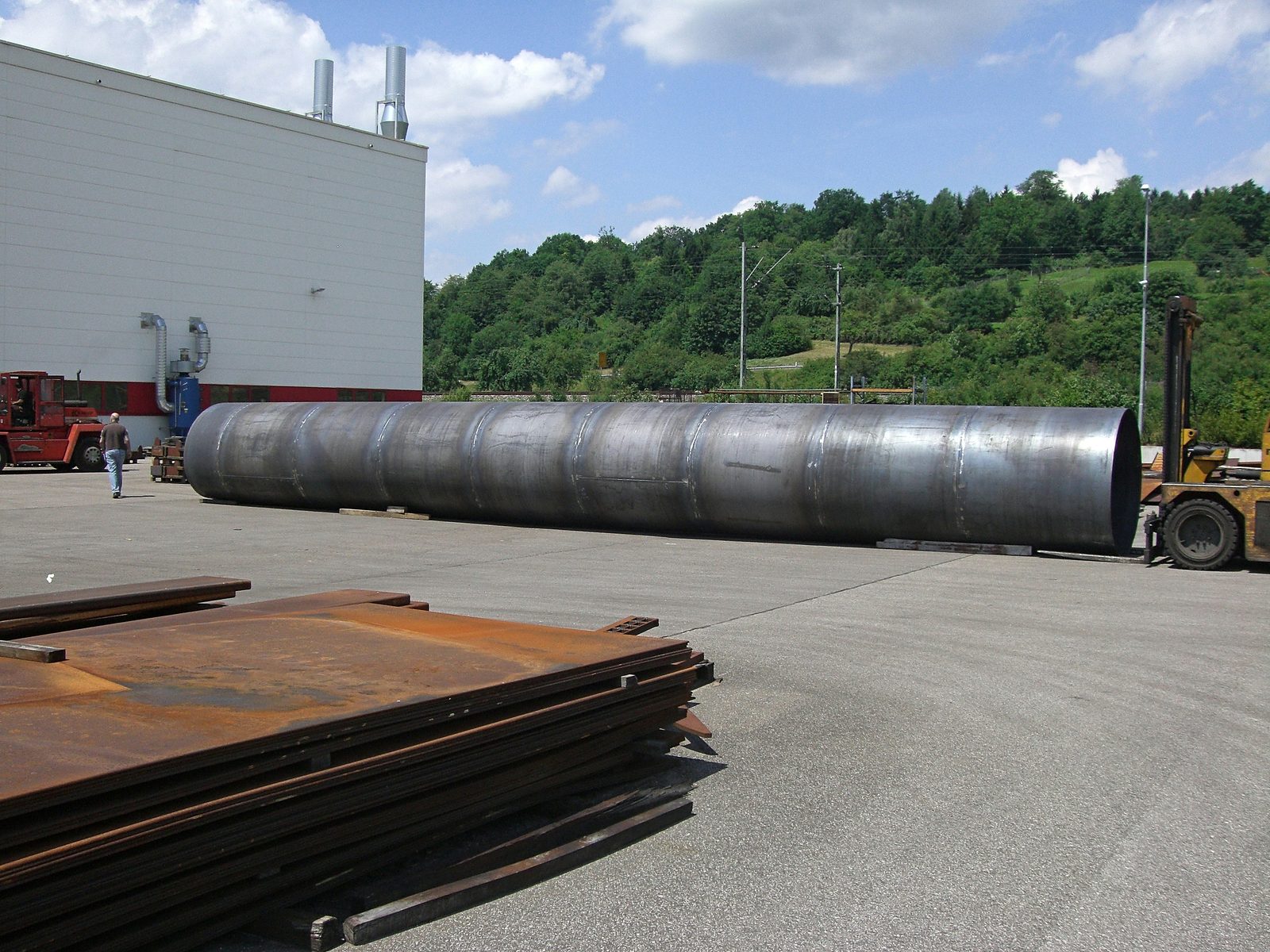
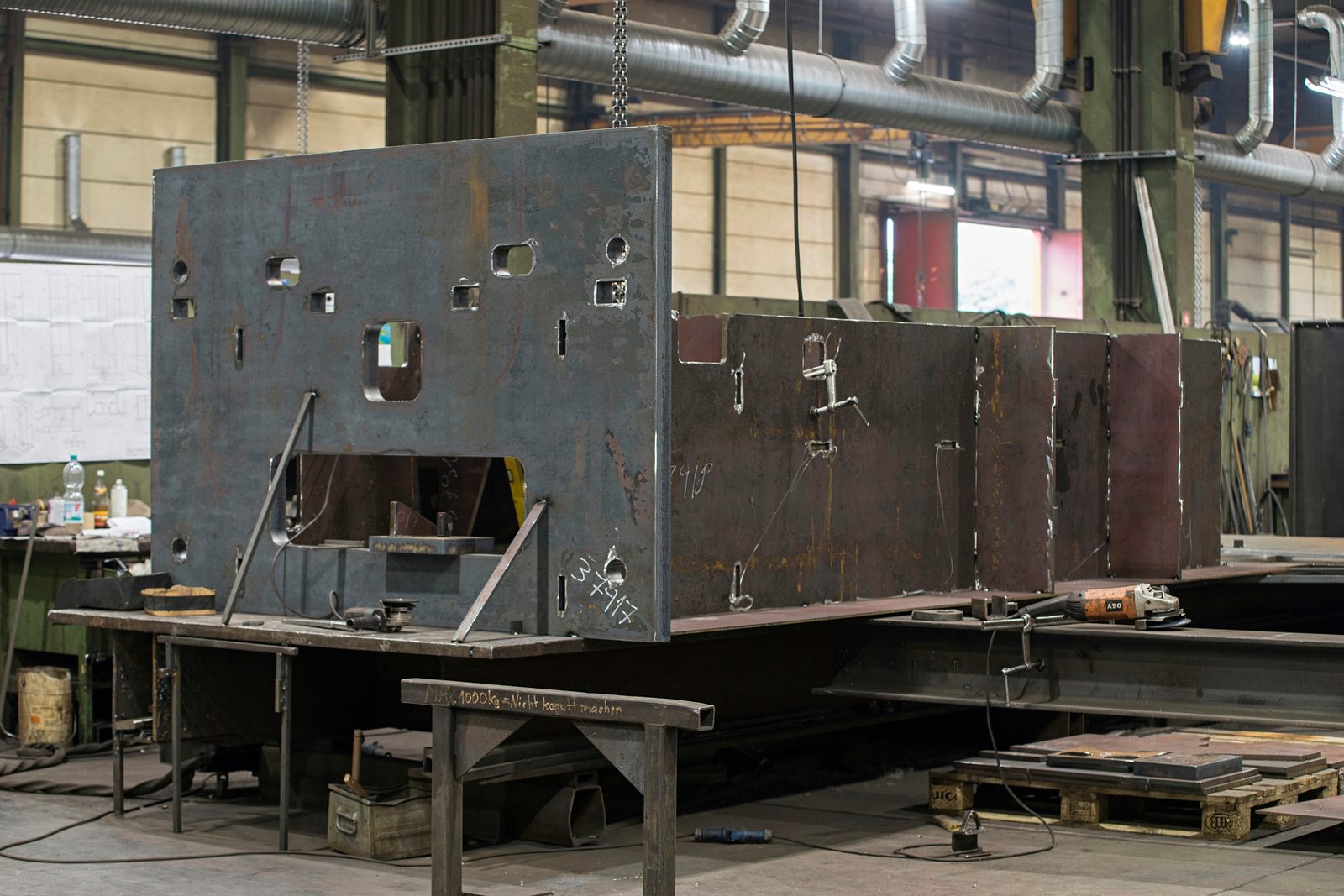
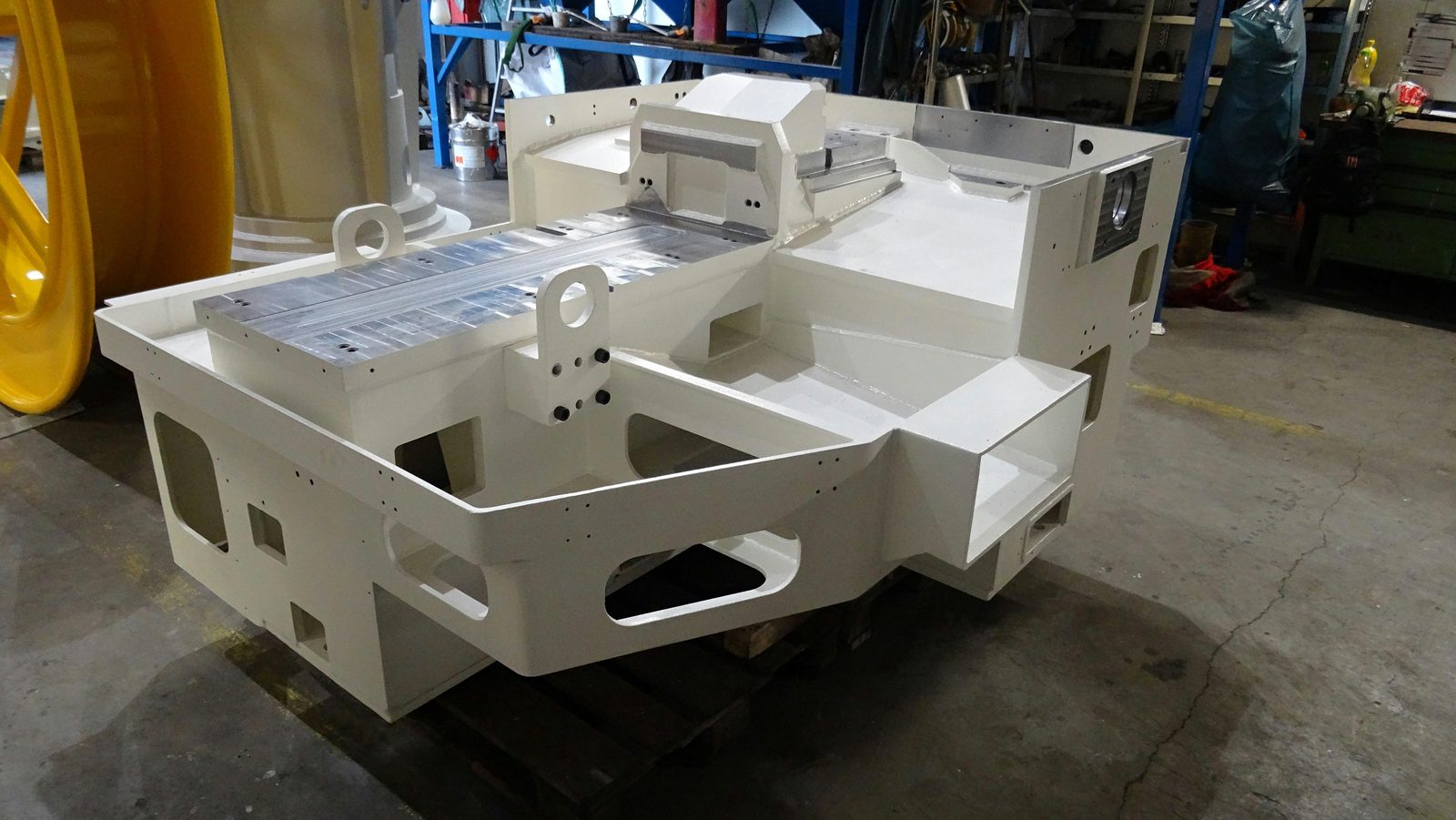
Heavy welded structures at Bock are large-format, load-bearing steel components – from solid single-piece structures to complex welded assemblies with demanding requirements for dimensions, weight and geometric accuracy.

Unlike welded assemblies, the focus is not on the number of individual parts but on structural size, component weight and handling effort. Normative requirements, close tolerances at large dimensions and high-strength materials define the component profile.

Production is carried out to customer drawings or specifications. CNC machining, shot blasting, painting and assembly operations can be integrated into the project workflow as required.

Large components up to 50 t in the flat position

Deep welds on heavy sections

Fully automatic submerged arc welding where the weld volume becomes too large for manual processes – ESAB masts with up to 7 m outreach.

Welding in the flat position

The crane system turns the structure between passes instead of welding it in a constrained position – weld quality comes from the position.

Distortion correction without furnace limits

Flame straightening and vibratory stress relief follow immediately after the weld – in the same plant, with no transport to third parties.

Heavy-Parts Handling up to 50 t – 2×25 t Crane System

The production facility is equipped with a 2×25 t crane system providing a total lifting capacity of 50 t. This allows large-format welded structures to be handled, turned and positioned safely – even with awkward dimensions or unfavourable centres of gravity.

This crane capacity is a structural prerequisite for components that cannot be moved or fabricated in standard workshops. It is not an optional feature but an integral part of the production infrastructure.

What matters is not just the lifting itself, but turning the component during welding: a structure that can be welded in the flat position achieves better weld quality than in constrained positions. The crane equipment therefore directly determines what weld quality is achievable on a heavy component at all.

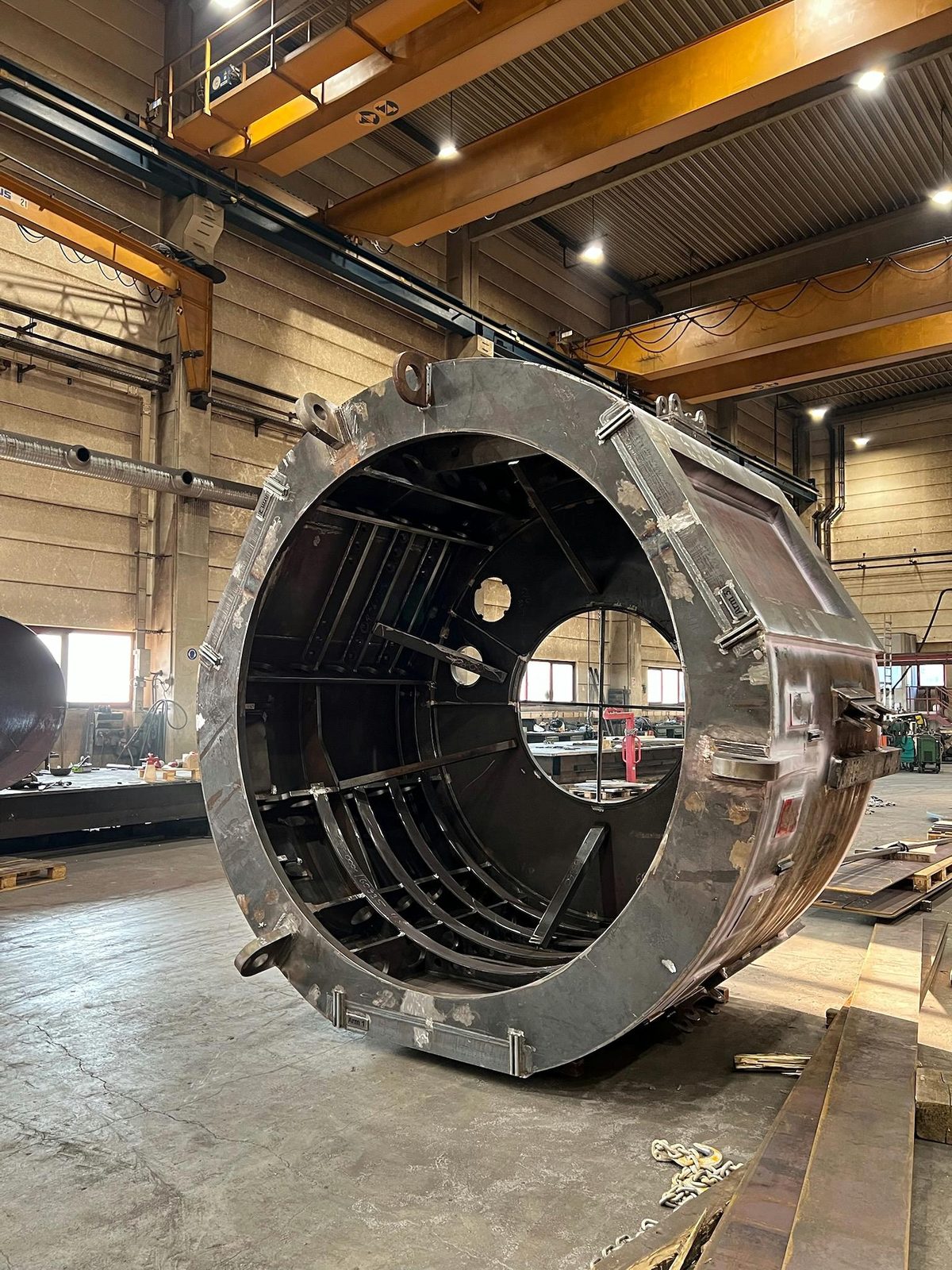
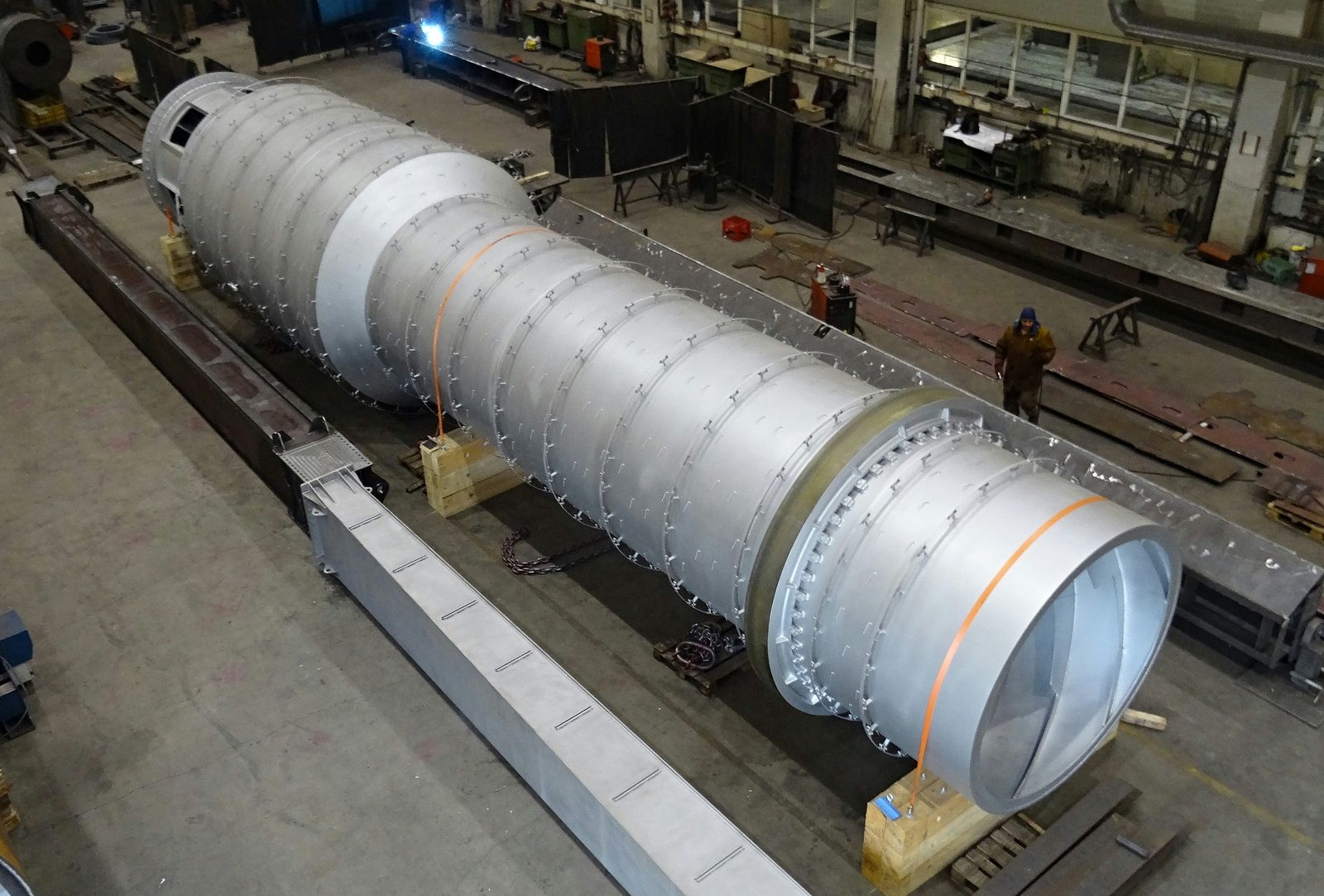
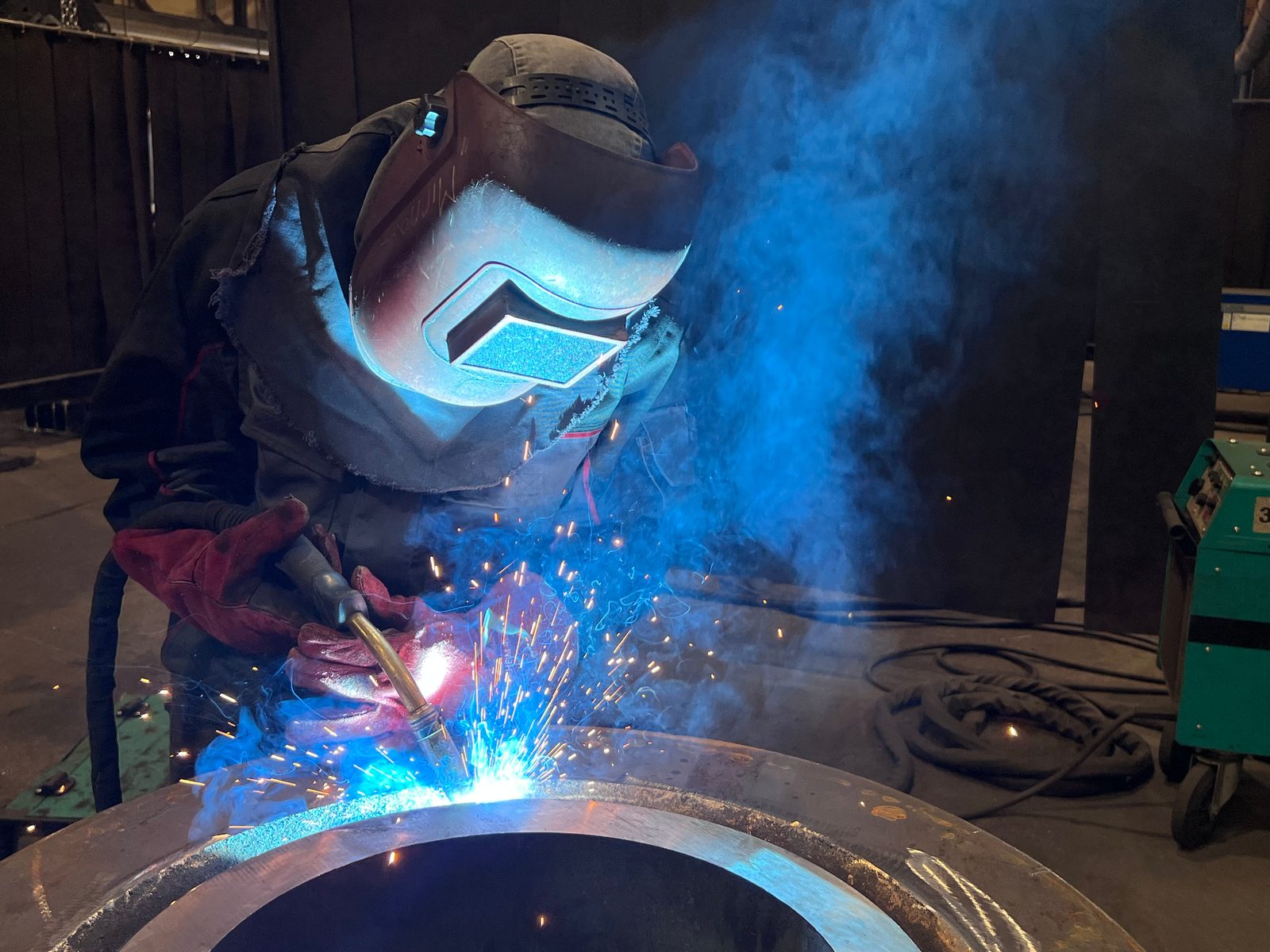
Contract welding in steel construction – cone with radial vanes, MAG welding to DIN EN 1090 at Bock Maschinenbau Lorch

Cranes & heavy-load handling

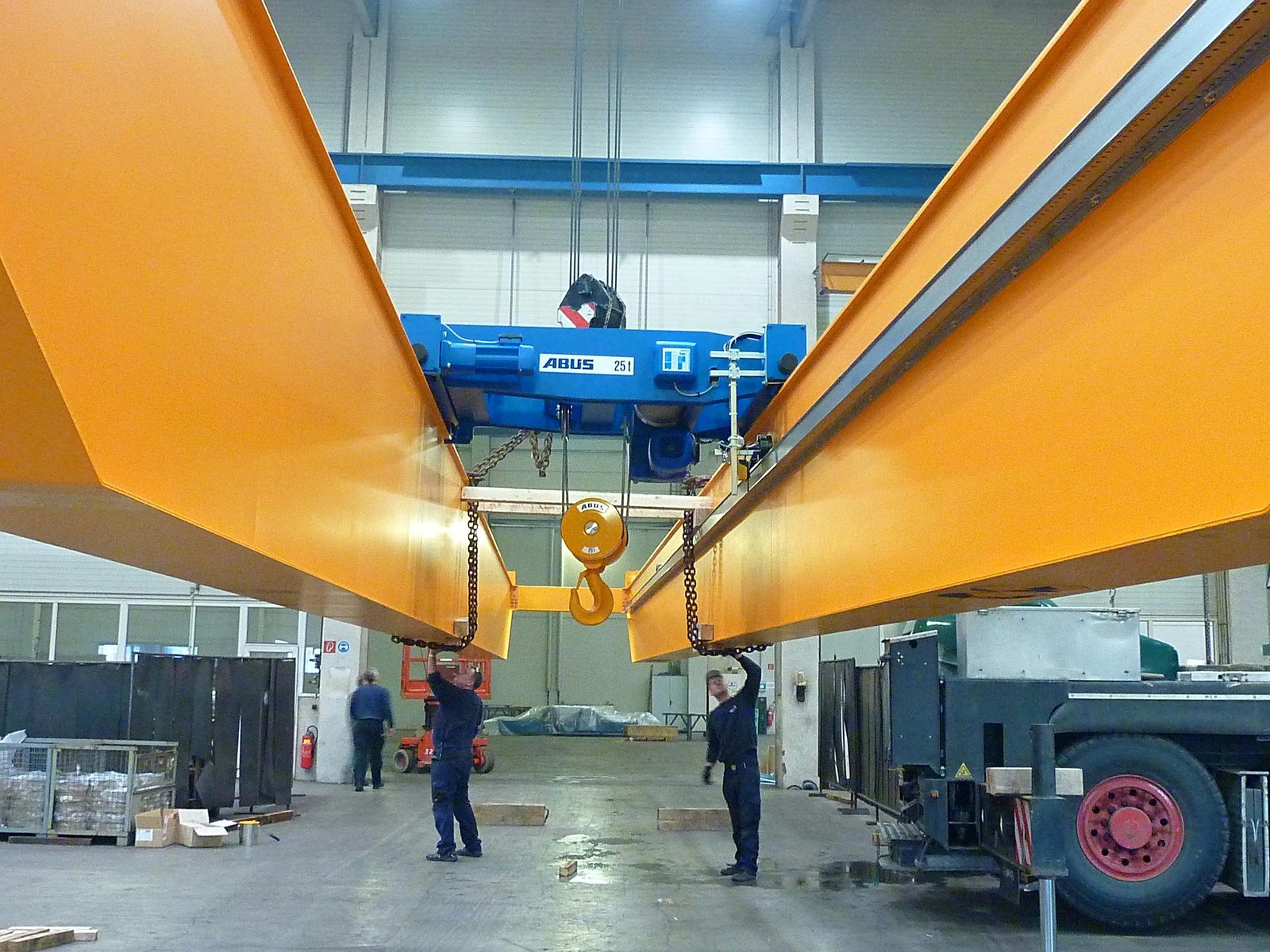
Over 50 crane installations in the plant – bridge cranes up to 50 t in tandem lift, 37 wall-mounted jib cranes at the workstations and heavy-duty forklifts up to 16 t move heavy components safely through the entire production.

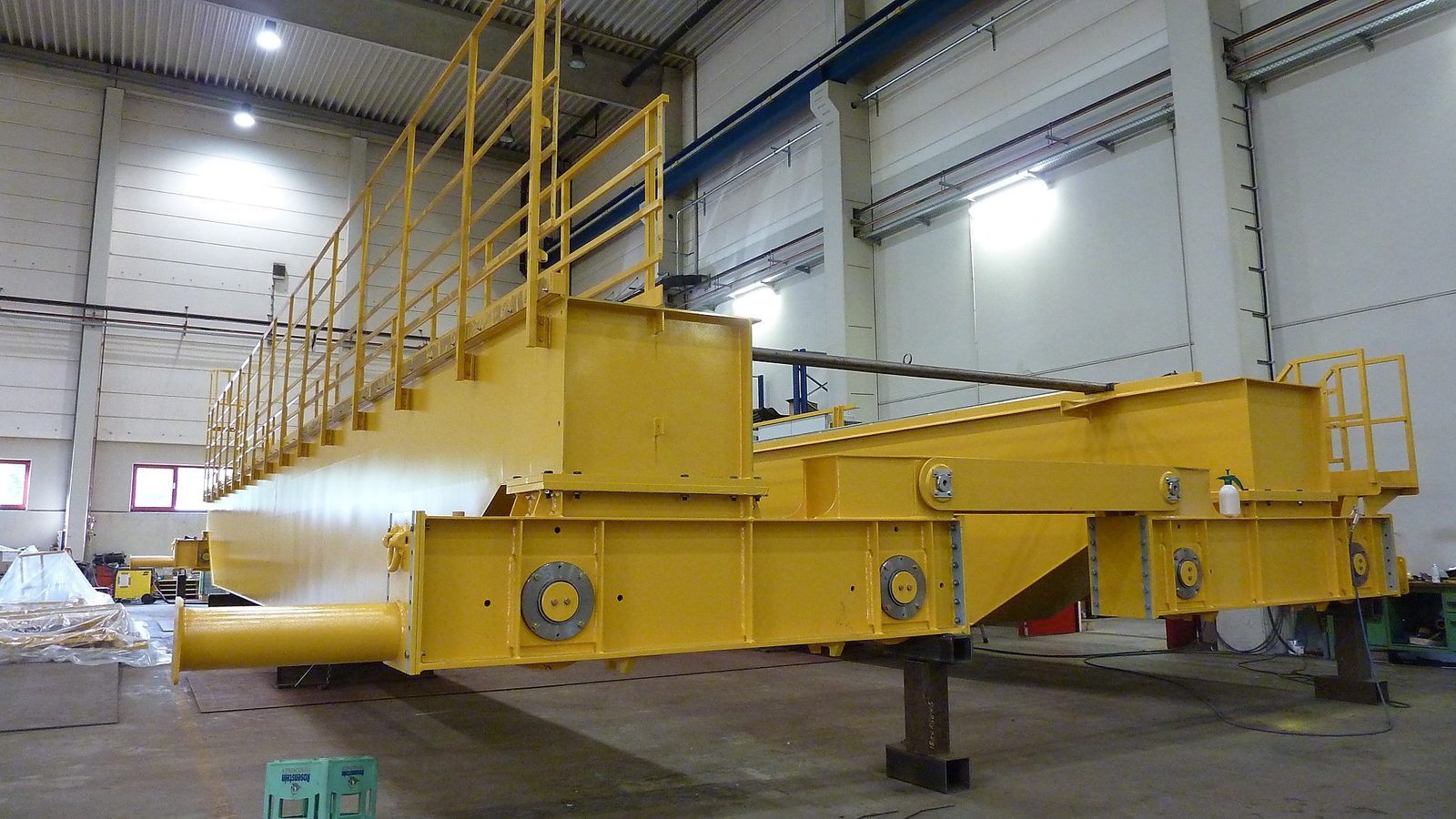
Overhead crane lifting a crane girder during assembly in the production hall – heavy-load handling at Bock Maschinenbau GmbH Lorch

MAG, TIG and Submerged Arc Welding for Heavy Structures

Depending on component geometry, material and seam requirements, Bock applies different welding processes:

MAG Welding
is the standard process for structural steel components and complex structures. Suitable for a wide range of materials, including high-strength structural steels.
TIG Welding
is used where particularly high seam quality and close tolerances are required – for example on stainless steel structures or quality-critical weld joints.
Submerged Arc Welding (SAW)
is the process for deep, high-strength seams on heavy components. Fully automated ESAB systems with booms up to 7 m reach allow high-strength longitudinal seams on large-format structures.

Process selection is based on the requirements of the component. Where necessary, multiple welding processes may be combined within a single structure.

European Quality Steels – from Structural Steel to Fine-Grain Steel

Bock uses predominantly European quality steels with traceable origin. Materials are selected according to drawing and requirements:

  • Structural steel S235, S355 – Standard structural steel
  • Fine-grained structural steel up to S1100 – high-strength, weldable
  • Hardox 400 / 500 – wear-resistant steel for high-stress components
  • Stainless steel 1.4301, 1.4571 – corrosion-resistant
  • Special steels to drawing and customer specification

The higher the strength and plate thickness, the more strongly the heat input affects dimensional accuracy and residual stress. That is why, on heavy structures, the choice of material is decided together with the post-treatment step rather than in isolation.

Certified Welding Contractor – DIN EN 1090-2 EXC3, EN ISO 3834-2 and NDT

Bock Maschinenbau is a certified welding contractor to DIN EN 1090-2 EXC3 and EN ISO 3834-2. Complemented by a certified quality management system to DIN EN ISO 9001:2015, these standards form a binding quality framework for the fabrication of welded structures: welding process qualifications, inspection requirements and documentation obligations are an integral part of production. Current certificates are available as PDF for clients with verification requirements.

Quality Assurance and Non-Destructive Testing

For heavy structures the inspection focus lies differently than for multi-part assemblies: what is critical is not the number of joints but the weld cross-section. Deep submerged-arc welds in thick plate cannot be assessed from the surface alone, which is why, at the corresponding weld quality class, ultrasonic testing by our cooperation partner is added in-house – complementing visual, liquid penetrant and magnetic particle testing with Level 2 qualification of our own inspectors to DIN EN ISO 9712. Scope and documentation are defined per component according to drawing and normative requirements.

  • Visual Testing (VT), Liquid Penetrant Testing (PT) and Magnetic Particle Testing (MT) are available in-house with Level 2 qualification to DIN EN ISO 9712.
  • Ultrasonic Testing (UT) is available on a project basis in-house through certified testing personnel of our cooperation partner. Volumetric testing (radiographic testing RT, ultrasonic testing UT) is, insofar as commissioned, provided by qualified partners.

This covers surface indications, cracks, near-surface irregularities and internal irregularities in suitable components and weld joints.

Inspection and documentation requirements are agreed on a project basis according to drawing, normative requirements and customer specifications – ensuring that quality assurance is tailored to the individual structure rather than applied as a blanket measure.

Certificates for heavy welded structures

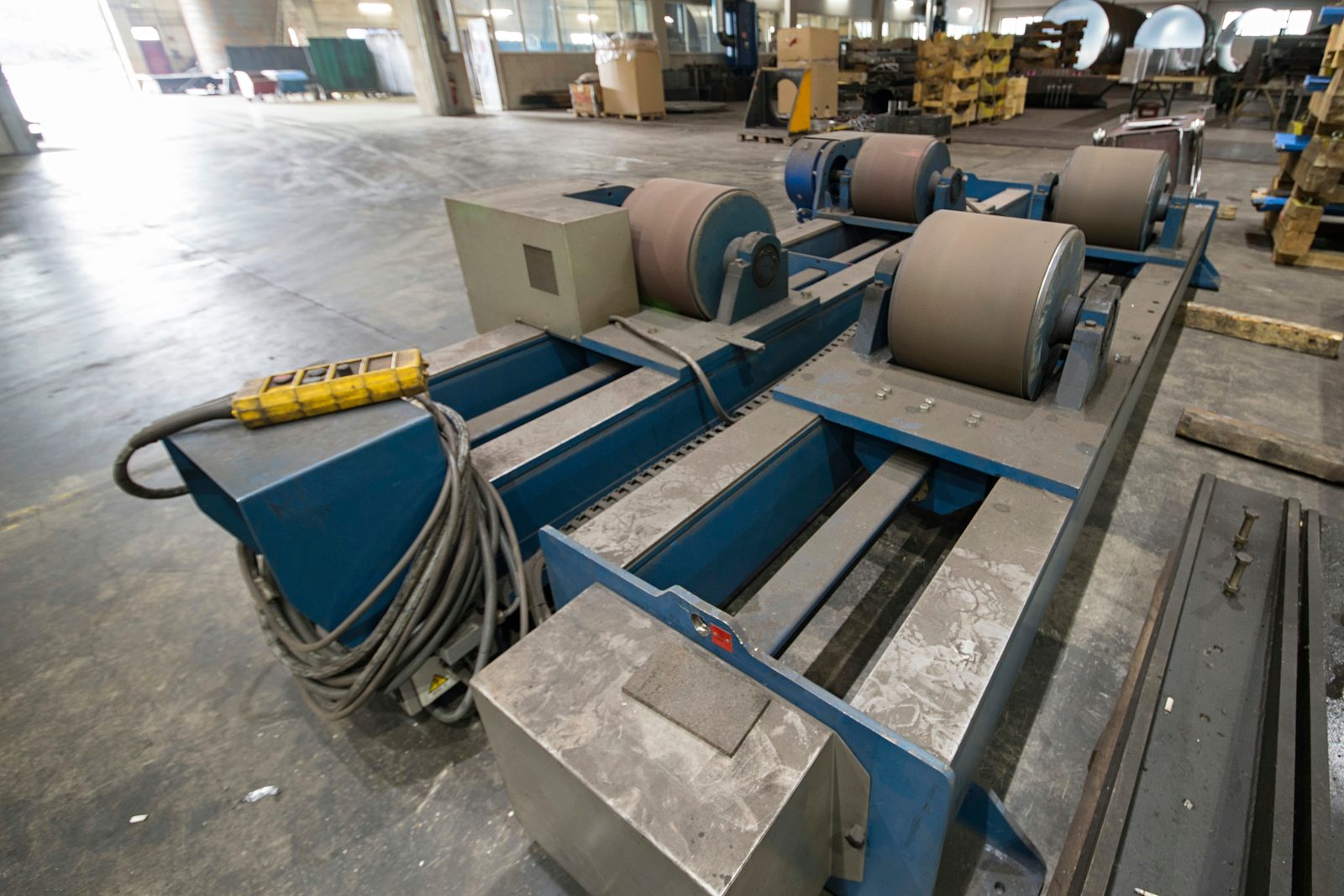
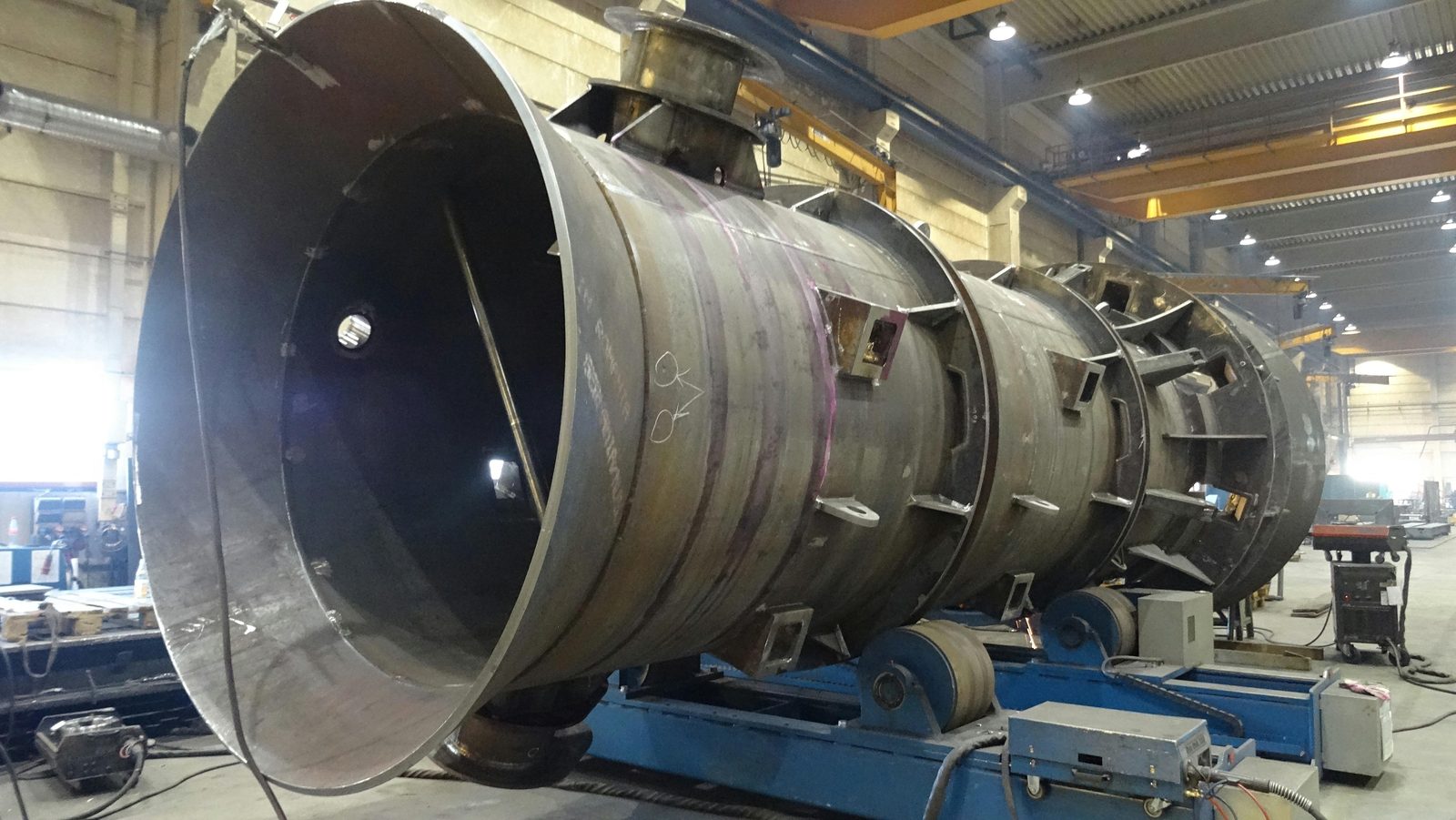
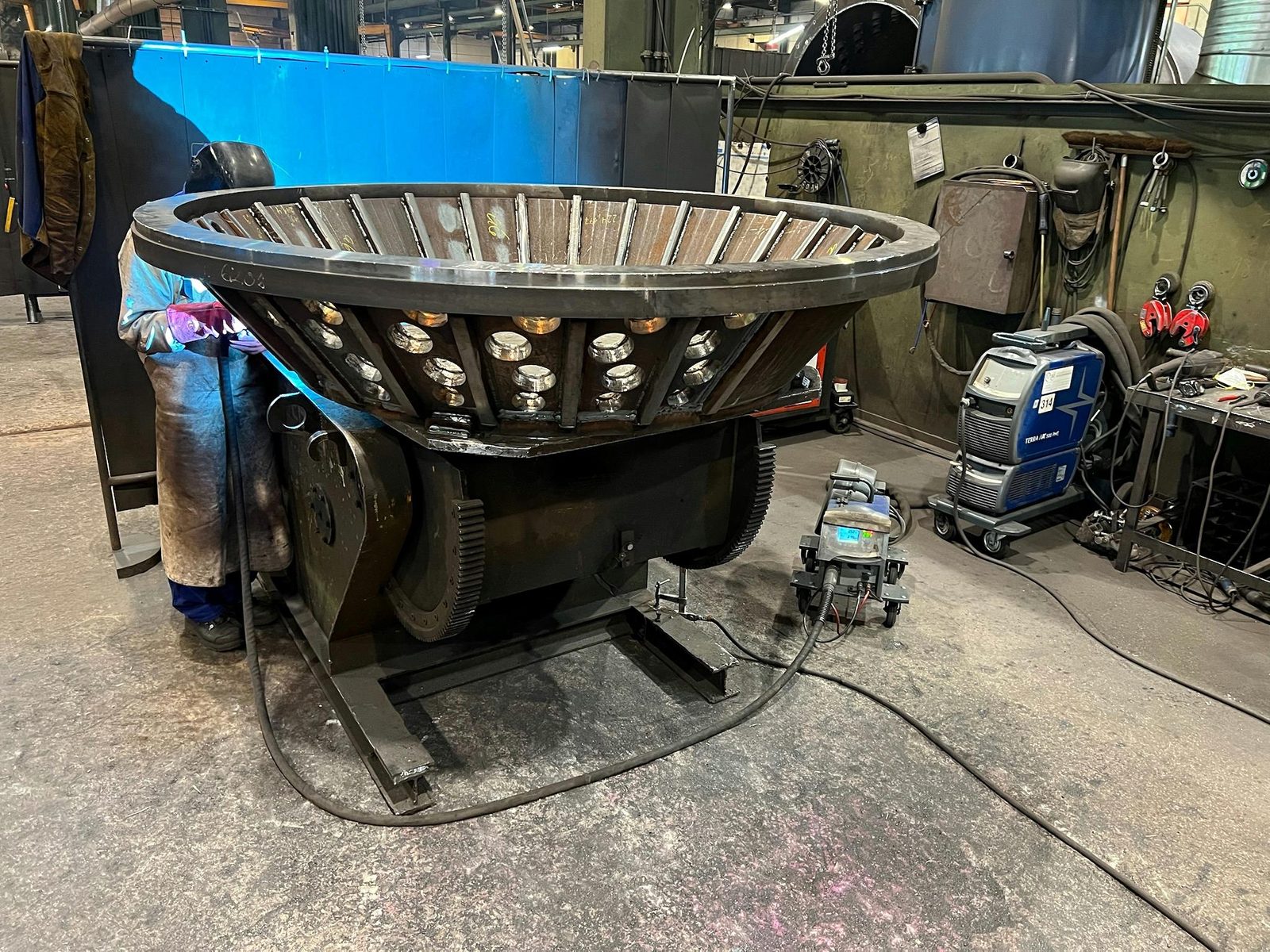
Heavy welded structures to DIN EN 1090-2 EXC3 – welding rotator with turning rolls – for welded structures and assemblies

Welded, tested and fully machined — with no stop in between.

CNC Machining, Shot Blasting, Painting and Assembly Where Required

Heavy welded structures frequently require further production steps. The following operations can be integrated into the project workflow as required:

CNC Heavy Machining
CNC heavy-part machining up to 50 t, portal milling up to 26,000 mm, vertical turning up to Ø 4,800 mm.
Surface Preparation
Shot blasting to Sa 2.5 in a large-format blast chamber.
Corrosion Protection and Painting
Industrial painting to EN ISO 12944 in a 25 × 7 × 6 m large-format spray booth.
Assembly
Project-specific pre-assembly or partial assembly of components.

Heavy welded structures can therefore be not only welded but also machined, surface-prepared, coated or pre-assembled within the same production facility – subject to agreement and project requirements.

Typical heavy welded structures

Heavy welded structures from Bock are produced for technically demanding applications where dimensions, weight and certification are critical:

  • Load-bearing and highly stressed structures with normative documentation requirements
  • Large-format individual components and structures produced without splitting
  • Structures with close dimensional and geometric tolerances at large dimensions
  • Wear-loaded structures with Hardox content
  • Structures for demanding projects in crane, plant and special vehicle engineering

If, on the other hand, the size of the individual component is not the focus, but rather the number of joints and dimensional accuracy across many connections, the production of welded assemblies provides the appropriate framework.

XXL drum housing heavy-duty steel fabrication – welded structure to DIN EN 1090, complete manufacturing at Bock Maschinenbau Lorch

Heavy Welded Structures – Why Bock

Bock Maschinenbau has been producing heavy welded structures at its Lorch site for over six decades:

Large-part manufacturing for custom machinery and steel construction: welded assemblies and vessels for plant engineering
Crane Capacity
2×25-⁠t crane system – 50 t total lifting capacity, plus over 50 crane installations for transport throughout the entire production
Certification
Turning heavy structures during production instead of welding in constrained positions – the prerequisite for uniform weld quality on the large component
Material Expertise
Fully automatic submerged arc welding with 7 m booms for long, deep longitudinal seams instead of many short manual seams
Process Range
MAG, TIG and SAW welding to specification
Quality Assurance
Portal milling up to 26 m and vertical turning up to Ø 4,800 mm – the structure does not have to be split for machining
Downstream Operations
DIN EN 1090-2 EXC3, EN ISO 3834-2 and DIN EN ISO 9001:2015, with ultrasonic testing of thick-walled welds via our cooperation partner

Crane, plant and special-machine builders from the Stuttgart area and the DACH region source load-bearing heavy-duty welded structures up to 50 t from our EXC3 facility in Lorch.

Frequently asked questions about heavy welded structures

What is the difference between heavy welded structures and welded assemblies?

With heavy welded structures, the focus is on structural size, component weight and handling effort; with welded assemblies, it is on the number of joints and dimensional accuracy across many connections. Accordingly, what counts on heavy structures is less the number of welds than their length and cross-section – long longitudinal seams in the SAW process, connections and repairs by hand.

Are heavy welded structures turned during welding?

Yes. A 2×25 t crane system with 50 t total lifting capacity turns the structure between passes, so that welding is done in the flat position instead of a constrained position – even with unwieldy dimensions or unfavourable centres of gravity. For transport through production, over 50 crane installations, including 37 jib cranes, and heavy-duty forklifts up to 16 t are available.

How are welding distortion and residual stresses on heavy welded structures dealt with?

By flame straightening and vibration stress relief, which follow immediately after welding in the same plant. Flame straightening corrects welding distortion thermally without material removal and without size limitation from furnaces or fixtures; vibration stress relief (VSR) reduces residual stresses without heat, even on structures that do not fit into any annealing furnace.

Does a heavy welded structure have to be split for final machining?

Not as long as it fits into the working envelopes: portal milling up to 26 m travel and vertical turning up to Ø 4,800 mm turning diameter and 25 t table load allow the structure to be finish-machined in one piece.

Welder (m/f/d)

Open position

Welder (m/f/d) — We are looking for welders (m/f/d) to join our team in 73547 Lorch, near Schwäbisch Gmünd, Baden-Württemberg. At Bock Maschinenbau, you will weld challenging steel assemblies, special machinery parts and large structures — MAG, TIG and submerged arc welding.

Apply now
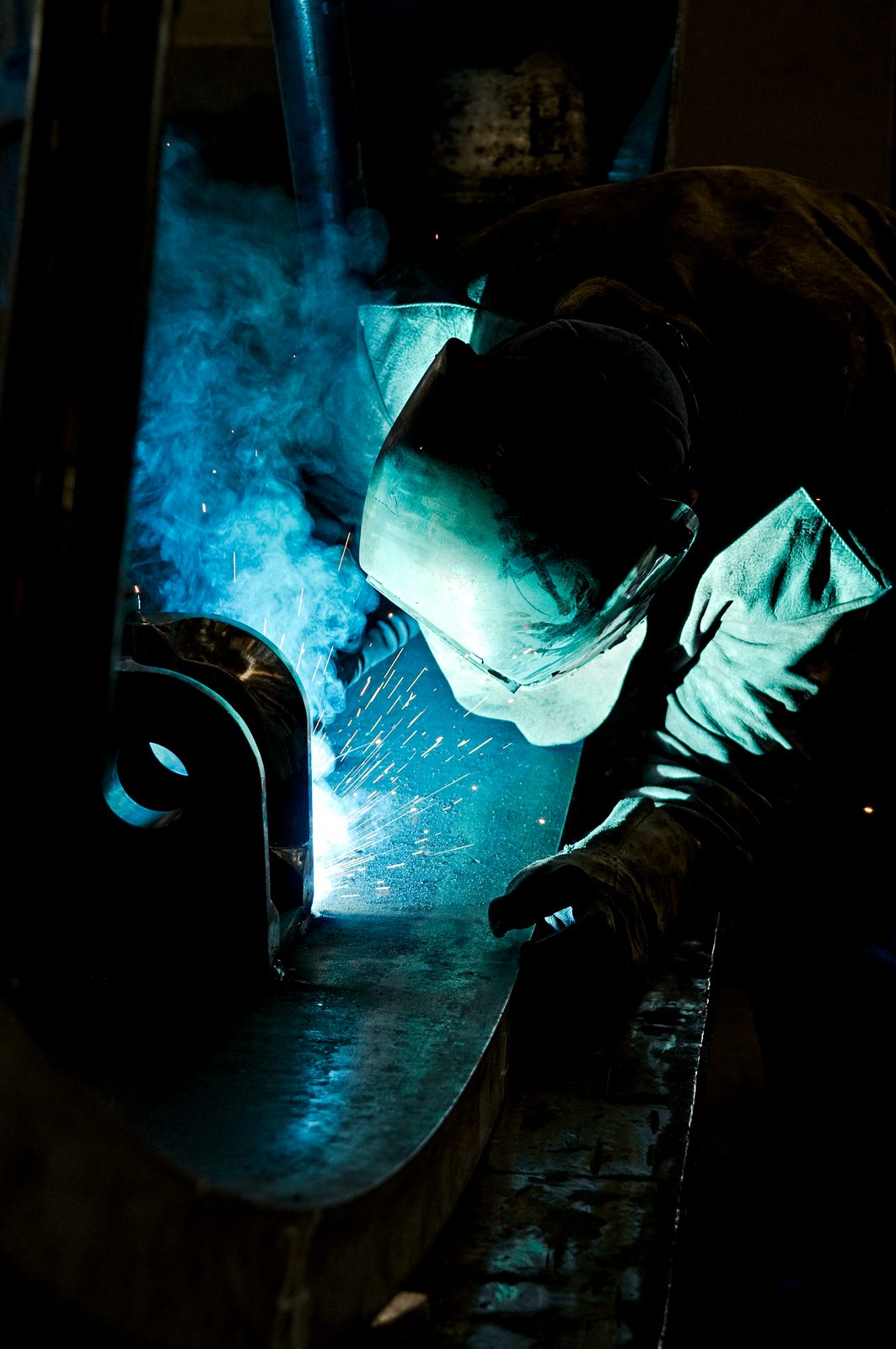
Welder at the certified welding contractor for custom machinery and contract manufacturing in metal fabrication – welded assemblies DIN EN 1090, Bock
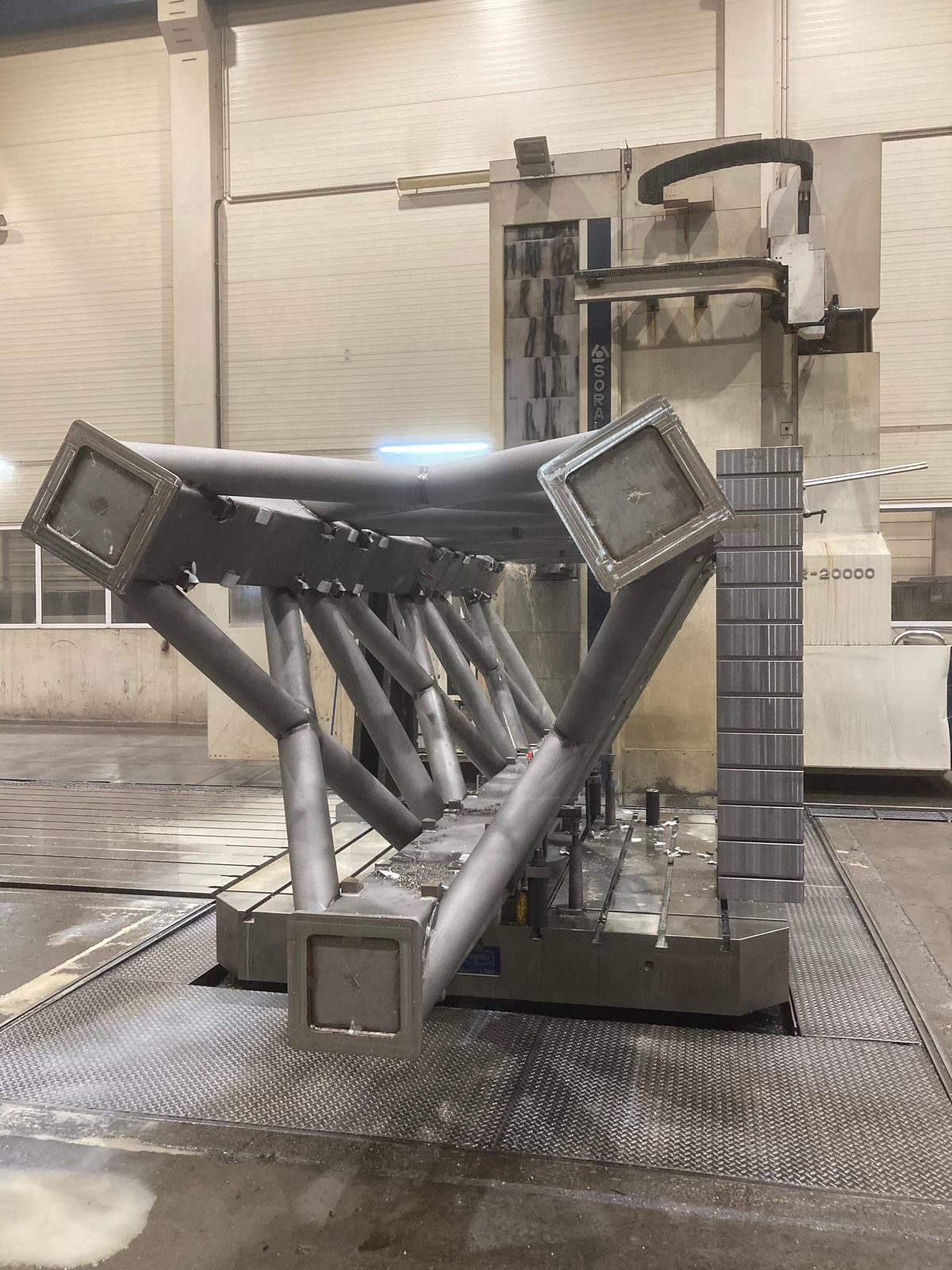
Welded tubular truss with diagonal tube braces and milled connection faces on the square tube ends

Request Heavy Welded Structures

Send us your drawing, material, plate thickness, largest dimension and inspection requirements. We weld, straighten, stress-relieve and machine the structure at the same site – or take on the welding only.

Your contacts
Alexander Schulz, Technical Sales, Bock Maschinenbau GmbH Lorch

Alexander Schulz

Technical Sales

For new enquiries, quotations and technical questions on the feasibility of your project.

Jochen Hack, Technical Sales, Bock Maschinenbau GmbH Lorch

Jochen Hack

Technical Sales

For new enquiries, quotations and technical questions on the feasibility of your project.