Execution classes to EN 1090: what EXC1 to EXC4 mean and who sets them
Contents
What an execution class describes
The title block of a steel drawing reads “EXC3”. That short entry has consequences for the whole order: how the welding is done, which tests are required and which proofs have to be on hand at delivery.
The basis is EN 1090-2 for the execution of steel structures. EXC1 carries the lowest requirements; they rise up to EXC3. EXC4 builds on EXC3 and adds project-specific requirements. In Germany, Part 2 is published as DIN EN 1090-2:2024-09, the adoption of EN 1090-2:2018+A1:2024. Part 1 of the series covers conformity assessment, Part 3 the technical rules for aluminium structures.
The class can apply to the whole structure, to individual components or to single details. Different classes can therefore be required within one assembly. An EXC3 certificate also covers EXC1 and EXC2; it is not enough for EXC4.
EXC1 to EXC4: the difference at a glance
From EXC1 to EXC4 the requirements rise step by step – for weld quality, for the testing of the welds and for the proof of the materials. The four cards show this jump, and where Bock stands with EXC3.
-
EXC1
Lowest requirements
- Welding
- ISO 3834-4 (elementary)
- Quality level
- ISO 5817, level D
- Traceability
- –
-
EXC2
Moderate requirements
- Welding
- ISO 3834-3 (standard)
- Quality level
- ISO 5817, level C
- Traceability
- via the identification
-
EXC3Bock certified
High requirements
- Welding
- ISO 3834-2 (comprehensive)
- Quality level
- ISO 5817, level B
- Traceability
- full
-
EXC4
Highest requirements
- Welding
- ISO 3834-2 (comprehensive)
- Quality level
- Level B, with additions
- Traceability
- full
EN 1090-2 assigns the parts of EN ISO 3834 to the classes; the quality levels to EN ISO 5817 follow the overview by the Austrian Economic Chamber on the 2018 edition. For individual cases, such as an undersized fillet throat, the standard names a different level per class. Full traceability is required from EXC3, and in EXC2 via the identification. An EXC3 certificate also covers EXC1 and EXC2; it is not enough for EXC4. The standard text and your project's execution specification remain authoritative.
Who sets the execution class? The structural designer
The structural designer, or the customer's responsible engineer, sets the class. To do so they assess the consequences of a failure for people, the economy and the environment (consequence class CC1 to CC3), together with the type of action, for example static loads, fatigue or earthquake. The criteria come from Eurocode 3 (EN 1993-1-1); which edition applies for building control is for the designer to clarify. The roles divide up as follows:
| Party | Task | Does not decide |
|---|---|---|
| Structural designer or responsible engineer | Sets the execution class for the structure, component or detail, along with the quality level, scope of testing and acceptance criteria, and records it in the execution specification | Which welding process is used and in which sequence fabrication takes place |
| Welding shop (manufacturer) | Meets the requirements with welding procedure specifications, qualified procedures, qualified welders, welding coordination, testing and documentation | Which execution class a component needs |
| Notified body | Assesses the manufacturer's factory production control, certifies it up to an execution class and audits it at regular intervals | The execution class of an individual order |
This decision needs the loads, the use and the possible consequences of a failure. Those details cannot be read in full from a fabrication drawing alone.
What the entry on the drawing means for fabrication
The execution class belongs to the requirements placed on the component, just like material, dimensions and tolerances. From it follow duties for weld quality, supplementary testing, traceability and welding coordination.
The fabricator plans the practical execution for this: the welding process, the run sequence, a suitable welding procedure specification and the testing stages. The drawing need not prescribe the process itself. The required execution class, by contrast, must be clear from the order documents.
Additional requirements can appear in the execution specification, for example for individual welds. Drawing and specification are therefore read together before fabrication and testing are planned.
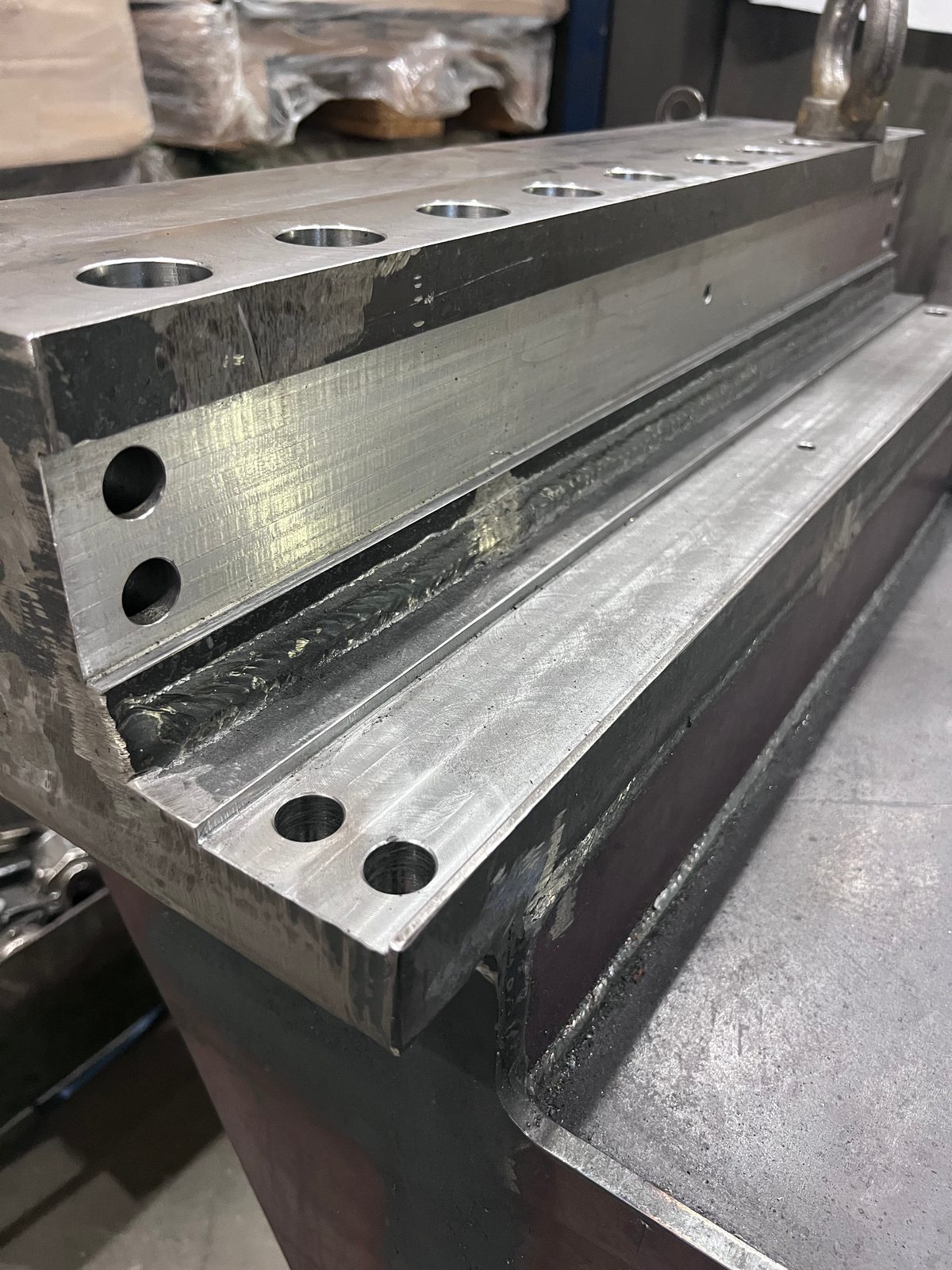
No execution class on the drawing? We ask before we quote
If the entry is missing, we make no assumption. Our Technical Terms of Delivery govern this in § 5.4: the execution class (EXC), the weld quality, the scope of testing and the acceptance criteria that apply to the order are to be set by the customer or the responsible engineer in the contract documents (execution specification). If those details are missing, we hold execution until they are clarified. The same rule applies to the material details under § 3.1.
Whether EXC2 applies automatically when nothing is stated is answered differently across the technical literature. The overview by the Austrian Economic Chamber on the 2018 edition writes that this earlier rule has lapsed and that the class must always be set unambiguously; other accounts still carry EXC2 as the default. For our calculation this is not decisive. The query clarifies which testing and documentation effort has to be included in the price; an assumed class would leave exactly that open.
If EXC4 is in the documents, the component lies outside our certificate, which reaches up to EXC3. We only carry out work within the scope of our valid certifications, and we say so before the quotation in such a case.
What EXC3 requires of the welding shop
EXC3 affects several areas at once. The most important are:
- Quality requirements for welding: the shop meets the comprehensive quality requirements to EN ISO 3834-2, from the review of requirements before accepting the order, through welding procedure specifications and consumables, to the calibration of measuring equipment.
- Welding coordination: from EXC2 the standard requires welding coordination to EN ISO 14731. Which level of knowledge it needs is set by a table in the standard, according to execution class, steel grade and plate thickness.
- Quality level: in EXC3 the visual inspection assesses the welds to quality level B of EN ISO 5817, the strictest of the three levels.
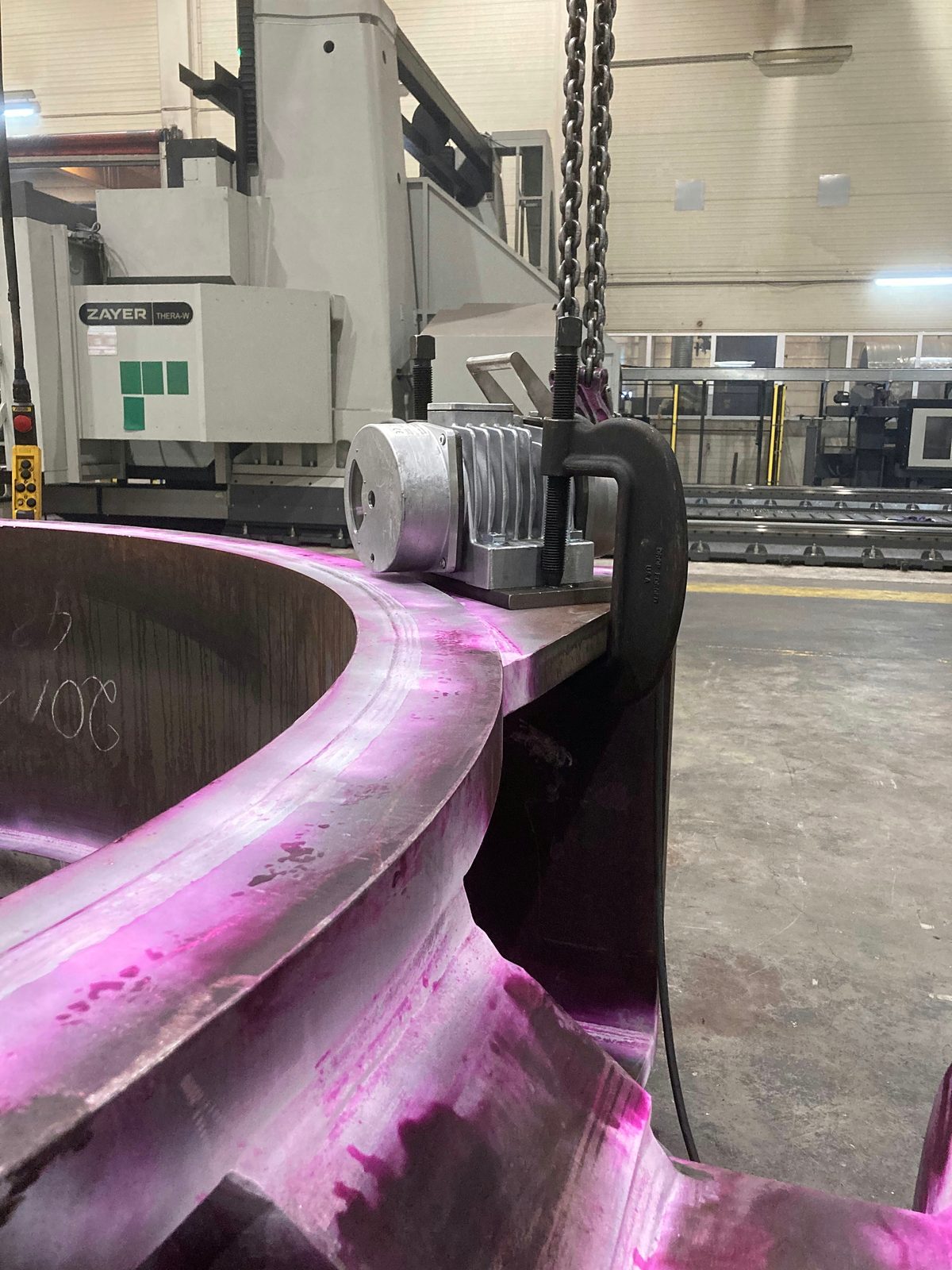
- Supplementary non-destructive testing: in addition to visual inspection, the standard prescribes a minimum amount of further testing, for example magnetic particle, penetrant or ultrasonic testing. The proportion rises with the execution class and depends on the weld type and the loading.
- Traceability: in EXC3 and EXC4 the materials must be traceable through every fabrication stage, from goods inward to handover. At cutting, the identification is therefore transferred to the individual parts.
- Qualified welding procedures: every welding procedure specification rests on a procedure qualification, for example to EN ISO 15614-1.
- Qualified welders: anyone who welds proves their qualification in a test to EN ISO 9606-1.
The actual testing proportions and qualification requirements depend, among other things, on the weld type, the loading, the material and the plate thickness. They are derived from the standard and the execution specification for the order.
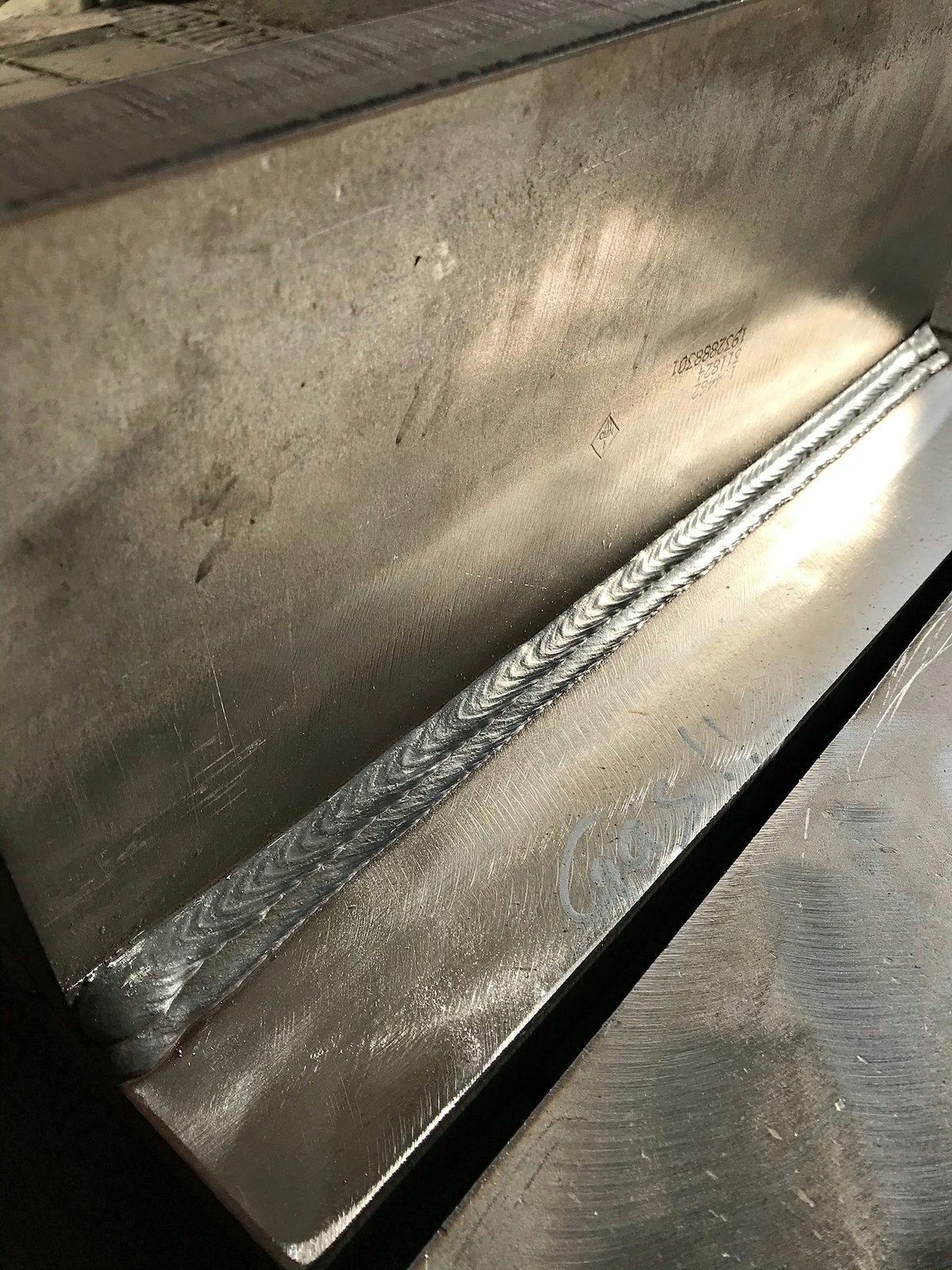
What we need for an enquiry in EXC3
For a complete quotation, fabrication, testing and documentation have to be clarified. These details therefore belong to the enquiry and are governed in our Technical Terms of Delivery:
| Detail | Why we need it | Rule in the terms of delivery |
|---|---|---|
| Execution class per component or assembly | Determines the quality level, scope of testing, traceability and welding coordination | § 5.4 |
| Weld quality as a quality level to EN ISO 5817 | The benchmark against which every weld is measured during testing | § 5.4 |
| Scope of testing and acceptance criteria | Set which welds are additionally tested, with which method, and what counts as acceptable | § 5.4 and § 7 |
| Material with grade, delivery condition and additional requirements, such as Z-quality | The basis for the welding procedure specification, material procurement and material certificate | § 3.1 |
| Required inspection documents to EN 10204 as well as welding and test records | Produced only if their type and extent are ordered; the effort is agreed separately | § 8.1 and § 8.2 |
If one of these details is missing, we clarify it before the quotation. If the execution class or material details are still missing at order placement, we hold execution until they are clarified.
How Bock proves the EXC3 requirements
Our certified scope includes the following proofs and responsibilities:
- Certificate to EN 1090-2: execution class EXC3 to the edition EN 1090-2:2018+A1:2024, for the welding processes 121 (submerged arc welding) and 135 (MAG welding), issued by DVS ZERT.
- Welding shop to EN ISO 3834-2: comprehensive quality requirements, likewise confirmed by DVS ZERT, for material groups 1.1 and 1.2 (non-alloy and low-alloy steels), 3.1 (quenched and tempered fine-grain steels) and 8.1 (austenitic stainless steels).
- Welding coordination to EN ISO 14731: the responsible coordinator holds the International Welding Engineer (IWE) qualification, with a deputy holding the International Welding Specialist (IWS) qualification.
- Welding procedure specifications and procedure qualifications: every weld is made to a welding procedure specification (WPS) that rests on a procedure qualification record (WPQR). Within this framework, only welders with a valid test to EN ISO 9606-1 may weld.
- Material and traceability: materials with an inspection certificate 3.1 to EN 10204 keep their proof even after cutting. We transfer the material marking to separated or machined parts and document the transfer. How this works is described on the re-stamping certificate page.
- In-house testing: visual, magnetic particle and penetrant testing are carried out by our own personnel, qualified to EN ISO 9712, level 2.
- Ultrasonic testing: it is carried out in the works through a partner certified to EN ISO 9712. Radiographic testing is placed with qualified partners.
- Documentation: inspection certificates as well as welding and test records are compiled to the extent you order.
Which tests and documents a specific order includes is set from the requirements and the order. The certificates, with their scope and validity, are available as PDFs.
The certificates to view
What is set out above in words can be read here. Page through the two proofs that count for work in EXC3: each sheet states the execution class, the standard edition, the approved welding processes and the validity – and opens as a PDF.

DIN EN 1090-2 EXC3
Certified welding contractor for load-bearing steel structures – qualified up to Execution Class EXC3.
DVS ZERT · Zertifizierungsstelle des DVS download as PDF
EN ISO 3834-2
Comprehensive quality requirements for fusion welding of metallic materials.
DVS ZERT · Zertifizierungsstelle des DVS download as PDF1/2
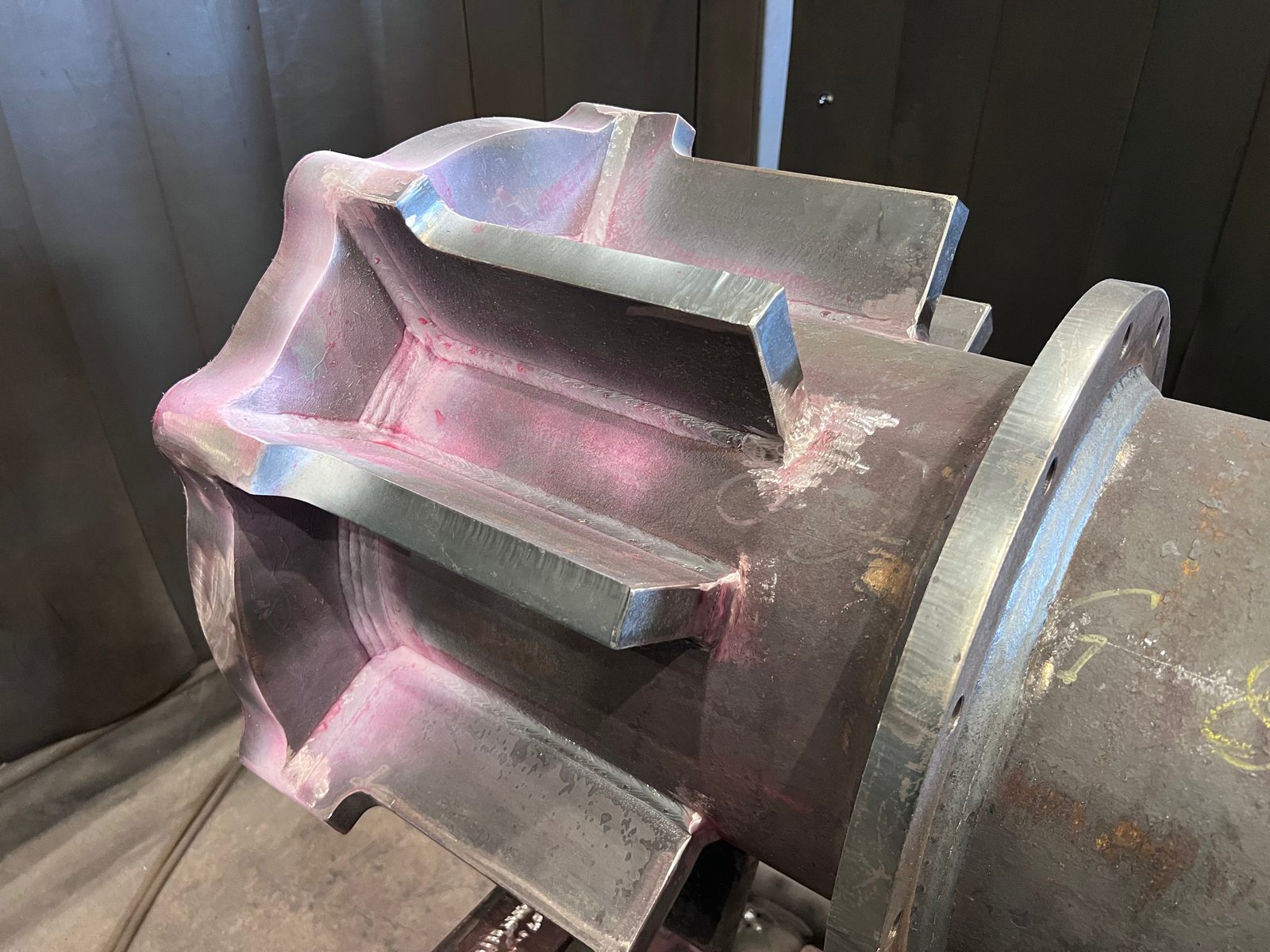
Factory production control and welding certificate: the proof to EN 1090
Load-bearing steel components that are placed on the market as a construction product fall under EN 1090-1. For this the manufacturer needs factory production control (FPC): a documented system that governs purchasing, fabrication, testing and marking. A notified body assesses it at the initial inspection in the works and audits it afterwards at regular intervals.
For welded components, a welding certificate is part of this. It states the highest execution class, the edition of EN 1090-2 it was assessed against, and the approved welding processes. Anyone selecting a welding shop therefore reads three details from the certificate: the class, the standard edition and the processes.
On this basis the manufacturer issues a declaration of performance for construction products to EN 1090-1 and applies the CE marking. Whether a component falls under this depends on whether it is supplied as an independent load-bearing construction product or as part of a machine or plant.
Reading EN 1090-2: paid, but free to view at reading points
EN 1090-2 is protected by copyright and is sold by DIN Media, as a print edition and as a PDF. Files offered free as a PDF download on the web are, as a rule, not licensed editions. With any version, watch the edition: the current one is 2024-09.
The standard can be viewed free of charge at around 90 reading points (Auslegestellen) in Germany, whose list DIN Media publishes. For a specific order, what counts in any case is the execution specification: it names the class and everything that deviates from it.
Fabrication and testing in pictures
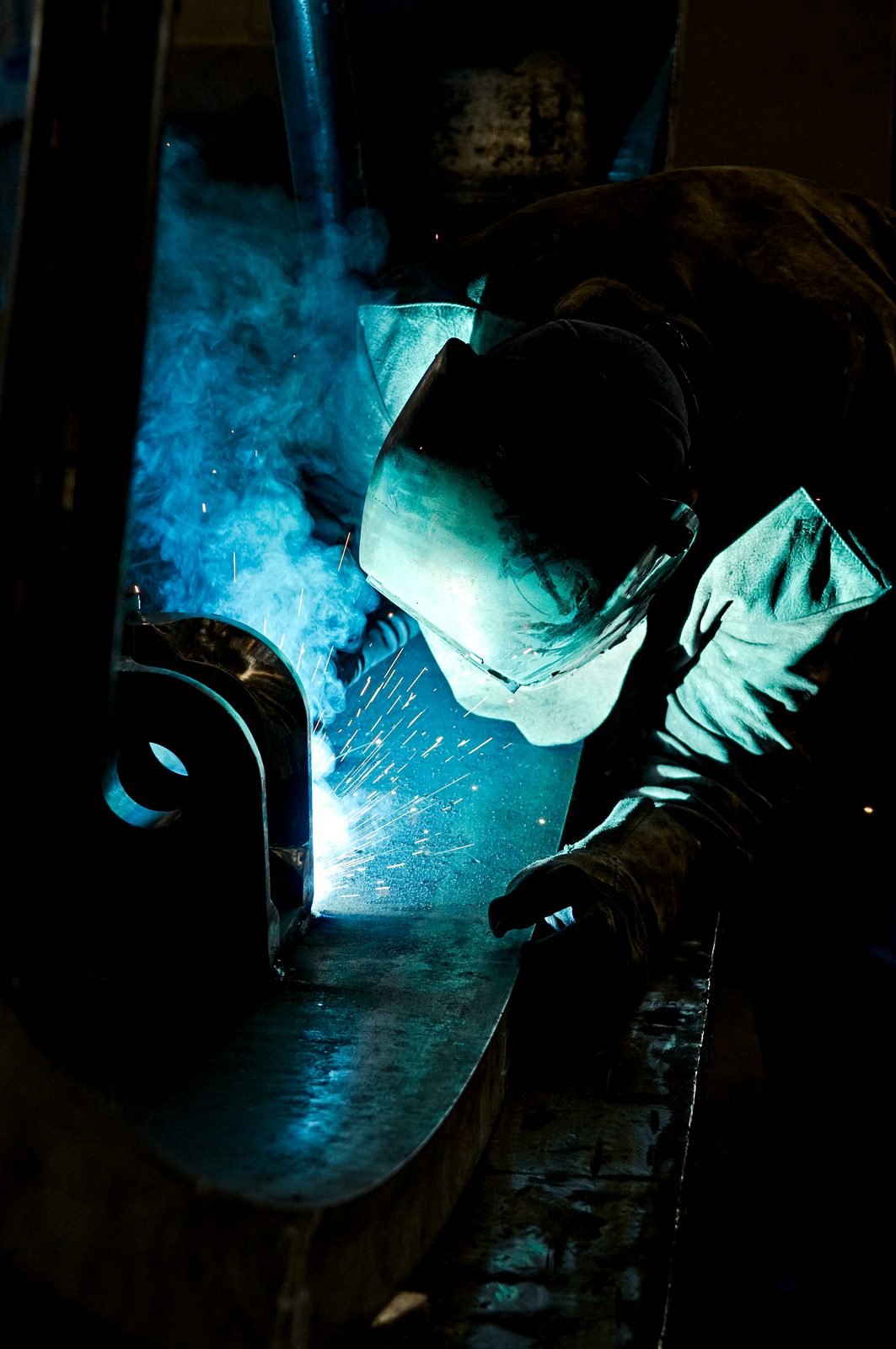
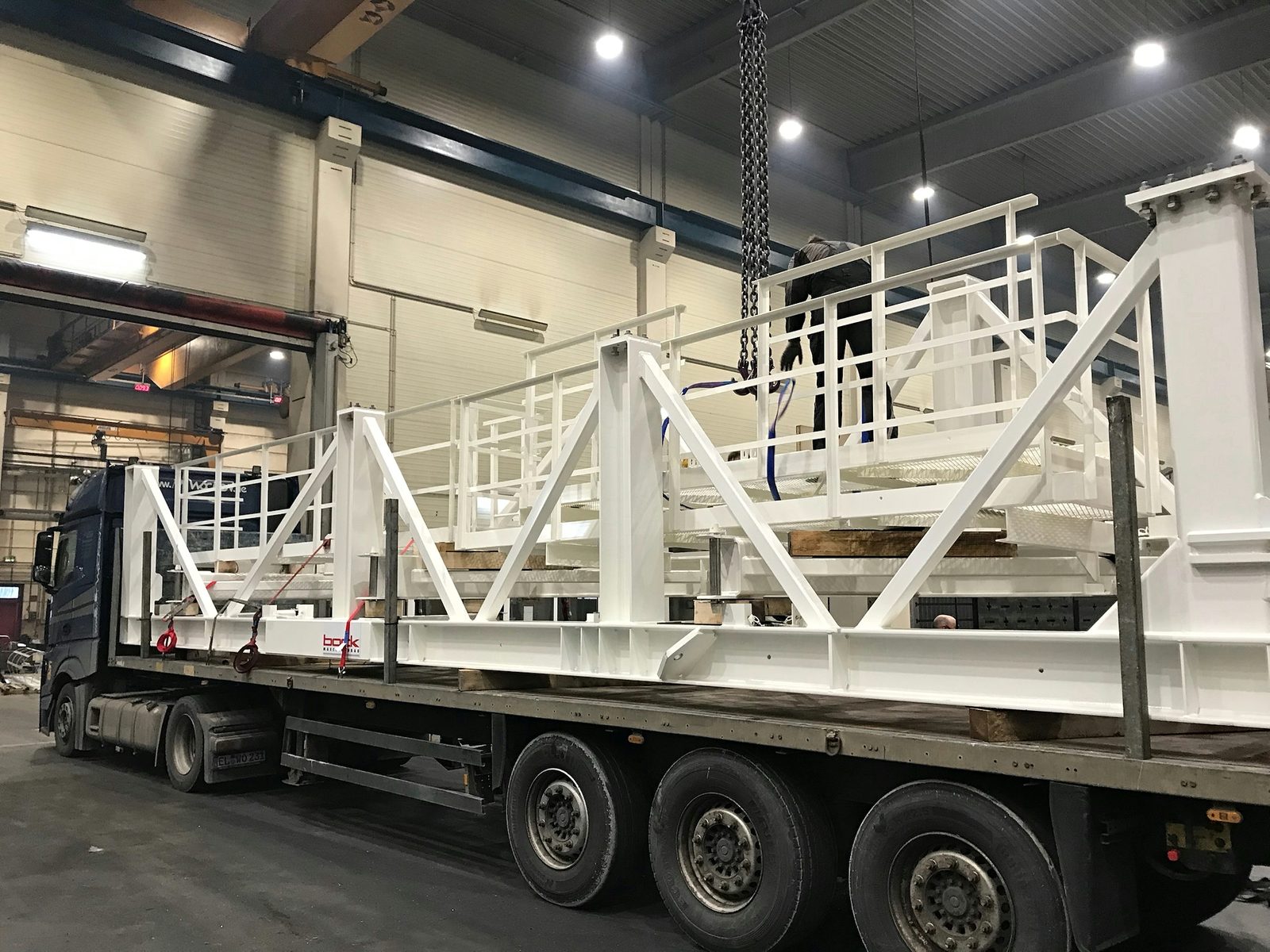
The shots from our fabrication lead to the respective sections.
Frequently asked questions about the execution classes
Who sets the execution class to EN 1090?
The structural designer or the customer's responsible engineer. Following Eurocode 3, they assess the consequences of a failure (consequence class) and the loading of the component, and record the class in the drawing or the execution specification. The welding shop does not set it. It carries it out and needs a certificate that covers that class.
What is the difference between EXC2 and EXC3?
EXC3 carries higher requirements. The welding shop has to meet the comprehensive quality requirements to EN ISO 3834-2 instead of the standard requirements of Part 3. The visual inspection assesses the welds to quality level B instead of C of EN ISO 5817, the minimum amount of supplementary testing is larger, and the materials must be traceable through every fabrication stage.
What applies if no execution class is on the drawing?
Whether EXC2 then applies automatically is answered differently across the technical literature. We do not assume a class but ask before quoting. Under § 5.4 of our Technical Terms of Delivery, the customer or their responsible engineer sets the execution class, weld quality, scope of testing and acceptance criteria. If those details are missing, we hold execution until they are clarified.
May a shop certified for EXC3 also fabricate EXC2?
Yes. A certificate names the highest execution class the shop is approved for; lower classes are included. An EXC3 shop therefore also fabricates components in EXC1 and EXC2, each to the requirements of the class required. For EXC4, by contrast, an EXC3 certificate is not enough.
Can one assembly have several execution classes?
Yes. EN 1090-2 allows an execution class to be set for the whole structure, for individual components or for single details. On one assembly, load-bearing connections can therefore sit in EXC3 and subordinate parts in EXC2. The drawing then has to show clearly which class applies where.
Is EN 1090-2 available free of charge as a PDF?
Not legally. The standard is protected by copyright and is sold by DIN Media. You can view it free of charge at around 90 reading points (Auslegestellen) in Germany; DIN Media publishes the list. Watch the edition: the current one is DIN EN 1090-2:2024-09.
What does a welding shop have to prove for EXC3?
A certificate to EN 1090-2 for EXC3, the comprehensive quality requirements to EN ISO 3834-2, welding coordination to EN ISO 14731, qualified welding procedures, welders with a test to EN ISO 9606-1, the traceability of materials through every fabrication stage, and inspection personnel to EN ISO 9712. Our certificates are available as PDFs to download.
Sources and standards
Standards are named with their number and edition; their text is paid for and therefore not linked. The assignment of the quality levels and the reading points come from freely available sources, linked with the date we checked them.
- Execution classes EXC1 to EXC4, assignment of the parts of EN ISO 3834, traceability in EXC3 and EXC4, setting for structure, component or detail EN 1090-2 – Execution of steel structures and aluminium structures – Part 2: Technical requirements for steel structures
- Conformity assessment of load-bearing components, factory production control, declaration of performance and CE marking EN 1090-1 – Execution of steel structures and aluminium structures – Part 1: Requirements for conformity assessment of structural components
- Choice of the execution class by the structural designer EN 1993-1-1 – Eurocode 3: Design of steel structures – Part 1-1: General rules and rules for buildings
- Quality levels of visual inspection per execution class, lapsed EXC2 default, EXC4 on the basis of EXC3, choice of the class by the designer Changes in EN 1090-2 (2018 edition, in German)
- Comprehensive quality requirements for EXC3 and EXC4 and the scope of approval of our welding shop EN ISO 3834-2 – Quality requirements for fusion welding of metallic materials – Part 2: Comprehensive quality requirements
- Tasks and responsibility of welding coordination EN ISO 14731 – Welding coordination – Tasks and responsibilities
- Quality levels B, C and D for imperfections in welds EN ISO 5817 – Quality levels for imperfections in fusion-welded joints
- Visual testing of fusion-welded joints EN ISO 17637 – Non-destructive testing of welds – Visual testing of fusion-welded joints
- Qualification of the inspection personnel at level 2 and certification of the ultrasonic testing partner EN ISO 9712 – Non-destructive testing – Qualification and certification of NDT personnel
- Qualification testing of welders EN ISO 9606-1 – Qualification testing of welders – Fusion welding – Part 1: Steels
- Procedure qualification as the basis of the welding procedure specification EN ISO 15614-1 – Specification and qualification of welding procedures for metallic materials – Welding procedure test – Part 1: Arc and gas welding of steels and arc welding of nickel and nickel alloys
- Inspection certificate 3.1 and further types of inspection documents EN 10204 – Metallic products – Types of inspection documents
- Free viewing of standards at around 90 reading points DIN reading points (Auslegestellen)