What does a structural metal fitter do? Tasks, training and career paths
Contents
What structural metal fitters make and how they work
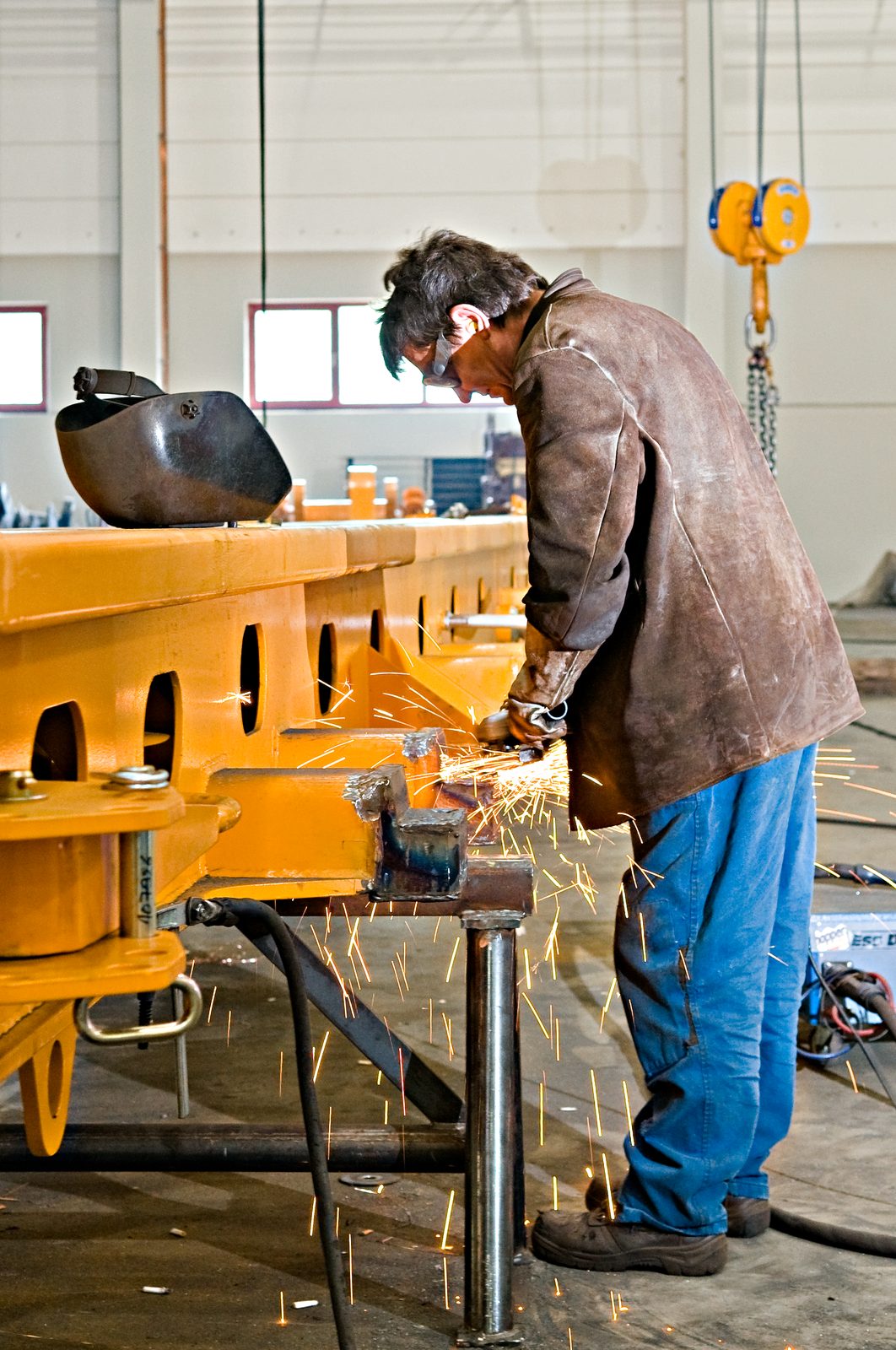
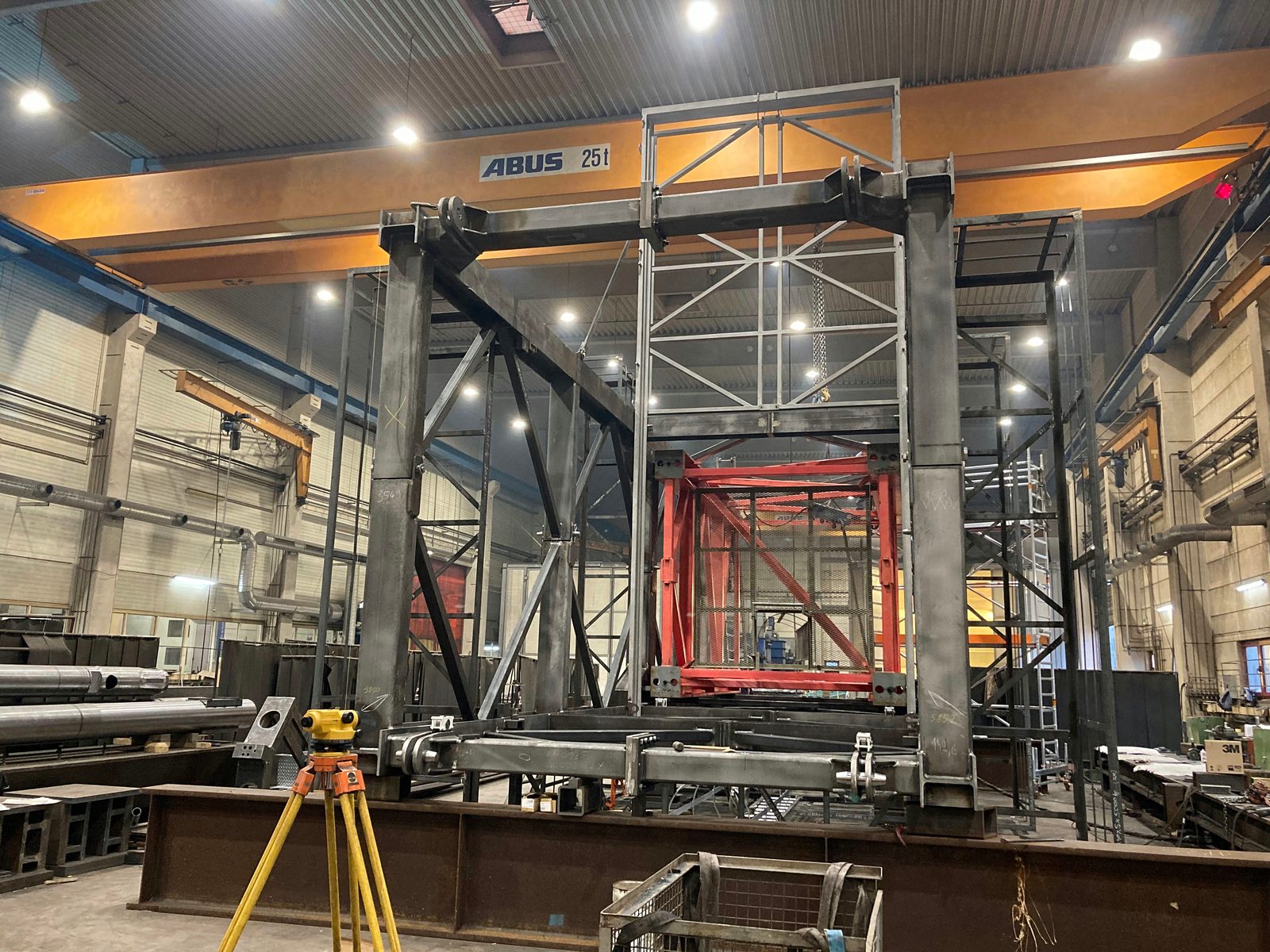
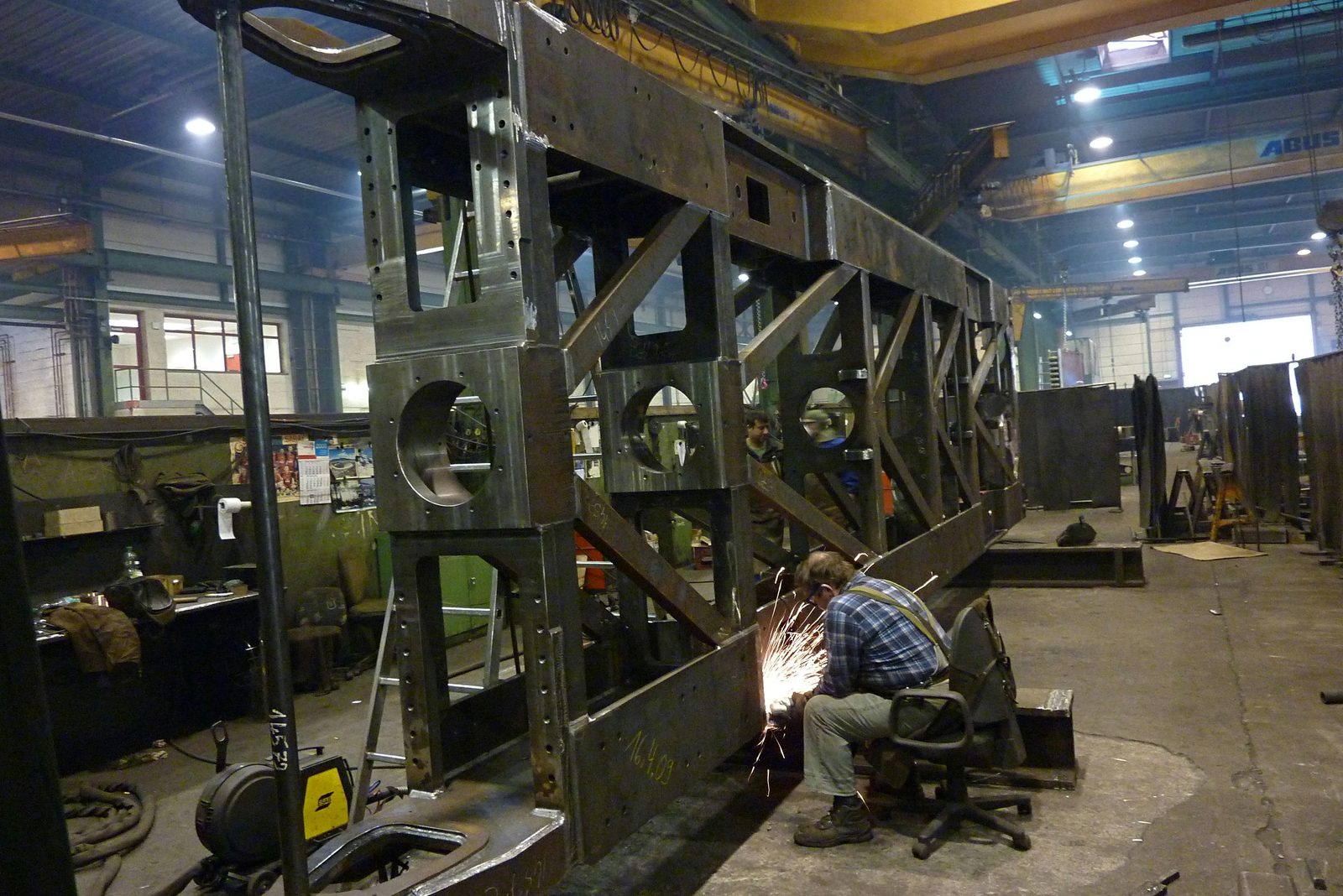
A structural metal fitter starts with a drawing and a set of cut parts. The task is to turn them into an accurately aligned assembly: perhaps a machine frame, a crane girder or a structure weighing several tonnes. Marking out, straightening, fitting and tack welding are the practical steps; deciding their sequence is a central part of the skill.
In Germany, the recognised apprenticeship is called Konstruktionsmechaniker. Schlosser is the older term still heard in workshops, though its meaning varies with the type of work. Our vacancy uses both names to help applicants recognise the role: Konstruktionsmechaniker / structural metal fitter (m/f/d).
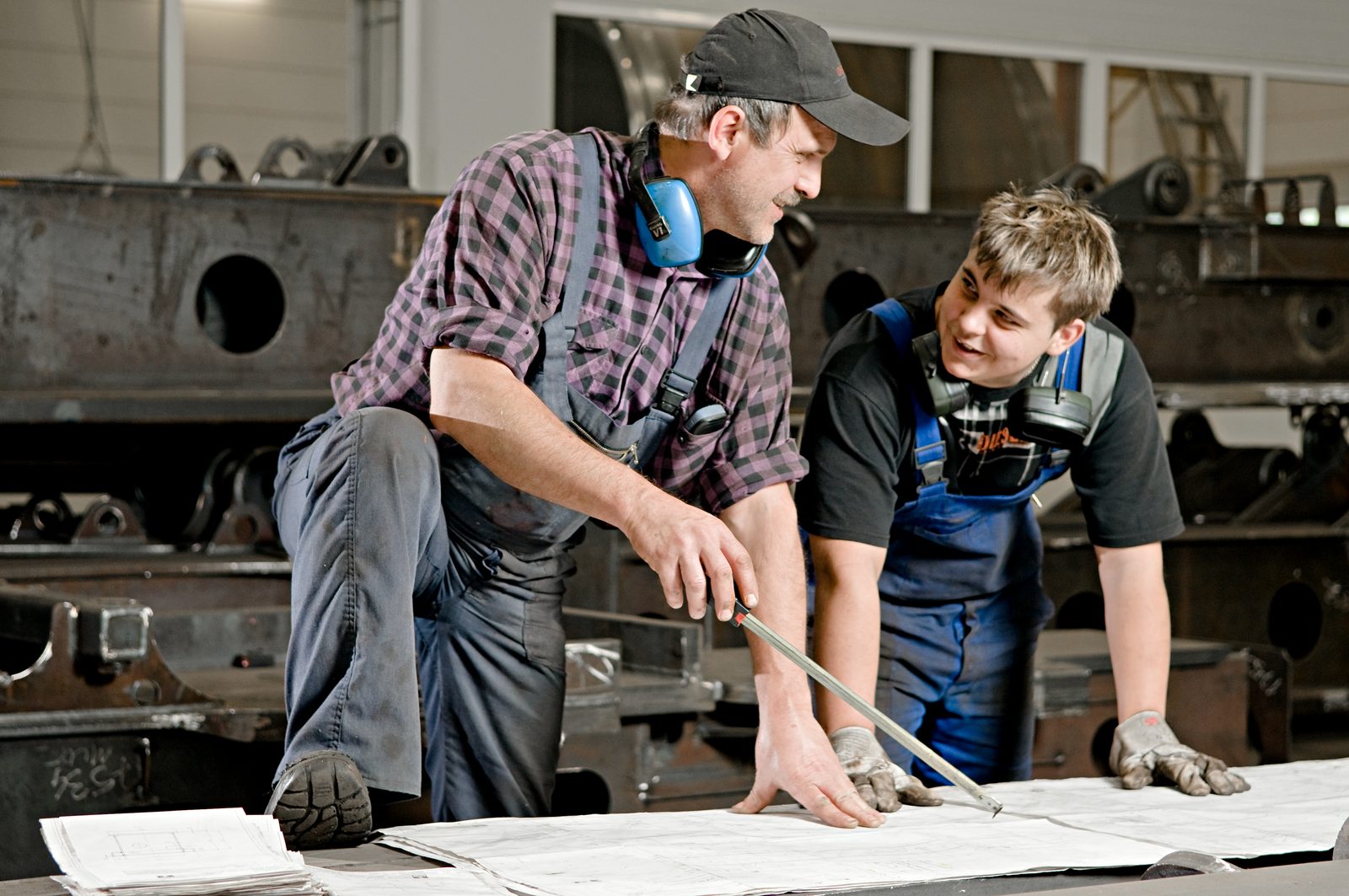
The drawing defines the finished dimensions. The fitter identifies the datum edges, works out how dimensions relate to them and plans the order of assembly. This takes more than knowing how to use the tools: the parts must remain accessible for fitting, measuring and welding as the structure grows.
Fitters work between cutting and welding. The cutting department supplies the plates and sections; the welding team completes the joints; machining produces the final functional surfaces. Accurate fitting gives each of these later stages a reliable starting point.
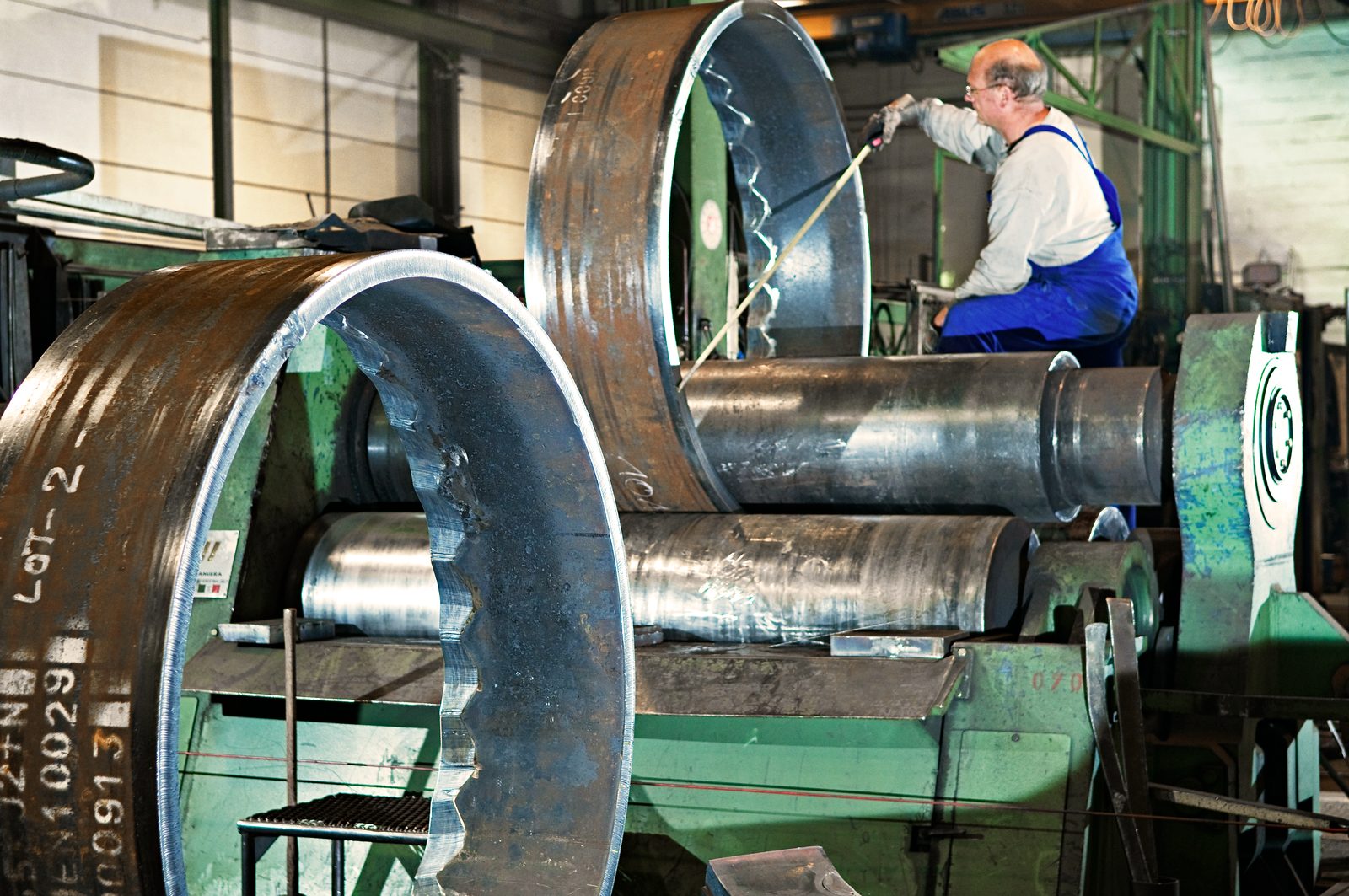
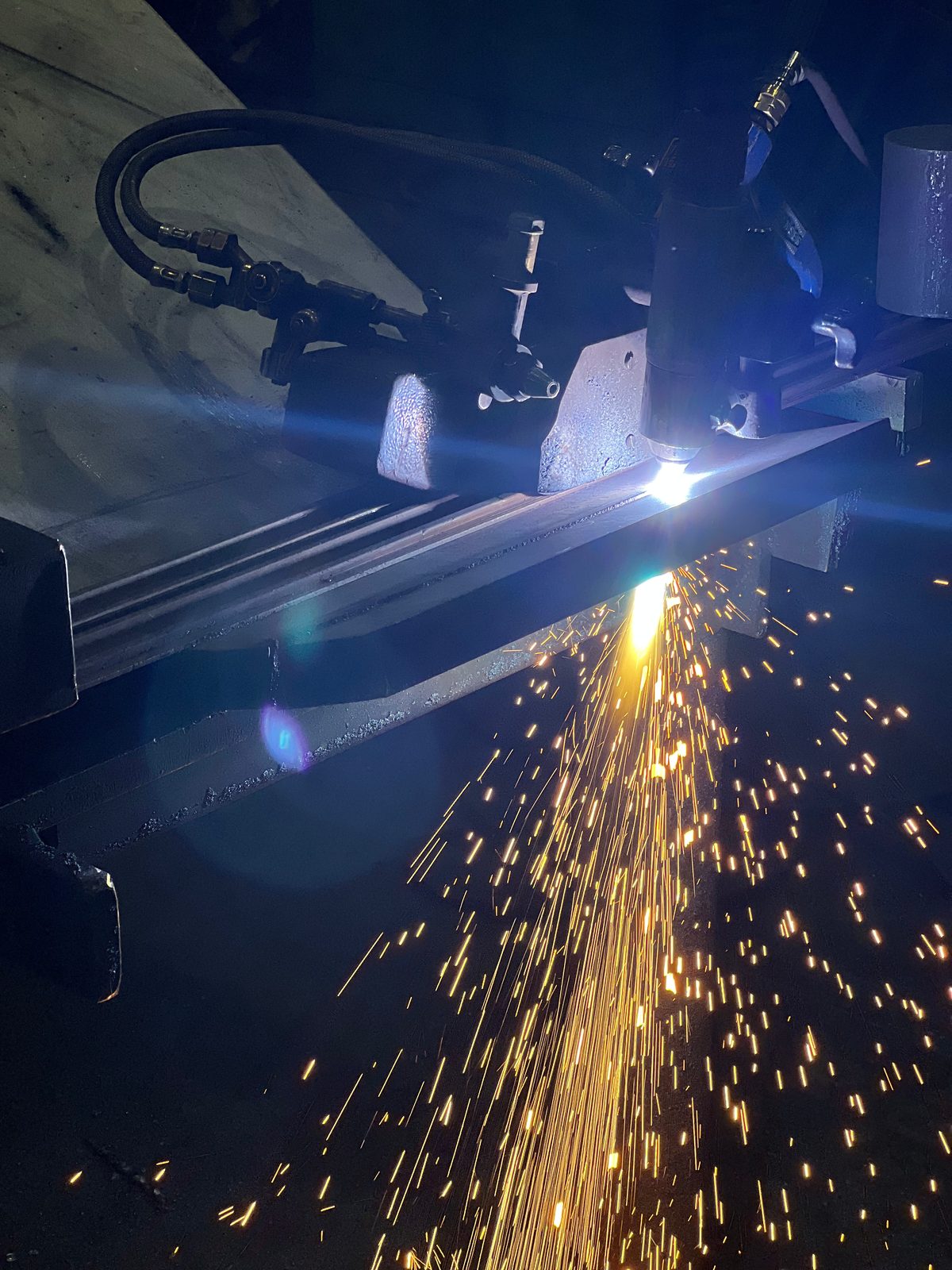
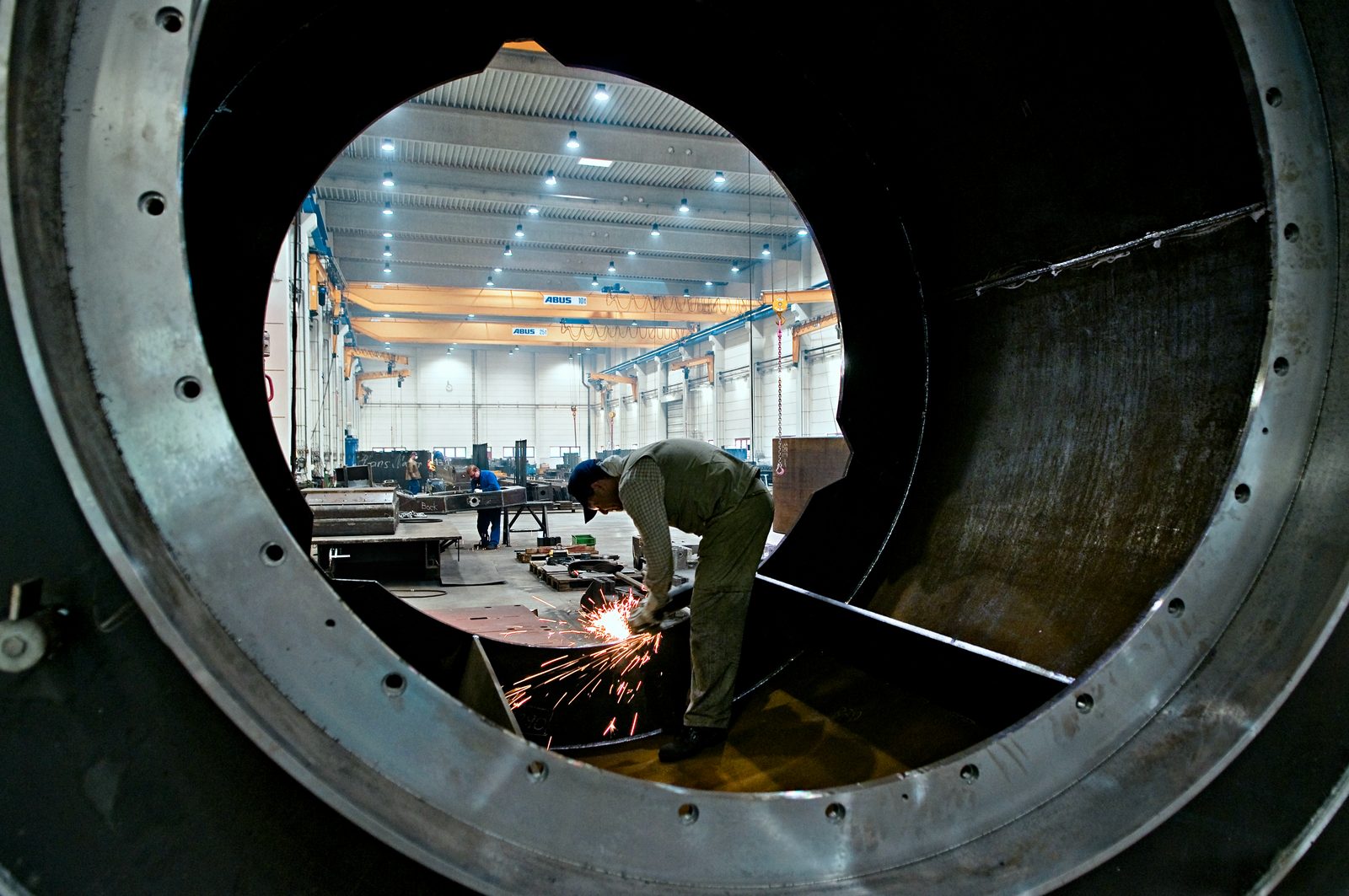
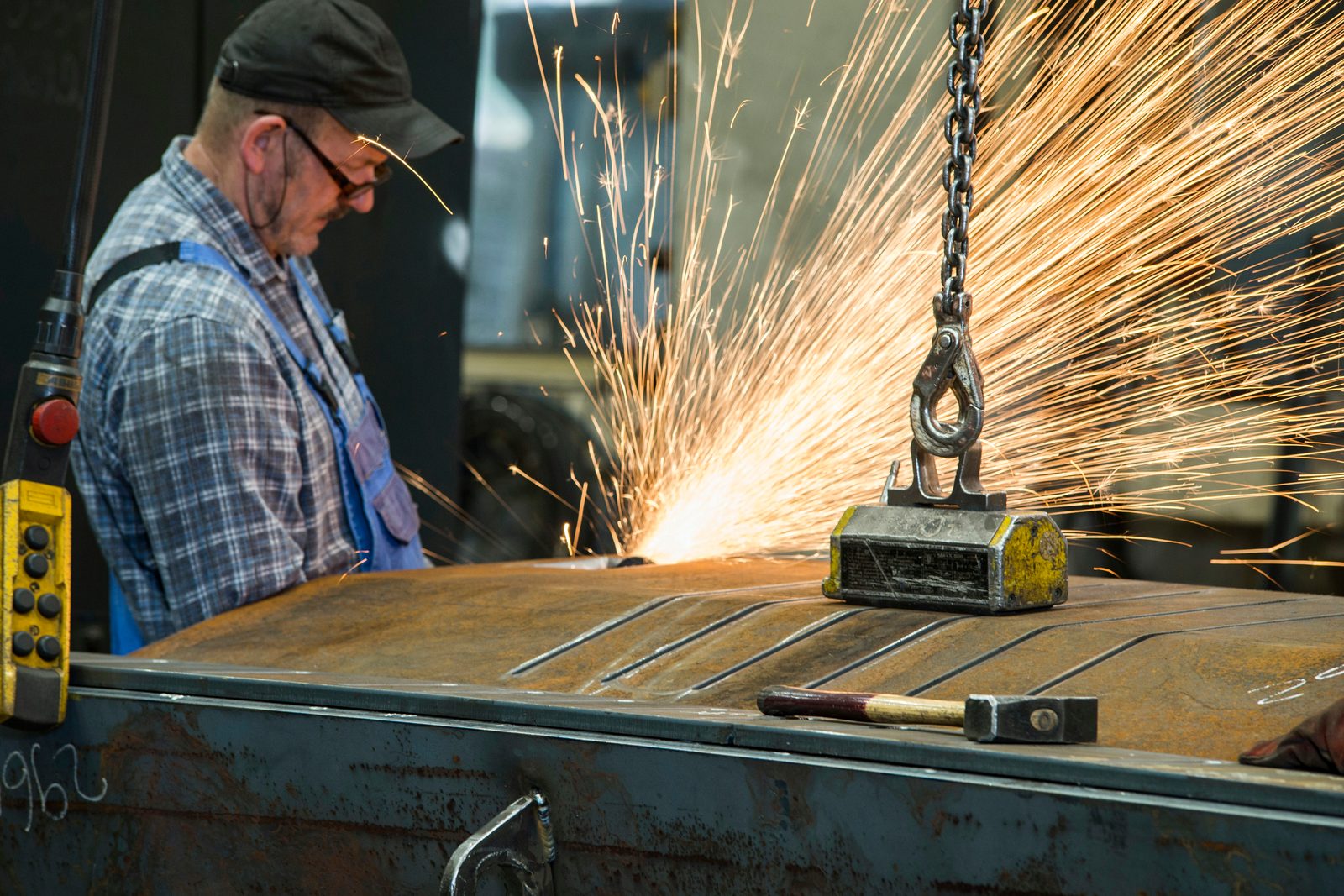
The preparatory work also includes the edge itself. Where the geometry allows, the bevel for the later weld seam is already produced during flame cutting. If that is not possible – or if something does not fit during assembly – the fitter reworks it on the component: a cutting carriage guides the plasma torch along the part on a guide rail, and the rolling allowance on rolled plates is cut off in the same way. The bevel helps determine how much weld metal goes into the joint and whether the root is properly fused.
Schlosser and Konstruktionsmechaniker: how German trade names changed
There is no longer an apprenticeship trade called "Schlosser". Industry reorganised its fitter trades with effect from 1 August 1987; the skilled crafts followed on 1 August 1989. Which trade has taken its place therefore depends on which Schlosser was meant – and whether the trade was learned under the IHK (Chamber of Industry and Commerce) or under the Handwerkskammer (Chamber of Skilled Crafts):
| Former trade | Replaced on | Today's apprenticeship trade | Chamber |
|---|---|---|---|
| Stahlbauschlosser | 1 August 1987 | Konstruktionsmechaniker | IHK |
| Bauschlosser (construction fitter) | 1 August 1987 | Konstruktionsmechaniker | IHK |
| Maschinenschlosser (machine fitter) | 1 August 1987 | Industriemechaniker | IHK |
| Betriebsschlosser (maintenance fitter) | 1 August 1987 | Industriemechaniker | IHK |
| Hochdruckrohrschlosser (high-pressure pipe fitter) | 1 August 1987 | Anlagenmechaniker (plant mechanic) | IHK |
| Schlosser in the skilled crafts | 1 August 1989 | Metallbauer (metal fabricator) (today with the specialisms Konstruktionstechnik, Metallgestaltung or Nutzfahrzeugbau – structural engineering, metal design or commercial vehicle construction) | Handwerkskammer |
Rule of thumb: in industry, the successors have been called "…mechaniker" since 1987, in the skilled crafts "Metallbauer" since 1989. Anyone who says "Schlosser" and means steel construction means the Konstruktionsmechaniker – how this trade differs from the Industriemechaniker and the Metallbauer is shown in the comparison of the three trades.
Daily tasks: marking out, straightening, tack welding and fitting
Five activities recur in almost every order. They are the core of the trade:
- Marking out and measuring: transferring the drawing to the plate and checking reference dimensions. Small errors can accumulate across a multi-part assembly, so accuracy matters from the first mark.
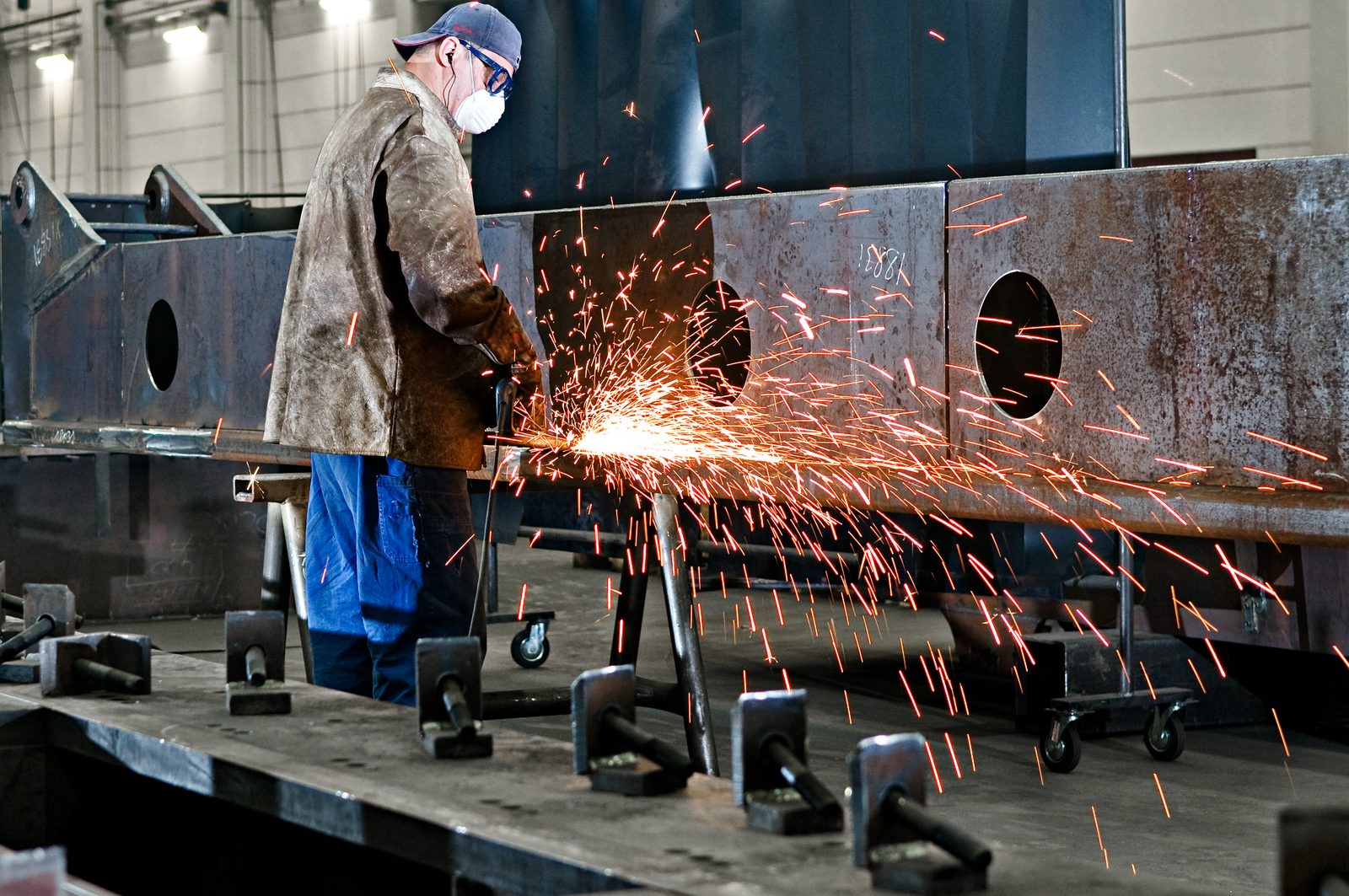
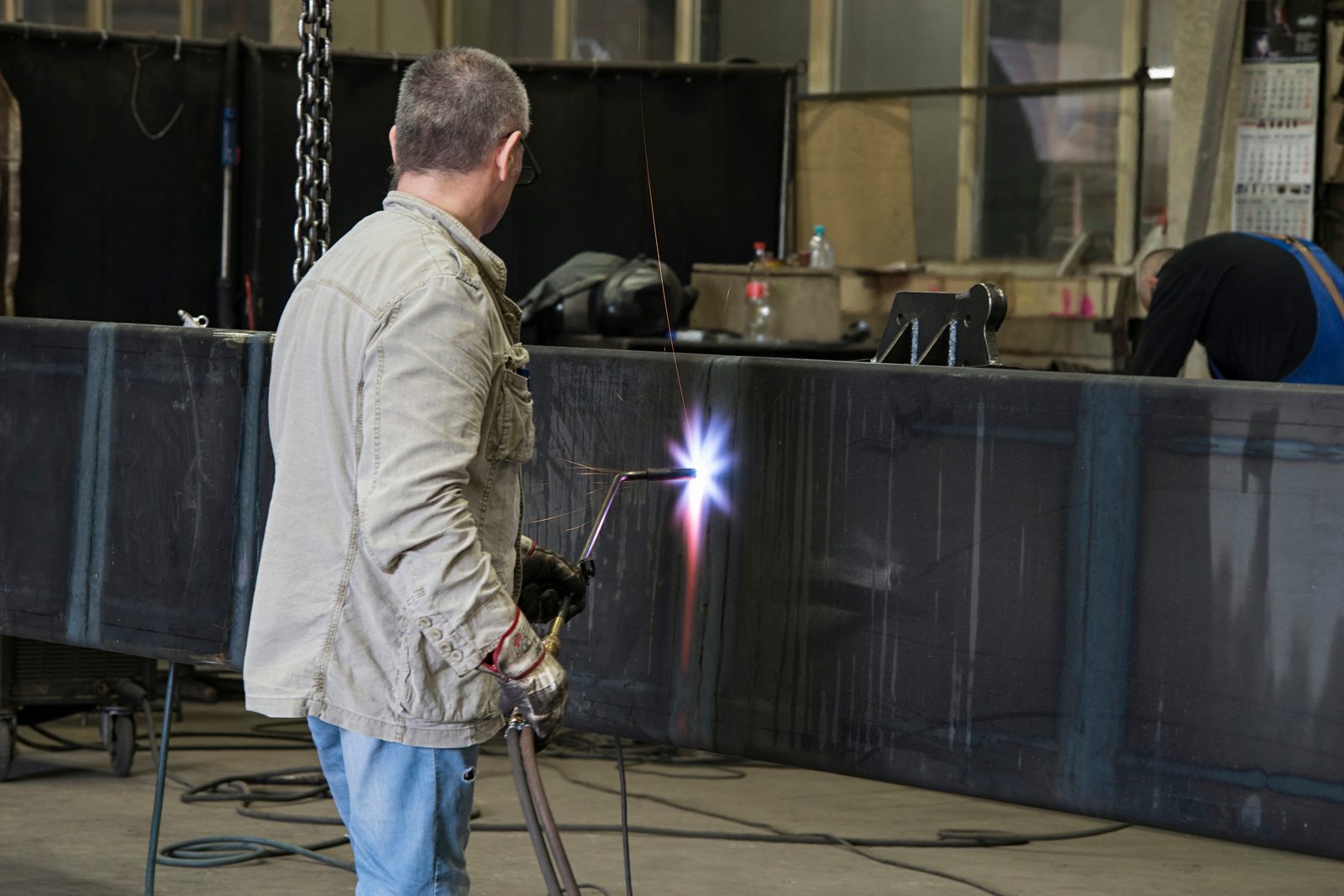
- Straightening: cutting and welding introduce stress into the material, and stress causes distortion. Straightening – mechanically or thermally with the flame – brings the component back into plane before it moves on.
- Tack welding: holding the parts with short welds so their position can be measured before final welding. This is the stage at which alignment can still be corrected with relatively little rework.
- Drilling, grinding, deburring: connection holes, clean edges, plane-parallel bearing surfaces – the jobs that later decide whether an assembly can be installed or has to be reworked.
- Fitting and checking: adjustment work with measuring instruments and self-inspection of the dimensions. In this trade, quality control starts with your own workpiece, not at the end of the hall.
These tasks establish the geometry for the stages that follow. Checking alignment while the assembly is still tack-welded helps avoid more extensive corrections after final welding.
Structural fitting, industrial mechanics or metalworking: how the roles differ
Three trades that are often confused in everyday life – and that differ less in their tools than in what is produced in the end:
| Feature | Structural metal fitter (Konstruktionsmechaniker) | Industrial mechanic (Industriemechaniker) | Metal fabricator (Metallbauer) |
|---|---|---|---|
| What is produced in the end | Load-bearing steel and sheet metal structures, assemblies, frames for special-purpose machines | Functioning machines and plants | Metal components in the skilled crafts – gates, railings, stairs, superstructures |
| Core task | Joining cut parts into a dimensionally accurate structure | Installing machines, keeping them running, repairing them | Fabricating structures and installing them at the customer's site |
| Typical component size | From a bracket to a heavy-duty assembly with edge lengths of several metres | From a single component to a complete plant | Usually of manageable size |
| Apprenticeship duration (dual) | 3.5 years | 3.5 years | 3.5 years |
| Responsible chamber | IHK (industry and commerce) | IHK (industry and commerce) | Handwerkskammer |
| Name in use since | 1987 – successor to the Stahlbauschlosser and Bauschlosser, among others | 1987 – successor to the Maschinenschlosser and Betriebsschlosser, among others | 1989 – successor to the Schlosser in the skilled crafts |
| At Bock | Apprenticeship trade AND skilled worker position | Recognised as prior training for the fitter position | Related craft – entry via the fitter or welder position |
Rule of thumb: the Industriemechaniker keeps the machine running – the Konstruktionsmechaniker builds what it stands on. Anyone who wants to see how something load-bearing is created from metal is in the right place as a Konstruktionsmechaniker.
Why hardly any two orders are alike here
Industry sounds like series production, and series production sounds like repetition. In special-purpose machine building and heavy steel construction it is different. A large share of the components is built exactly once: a crane jib, a press frame, a drum body, a machine bed. Alongside these there are orders that pass through the hall in small batches. What does not exist is the cycle – the same part, every day, in the same fixture.
That changes the work. For a one-off piece there is no proven fixture ready into which you simply place the part: how it is clamped and in which order it comes together often has to be thought through first. In return, even after years there are still components in the hall that never existed in this form before.
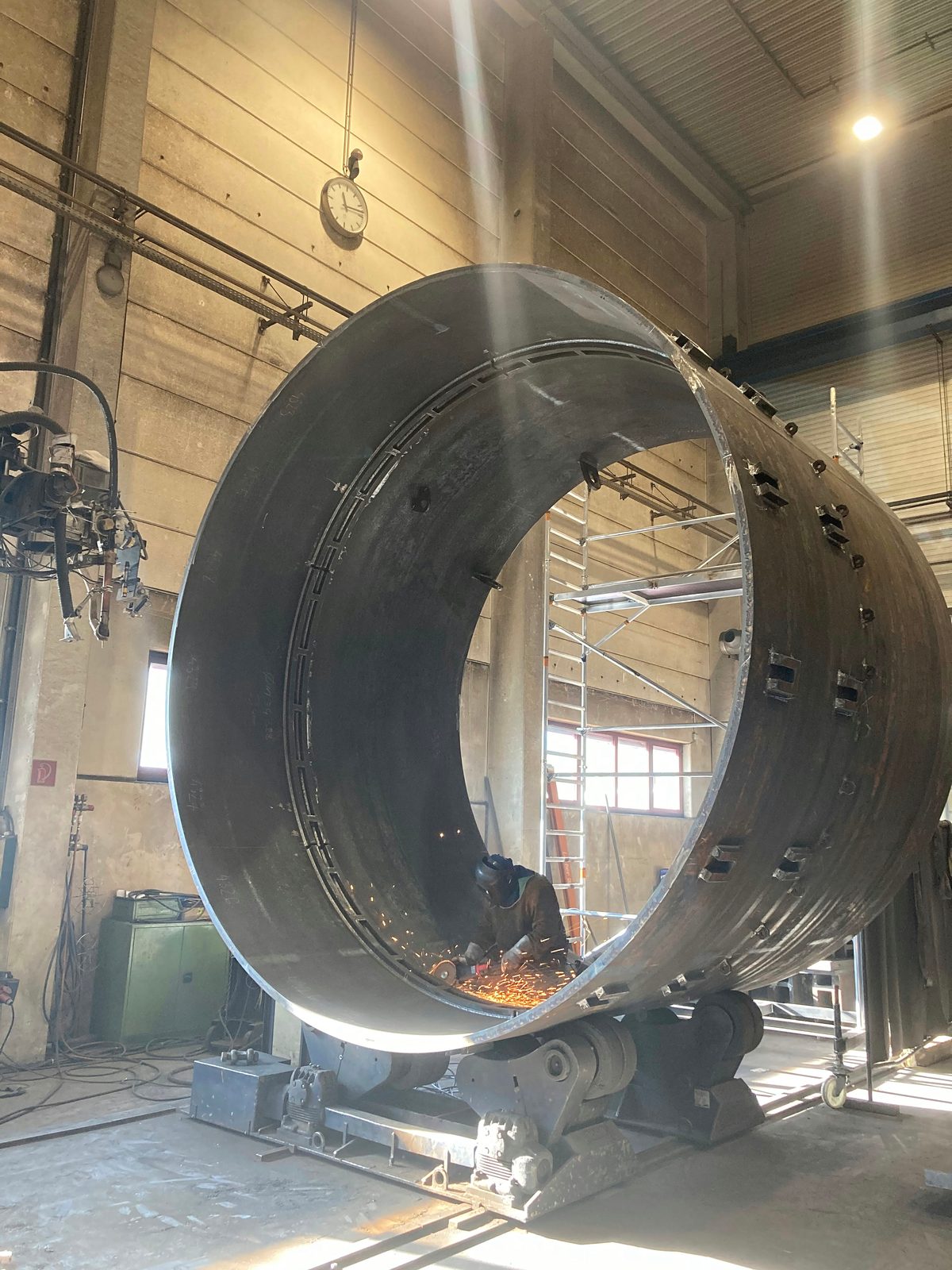
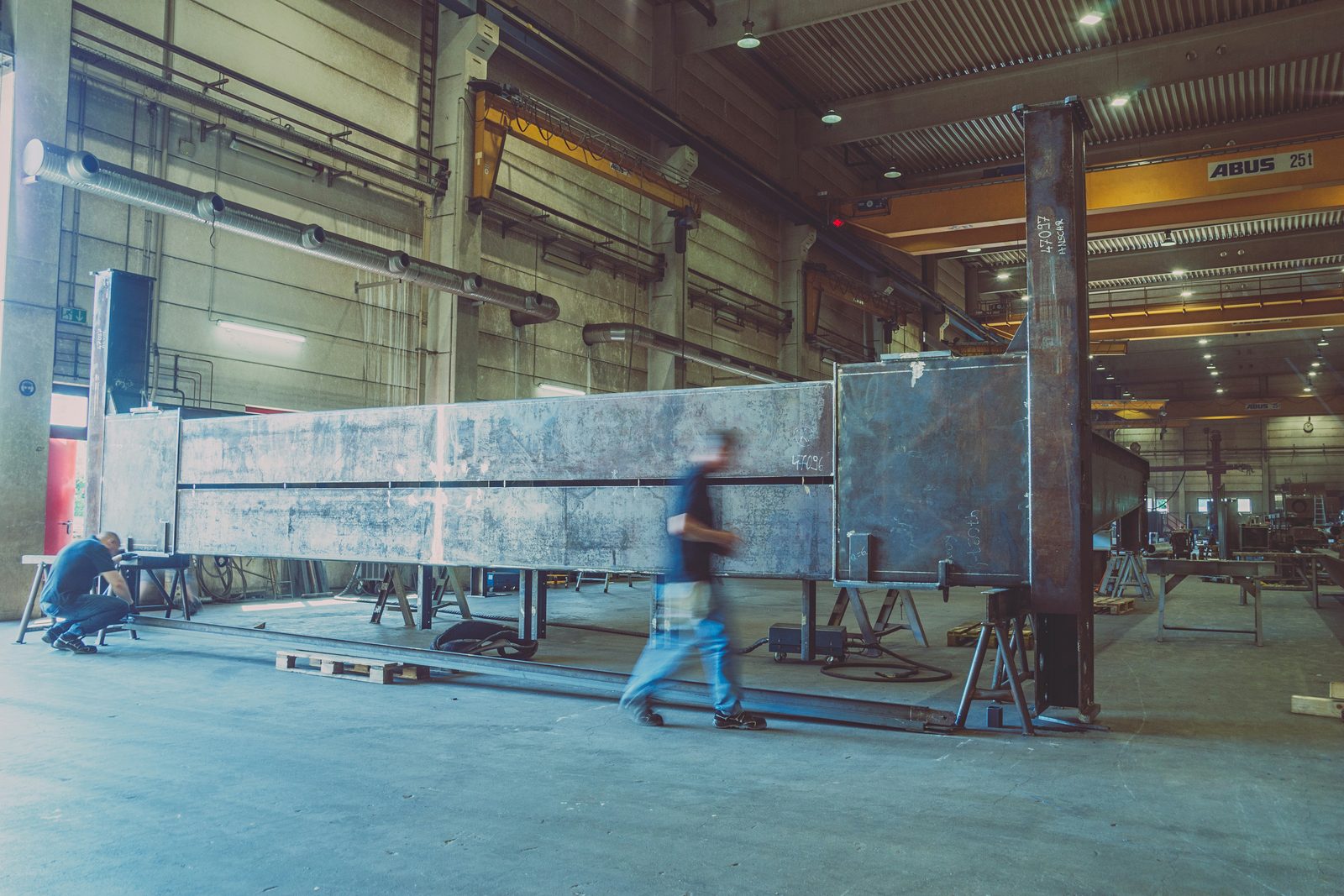
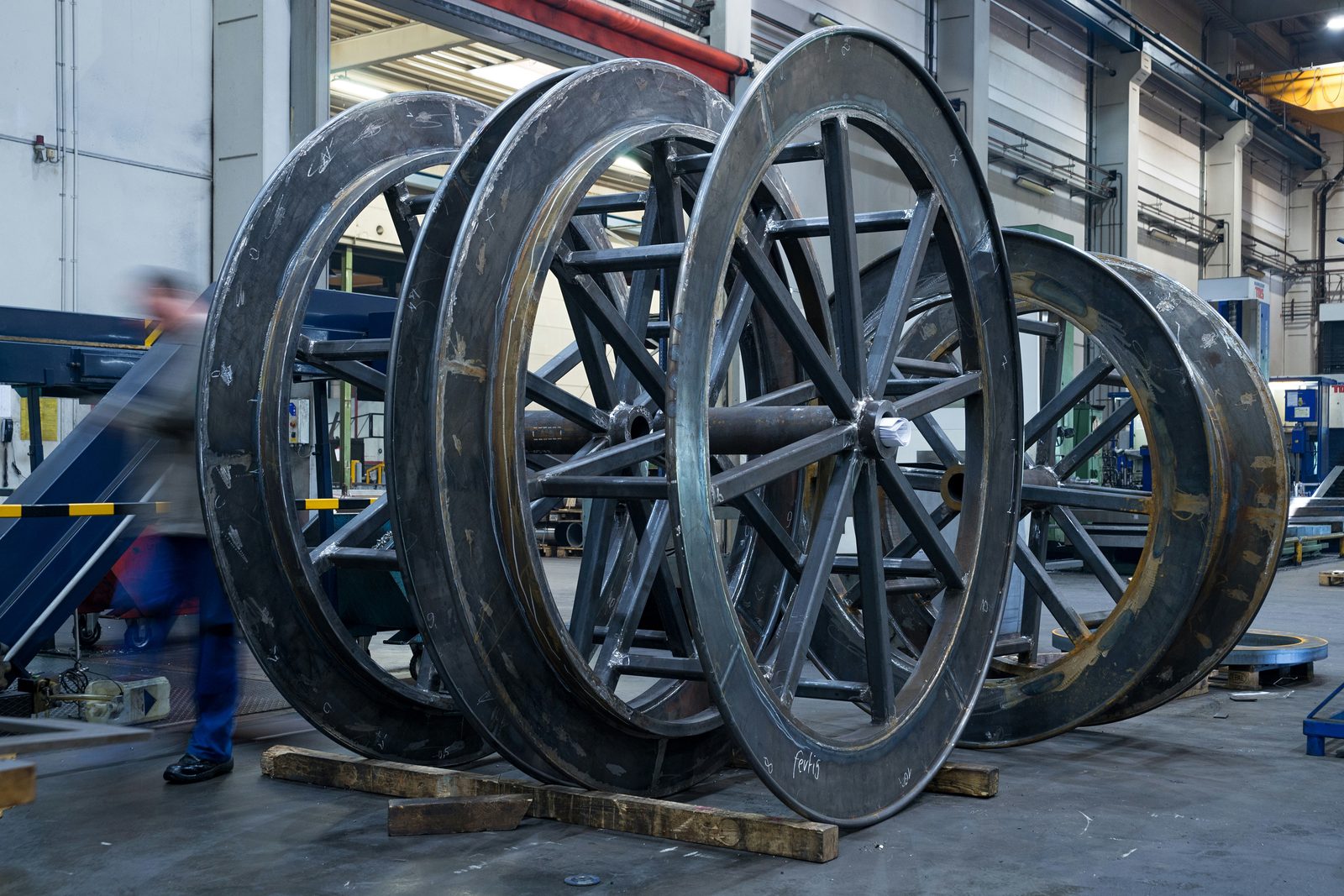
And the dimensions do not stay on paper. A unit weight of 50 t means that nobody carries this component: it hangs from the 2×25-t crane, and whoever slings it first thinks about where the lifting points are and where the centre of gravity lies. Component lengths of up to 26 m mean that you walk along your own workpiece instead of standing in front of it.
Variety comes with responsibility. Each one-off assembly needs its own checks rather than relying on a familiar repeat process. Measuring and recording the work are part of making the component correctly.
The German apprenticeship: 3.5 years of practical training
Konstruktionsmechaniker is an industrial apprenticeship trade in Germany's dual vocational training system: 3.5 years, alternating between the company and vocational school, with a final examination in two parts held at different times. Specialisations (Fachrichtungen) were abolished in 2004; instead, the training regulations list areas of deployment (Einsatzgebiete) – equipment technology, sheet metal construction, shipbuilding, welding technology, and steel and metal construction – and the training company determines which of them applies. With us, the apprenticeship follows this order:
- Basic techniques first: measuring, marking out, sawing, filing, drilling – the manual skills on which everything later builds.
- Reading and implementing drawings: assembly and installation of steel assemblies to drawing, from a simple frame to a multi-part structure.
- Learning to join: tack welding and assembling with auxiliary welds – in direct interplay with the welding shop, which turns them into the load-bearing seam.
- Checking: quality control of the manufactured parts and assemblies. Self-inspection is part of the job from the first year of the apprenticeship, not only during exam preparation.
- Working instead of watching: apprentices work on live orders in the fitting shop and assembly – not on practice pieces that end up as scrap afterwards.
Care, reliability and an interest in practical work matter alongside school qualifications. Apprentices learn with experienced colleagues, gradually taking on more of the assembly process. The apprenticeship vacancy lists the current entry requirements.
Learning the whole production chain at Bock
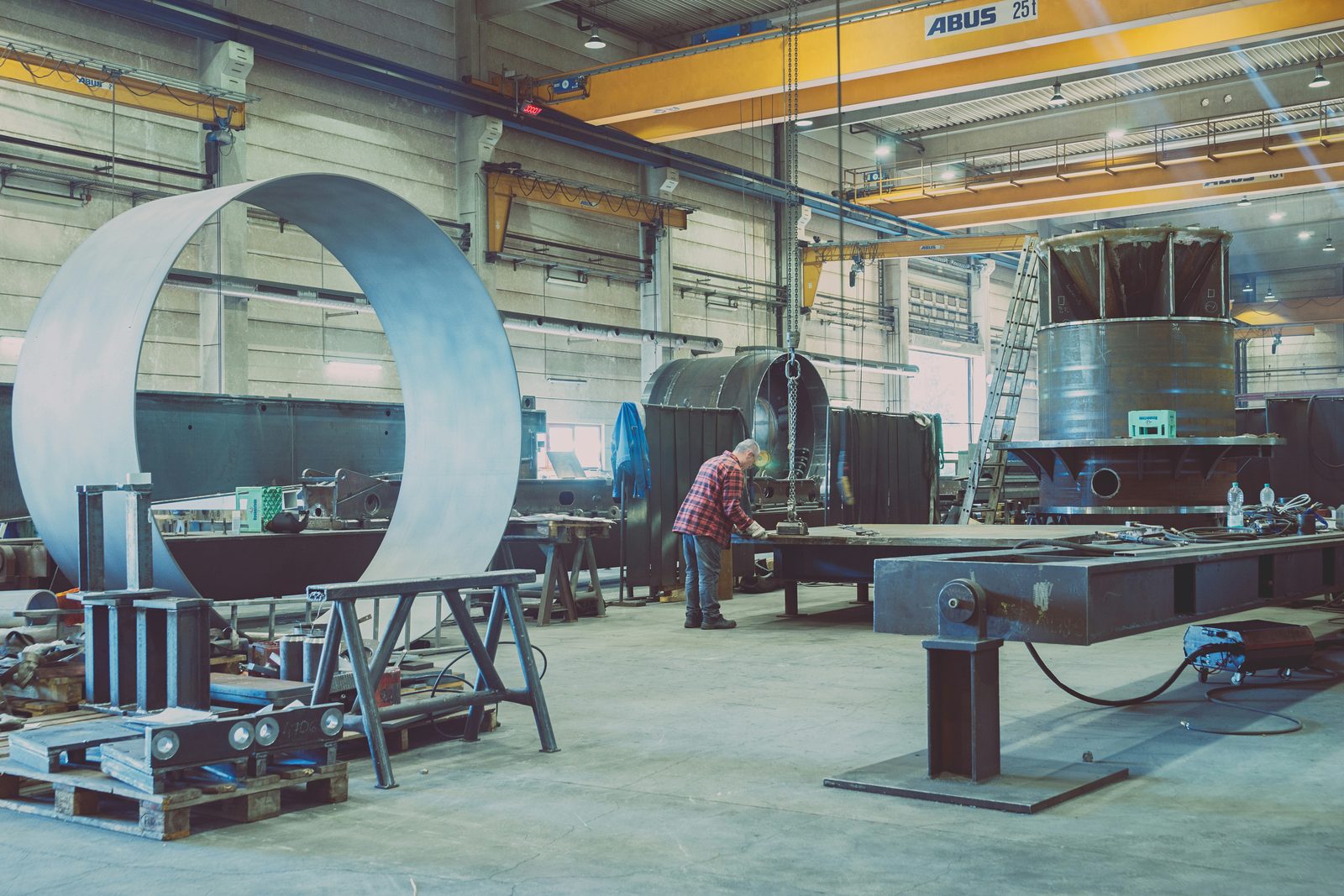
The trade is the same everywhere – the company in which you learn it is not. At Bock, all production steps take place under one roof on 14,000 m²:
- Cutting: oxy-fuel flame cutting up to 200 mm material thickness and CNC plasma cutting. The blank comes from our own shop – you see where it comes from.
- Forming: rolling and press brake bending. Anyone fitting a curved shell has already seen how that curvature was produced.
- Welding to DIN EN 1090-2 EXC3 (execution class 3 for steel structures) and EN ISO 3834-2 (quality requirements for fusion welding), monitored by our own welding supervision (IWE/EWE).
- Machining: CNC heavy machining up to 26 m component length. Mating surfaces are deliberately produced AFTER welding, so that distortion from the seam stays outside the dimensional chain.
- Testing and documentation: non-destructive testing (VT, PT, MT to ISO 9712, the standard for qualifying NDT personnel) in our own plant, materials with inspection certificate 3.1 to EN 10204 from a stock of over 40 grades – from structural steel and Hardox to S1100.
- Surface: blasting and painting. The assembly leaves the plant ready for installation, not as a raw weldment.
For the trade, this means: anyone who learns here sees their component across the entire chain – from the plate to the painted assembly. In a pure assembly company, this view ends at the hall door. Added to this is the breadth of customers: crane building, vehicle construction, plant engineering and offshore keep the company stable even when a single industry is weak.
What to consider before becoming a structural metal fitter
The work combines physical activity with careful planning and repeated dimensional checks. These are the main demands to consider:
- Physical work: much of the day is spent standing, handling tools and working around large components in a noisy production environment.
- Longer projects: a large assembly can take days or weeks. Progress is visible as the structure grows, while the finished result takes patience.
- Regular measurement: checking dimensions and alignment is a substantial part of the job. Care at this stage reduces rework for the whole team.
- Hands-on fabrication: fitters build from technical drawings. Those more interested in creating the drawings may want to explore technical drafting or design.
- Changing tasks: one-off parts bring different drawings, setups and assembly sequences. The role suits an interest in solving practical problems as new work arrives.
Career paths after the apprenticeship
Passing the final apprenticeship examination is the start of a skilled career. With experience, structural metal fitters take on more complex assemblies and more responsibility for planning the sequence of work. Reading a drawing becomes increasingly connected to knowing how the structure will actually come together.
The neighbouring trades are not a job advertisement in another town but the hall next door: in the welding shop, seams are produced to DIN EN 1090-2 EXC3, welded by welders with a valid welder qualification test to DIN EN ISO 9606-1; in machining, CNC gantry milling machines and boring mills are running; in quality assurance, the seams are tested non-destructively by personnel qualified to ISO 9712. Anyone who wants to develop in one direction does not have to leave the company to do so.
We deliberately do not quote a flat figure for pay: it depends on qualification, professional experience, area of work and individual agreement. On top of that come holiday pay and special payments, 30 days of annual leave, a company pension scheme and capital-forming payments, company health insurance and a travel allowance – in a family business with 63 years of manufacturing experience.
Steel construction apprenticeships: which trade suits you?
Follow a component through the workshop to discover the work of fitters, machinists and welders, and how German apprenticeships prepare people for these roles.
Explore apprenticeshipsStructural metal fitting in pictures
Revisit the workshop images from this article. Select an image to return to its chapter.
-
The trade -
1 What structural metal fitters make and how they work -
1 What structural metal fitters make and how they work -
3 Daily tasks: marking out, straightening, tack welding and fitting -
3 Daily tasks: marking out, straightening, tack welding and fitting -
3 Daily tasks: marking out, straightening, tack welding and fitting -
5 Why hardly any two orders are alike here -
5 Why hardly any two orders are alike here -
6 The German apprenticeship: 3.5 years of practical training -
7 Learning the whole production chain at Bock -
9 Career paths after the apprenticeship
Frequently asked questions about structural metal fitting
What does a structural metal fitter do?
A structural metal fitter assembles plates, sections and tubes into steel structures and machine frames. The work includes marking out, straightening, fitting, tack welding, drilling and checking dimensions. Planning the assembly sequence is a key skill: the parts must come together in a way that achieves the drawing’s dimensions and leaves access for welding. At Bock, the work centres on one-off parts and small batches. The German apprenticeship title is Konstruktionsmechaniker.
What is the Schlosser trade called today?
Depending on which Schlosser is meant, the trade is now called Konstruktionsmechaniker, Industriemechaniker or Metallbauer – there is no longer an apprenticeship trade called "Schlosser". Industry reorganised its fitter trades with effect from 1 August 1987: the Stahlbauschlosser and Bauschlosser became the Konstruktionsmechaniker, the Maschinenschlosser and Betriebsschlosser became the Industriemechaniker. In the skilled crafts, the Metallbauer replaced the Schlosser on 1 August 1989. The distinction behind this still applies today: the Konstruktionsmechaniker fabricates the load-bearing structure, the Industriemechaniker keeps machines and plants running. Anyone who says "Schlosser" and means steel construction therefore means the Konstruktionsmechaniker – and that is how our job advertisement puts it, too. All predecessors and successors are shown in the overview of the fitter trades.
I trained as an Industriemechaniker – can I apply as a fitter?
Yes. The requirements profile of our fitter position explicitly names a completed apprenticeship as Konstruktionsmechaniker, Schlosser or Industriemechaniker. What matters is experience with steel assemblies, confident reading of technical drawings and a careful way of working – not the wording on the certificate.
Does Bock also train Industriemechaniker apprentices?
No. Our apprenticeship trade for steel construction is called Konstruktionsmechaniker / fitter (m/f/d). In addition, we train Zerspanungsmechaniker (CNC machinists) and Industriekauffrau / Industriekaufmann (industrial clerks). Anyone who trained as an Industriemechaniker is nevertheless welcome to apply for the skilled worker position in the fitting shop.
Go to the Konstruktionsmechaniker / fitter apprenticeship vacancy
Which school qualification do I need for the apprenticeship?
A good lower secondary certificate (Hauptschulabschluss) or intermediate secondary certificate (Realschulabschluss) is sufficient. More important than the grade are technical interest, manual dexterity, enjoyment of physical and precise work as well as reliability and team spirit. If you are unsure whether it is enough, it is best to ask us directly – a conversation says more than a school report.
What does a structural metal fitter earn at Bock?
A flat figure would not be serious: pay depends on qualification, professional experience, area of work and individual agreement. Firmly guaranteed, on the other hand, are holiday pay and special payments, 30 days of annual leave, a company pension scheme and capital-forming payments, company health insurance and a travel allowance.
As a fitter, do I work at the same machine all day?
No. The work is done on the component, not at a fixed station. One part is a one-off piece, the next runs in a small batch – workpiece, material and clamping change accordingly often. Materials processed include structural steel, wear-resistant steel such as Hardox and stainless steel 1.4301.
Where exactly is the workplace?
In 73547 Lorch in the Ostalbkreis, near Schwäbisch Gmünd. The site is easy to reach from Schorndorf, Aalen, Göppingen and Stuttgart; there is an allowance towards travel costs.
Sources on the apprenticeship and the history of the trade
Each entry states which statement it supports. Ordinances are cited with their date and their reference in the Bundesgesetzblatt (Federal Law Gazette). The linked sources were accessed and read on the date stated.
- Reorganisation of the industrial metal trades with effect from 1 August 1987; the trades abolished included the Bau-, Betriebs-, Maschinen-, Hochdruckrohr- and Stahlbauschlosser Verordnung über die Berufsausbildung in den industriellen Metallberufen (Industrielle Metall-Ausbildungsverordnung – IndMetAusbV) of 15 January 1987 – ordinance on vocational training in the industrial metal trades
- The craft trade of Schlosser was abolished with effect from 1 August 1989; it was replaced by the Metallbauer Verordnung über die Berufsausbildung zum Metallbauer/zur Metallbauerin of 10 April 1989 – ordinance on vocational training as a Metallbauer
- Areas of deployment instead of specialisations in the industrial metal trades since 1 August 2004 Verordnung über die Berufsausbildung in den industriellen Metallberufen of 9 July 2004 – ordinance on vocational training in the industrial metal trades
- Apprenticeship duration of three and a half years, final examination in two parts held at different times, areas of deployment of the Konstruktionsmechaniker, area of deployment determined by the training company Verordnung über die Berufsausbildung in den industriellen Metallberufen (IndMetAusbV 2007) as promulgated on 28 June 2018 (BGBl. I S. 975)
- Metallbauer today – three and a half years, specialisms Konstruktionstechnik, Metallgestaltung and Nutzfahrzeugbau Verordnung über die Berufsausbildung zum Metallbauer und zur Metallbauerin of 25 July 2008 – ordinance on vocational training as a Metallbauer
- Profile of the apprenticeship trade – training sector industry and commerce, 42 months, areas of deployment, legal bases Konstruktionsmechaniker/Konstruktionsmechanikerin – BIBB-Berufesuche (BIBB occupation search)