What does a CNC machinist do? From setup to precision inspection
Contents
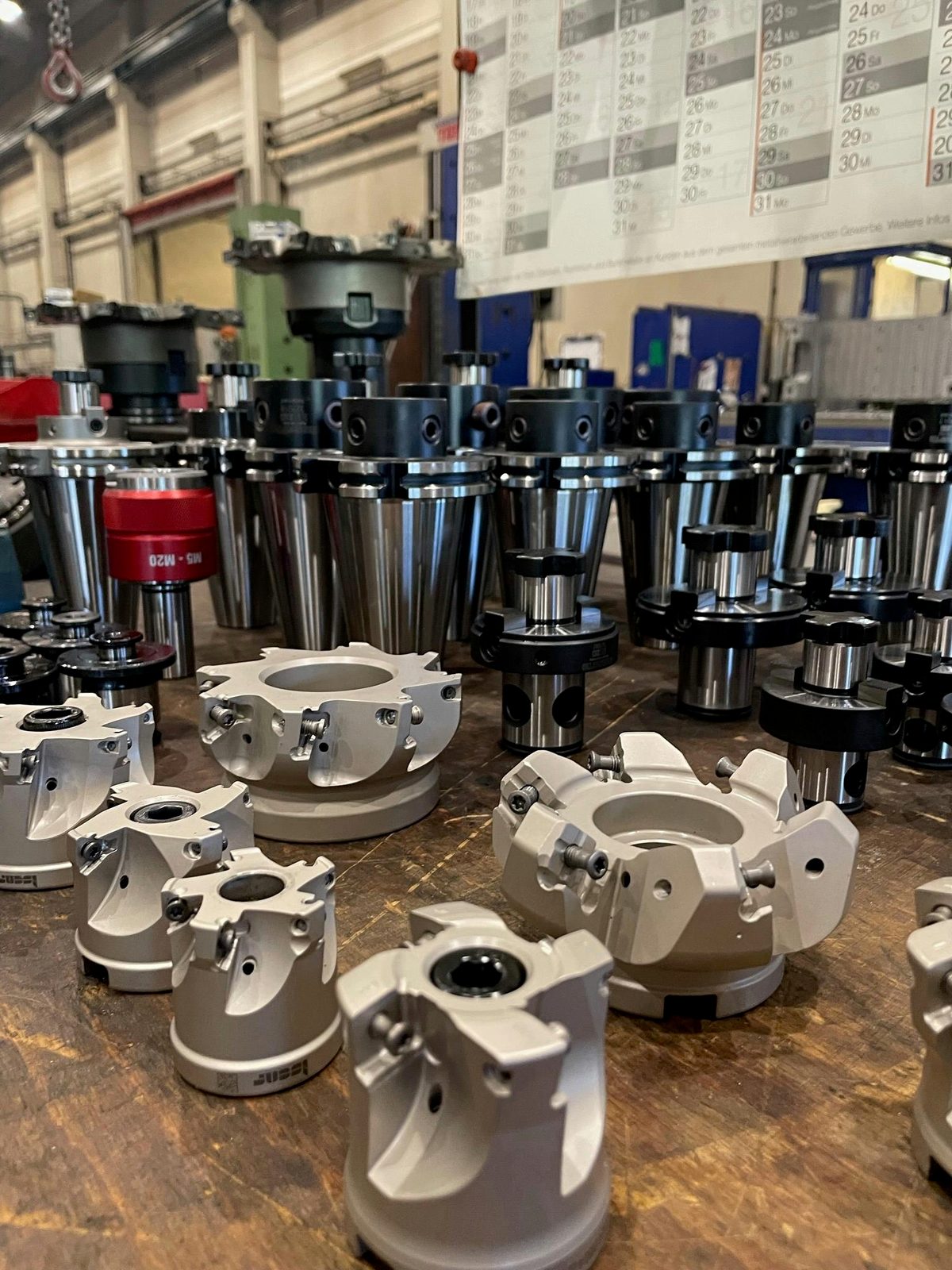
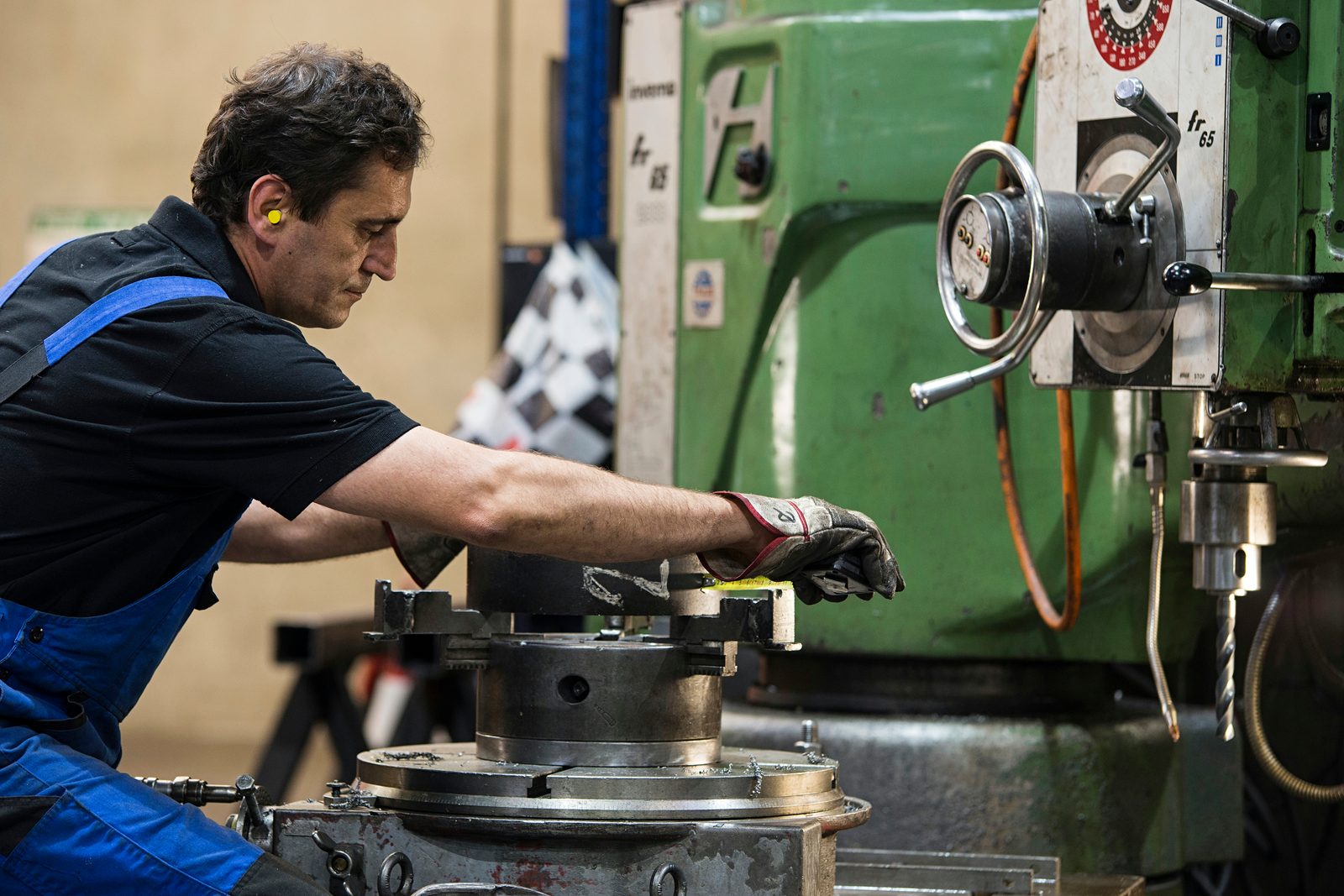
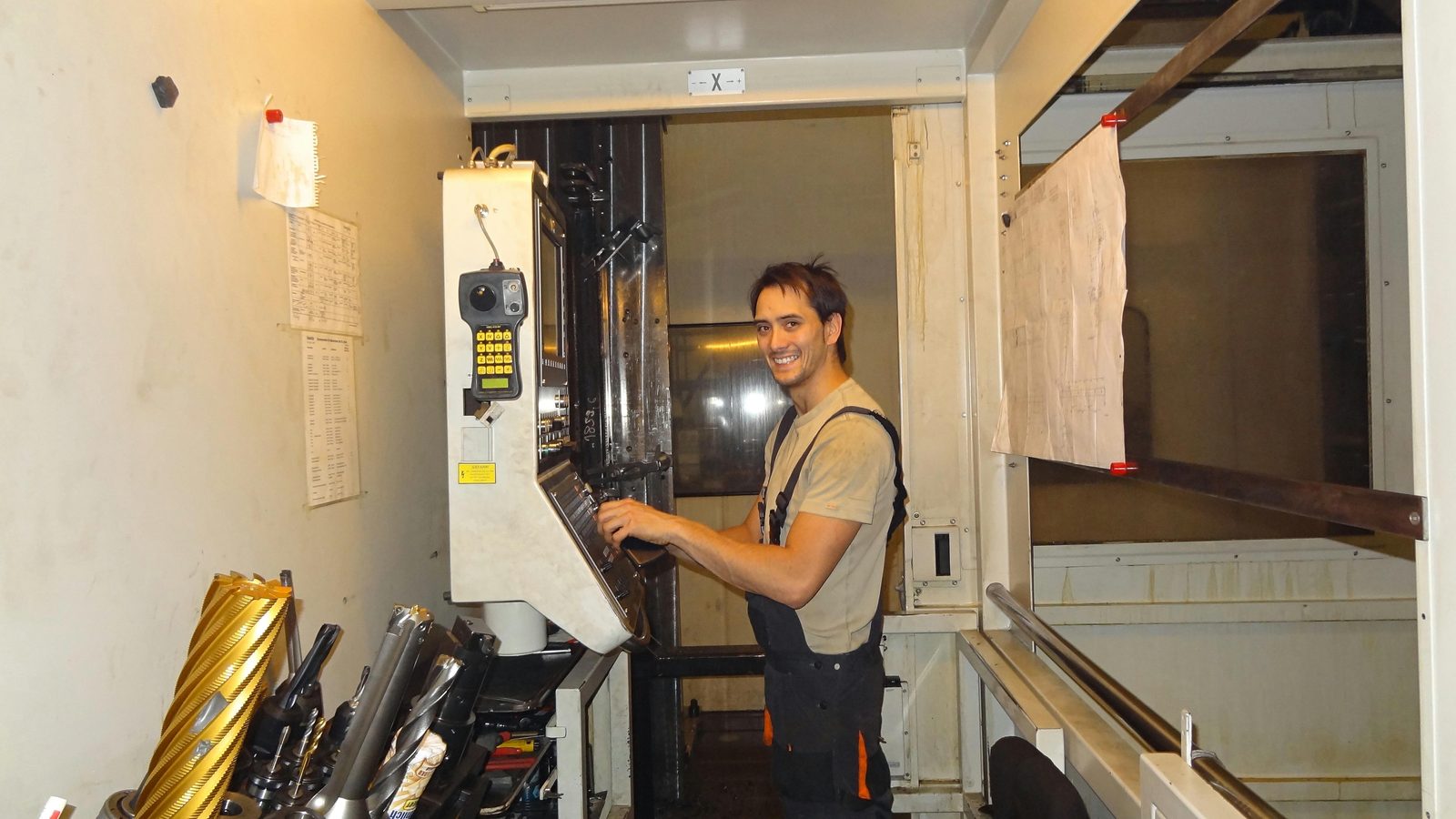
What CNC machinists make and how they work
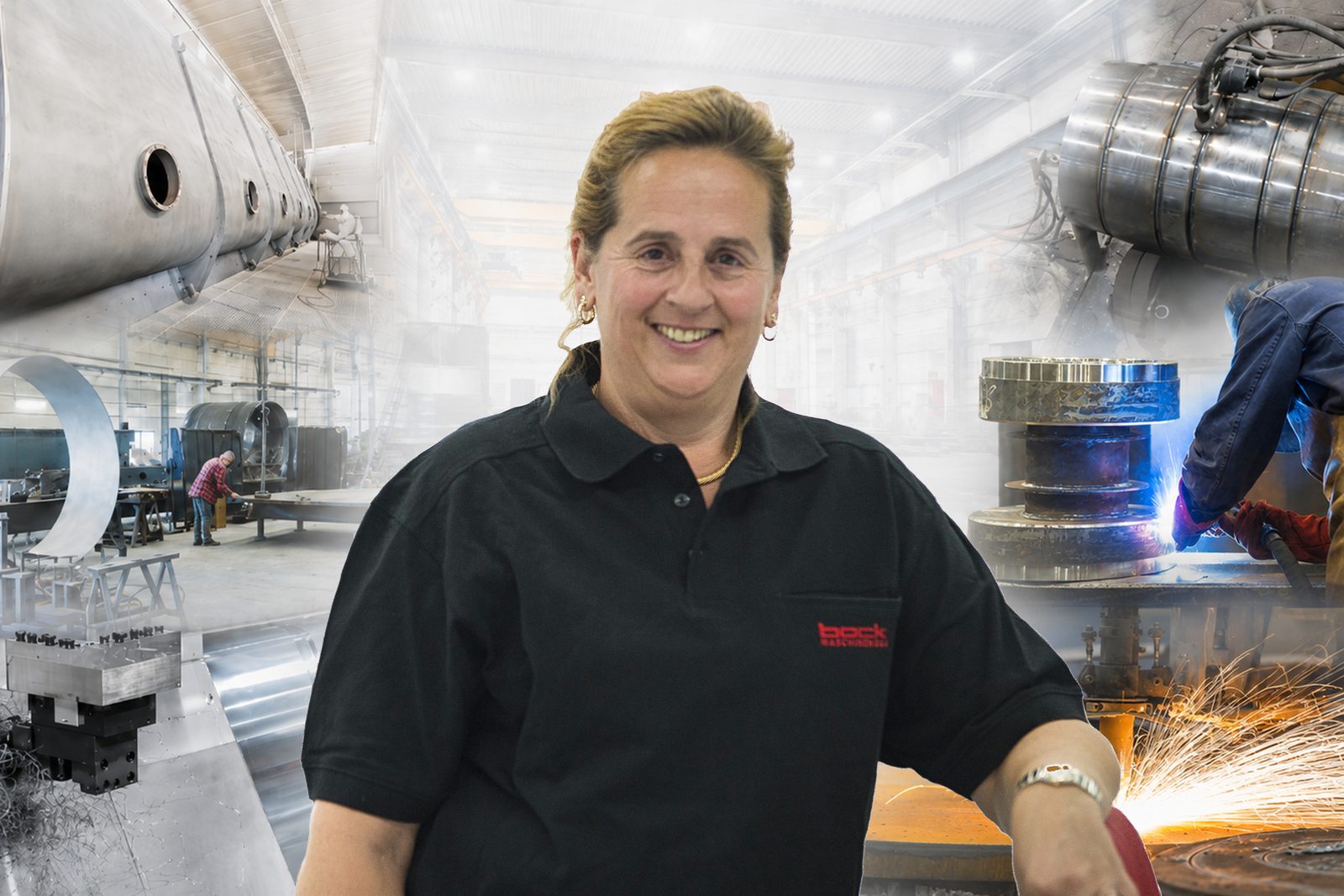
A casting, forging or welded assembly arrives at the machine with material still to remove. The drawing specifies the bores, surfaces and tolerances it needs. The CNC machinist plans the setup, selects the tools and programs the operations that turn this blank into a finished component.
Machining removes material as chips. Turning, milling and drilling each use this principle to produce a different geometry. Because excess material cannot simply be put back, the cutting sequence and the dimensions need careful checking.
Before the spindle starts, the machinist decides how to support and clamp the part, which reference surfaces to use and which tools and cutting data suit the material. The CNC control executes the program; the machinist plans the process and checks the result.
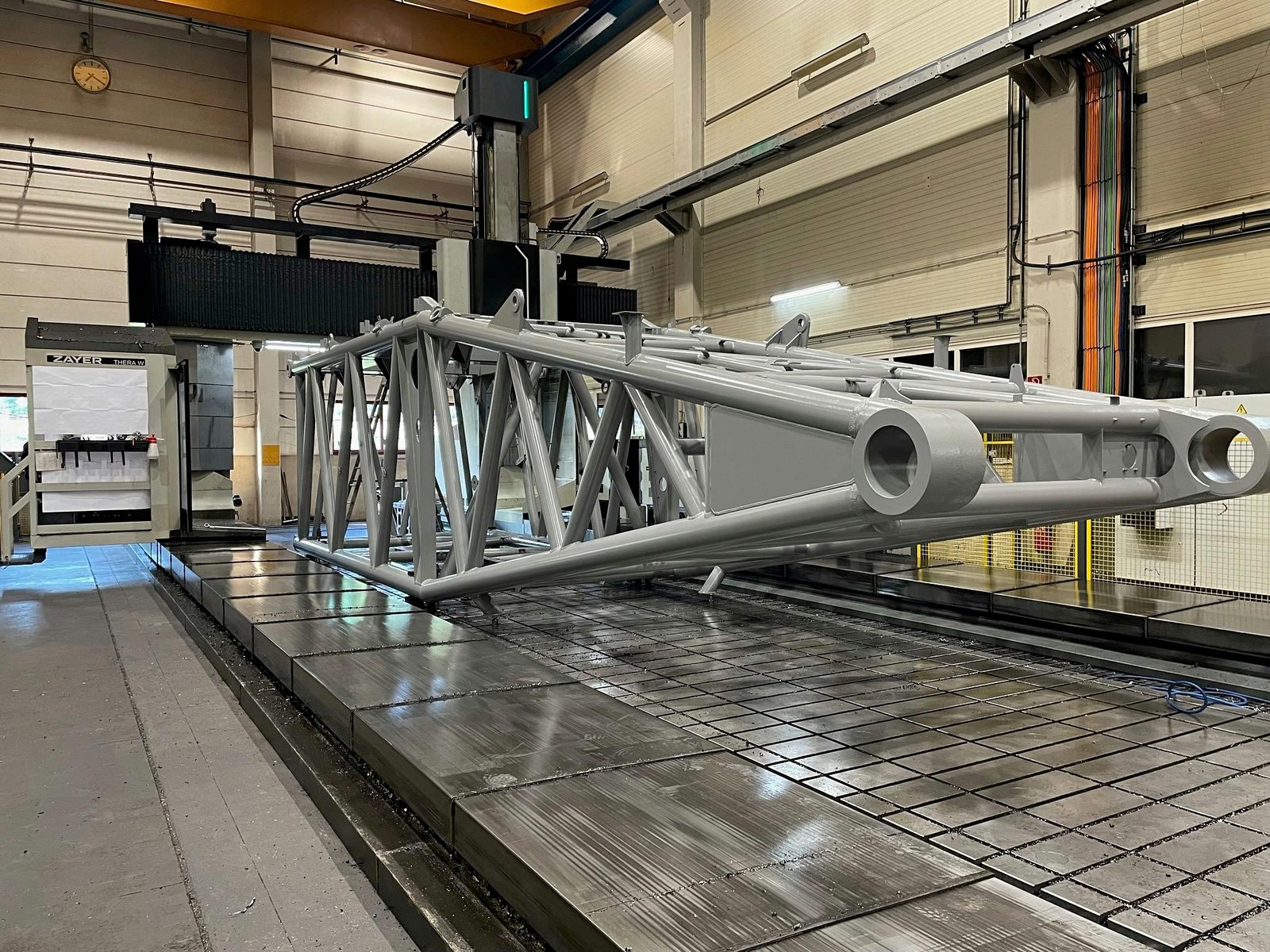
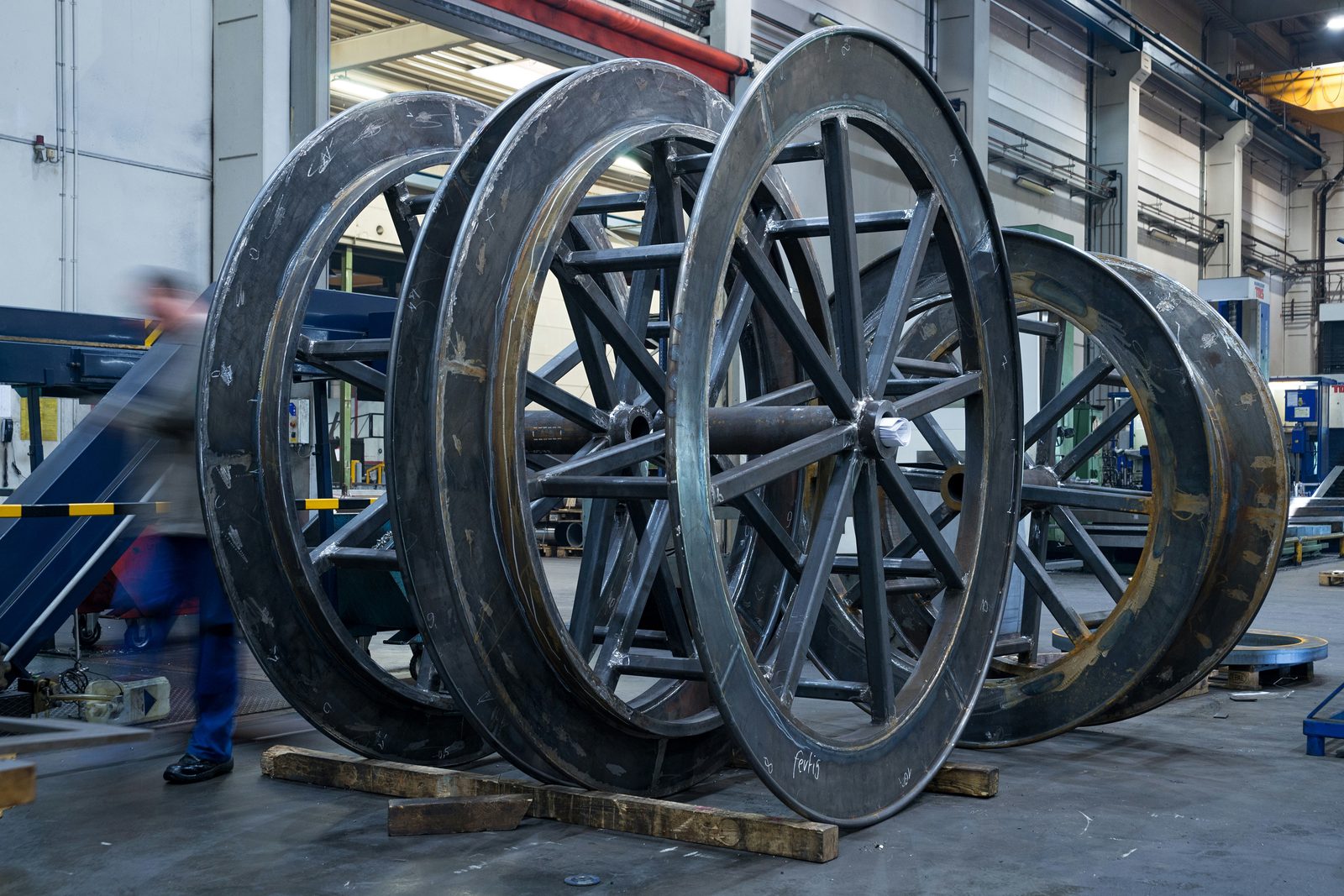
At Bock, this work includes machine beds, press frames, housings and large rings. Their scale makes setup planning especially important. Examples are shown on the CNC large-part machining page.
Daily tasks: setup, programming, tool selection and inspection
The cutting cycle is one part of the job. A typical order also involves planning, setup, programming and inspection:
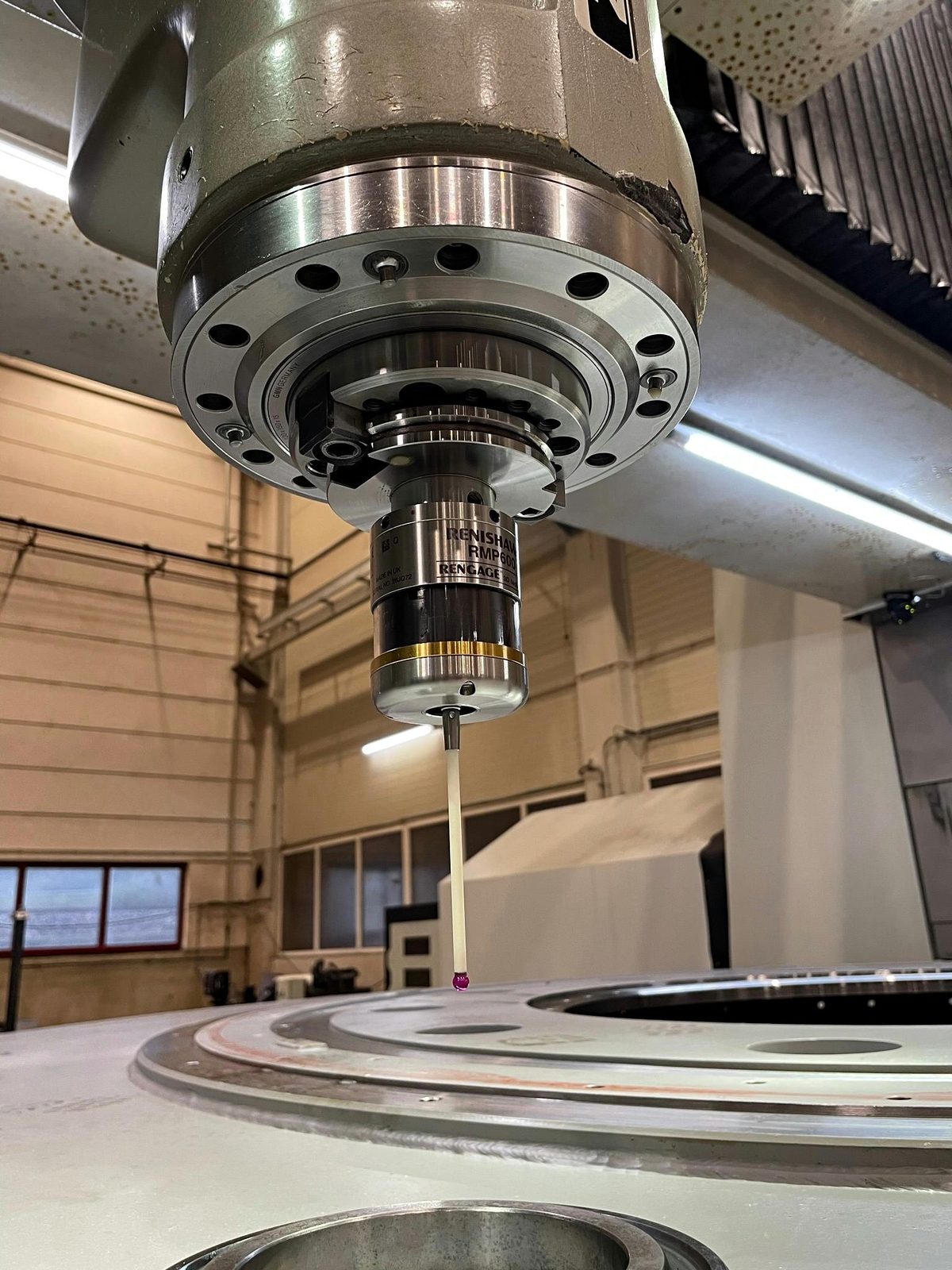
- Setting up: the component is clamped, aligned and probed. For a part that weighs several tonnes, this is not a quick task but a piece of planning – including the crane, the clamping equipment and the question of where it may be clamped without anything distorting.
- Programming and adjusting: CNC programs are written to the drawing and fine-tuned at the machine. With one-off parts, no proven program ever runs a second time – each one is written for exactly this component.
- Choosing and managing tools: cutting material, cutting speed, feed, depth of cut. The same milling cutter behaves differently in structural steel than in stainless steel – and a wrongly chosen tool costs not only tool life but, in the worst case, the component.
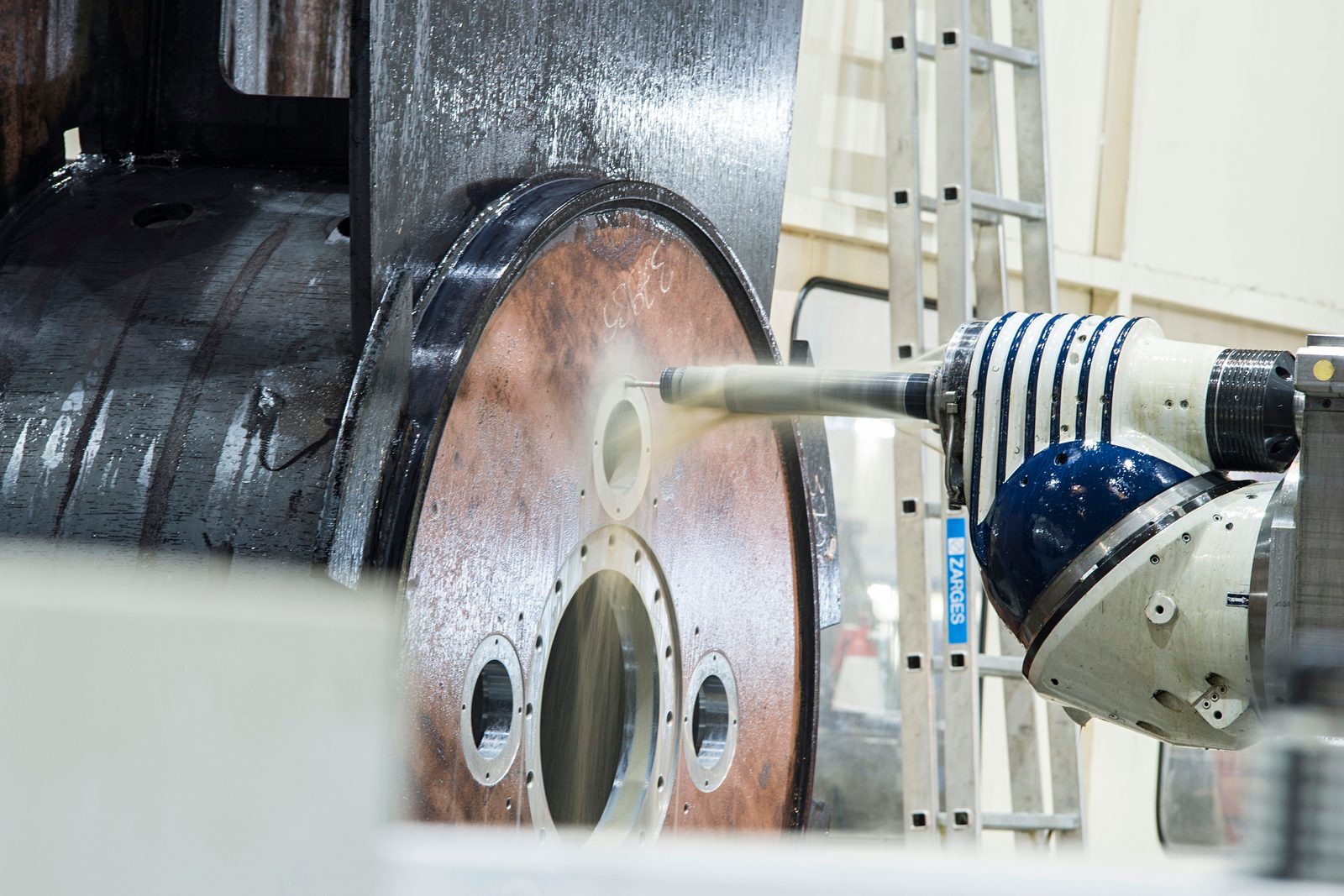
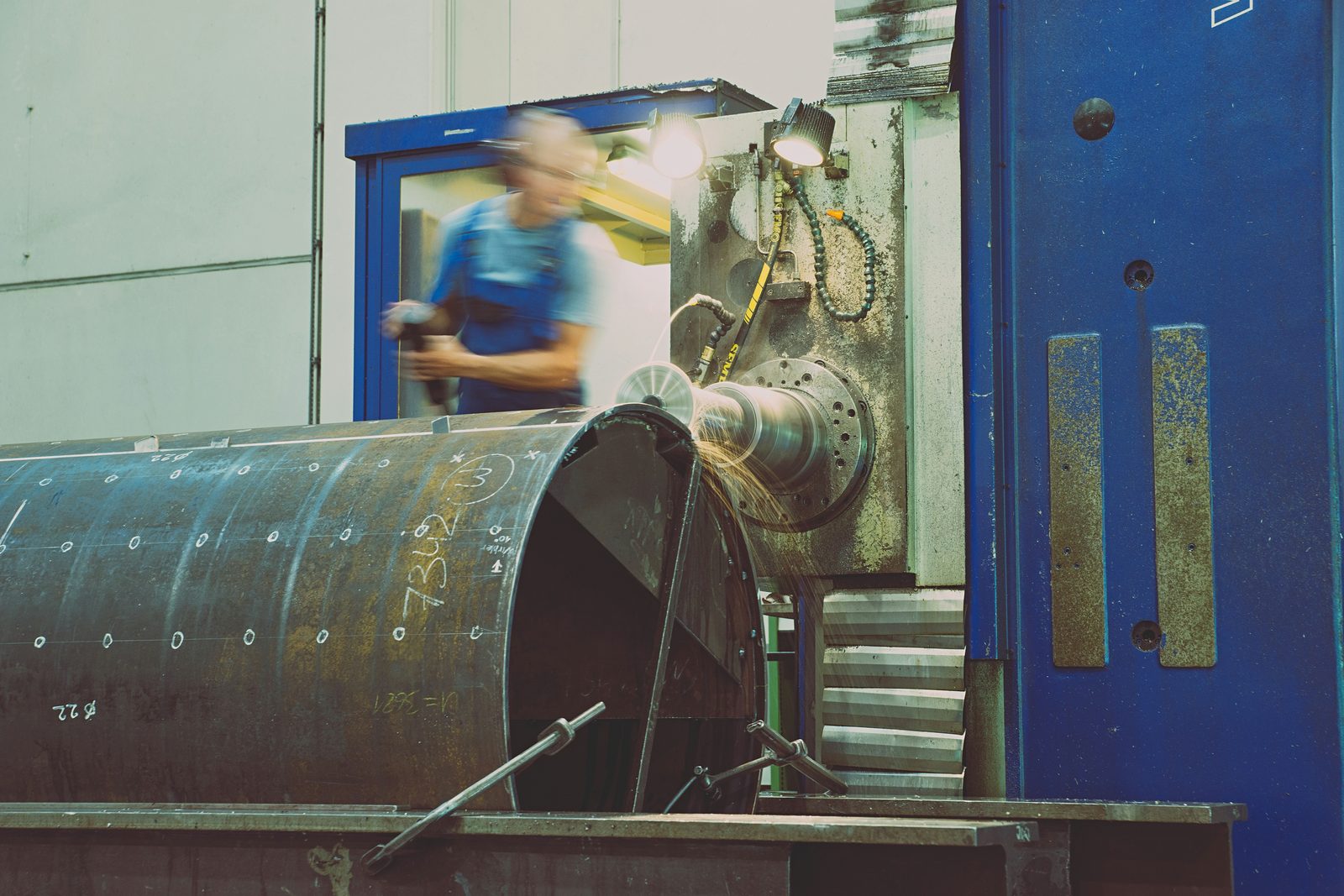
- Monitoring the first cut: watching the tool engagement, chip formation and spindle load, and listening for changes in the cut. These observations help identify problems early.
- Measuring and documenting: dimensional inspection on the workpiece, often while it is still in the setup. Only the inspection record turns a finished part into an accepted one.
Preparation gives the machining cycle a reliable starting point. Monitoring and measurement then confirm that the planned process is producing the required result.
CNC machining, industrial mechanics or toolmaking: how the roles differ
Three metalworking trades that are often lumped together. The difference lies in what you hold in your hand at the end:
| Feature | Zerspanungsmechaniker | Industriemechaniker | Werkzeugmechaniker (toolmaker) |
|---|---|---|---|
| What is produced in the end | A component with dimensionally accurate functional surfaces | A running machine or plant | The tool, mould or fixture that others use to produce |
| Core task | Removing material until the dimension is right | Assembly, maintenance, repair | Building and spotting tools and fixtures |
| What they work with | CNC milling, turning and drilling machines | Tools, measuring equipment, complete plants | Precision machining, EDM, grinding |
| Apprenticeship duration (dual) | 3.5 years | 3.5 years | 3.5 years |
| At Bock | Apprenticeship trade AND skilled-worker position | Recognised as prior training for the machinist position | Not an apprenticeship trade we train in-house |
Rule of thumb: the Werkzeugmechaniker builds the tool, the Zerspanungsmechaniker uses it, and the Industriemechaniker keeps the machine that holds both running.
Large-part machining: why setup matters so much
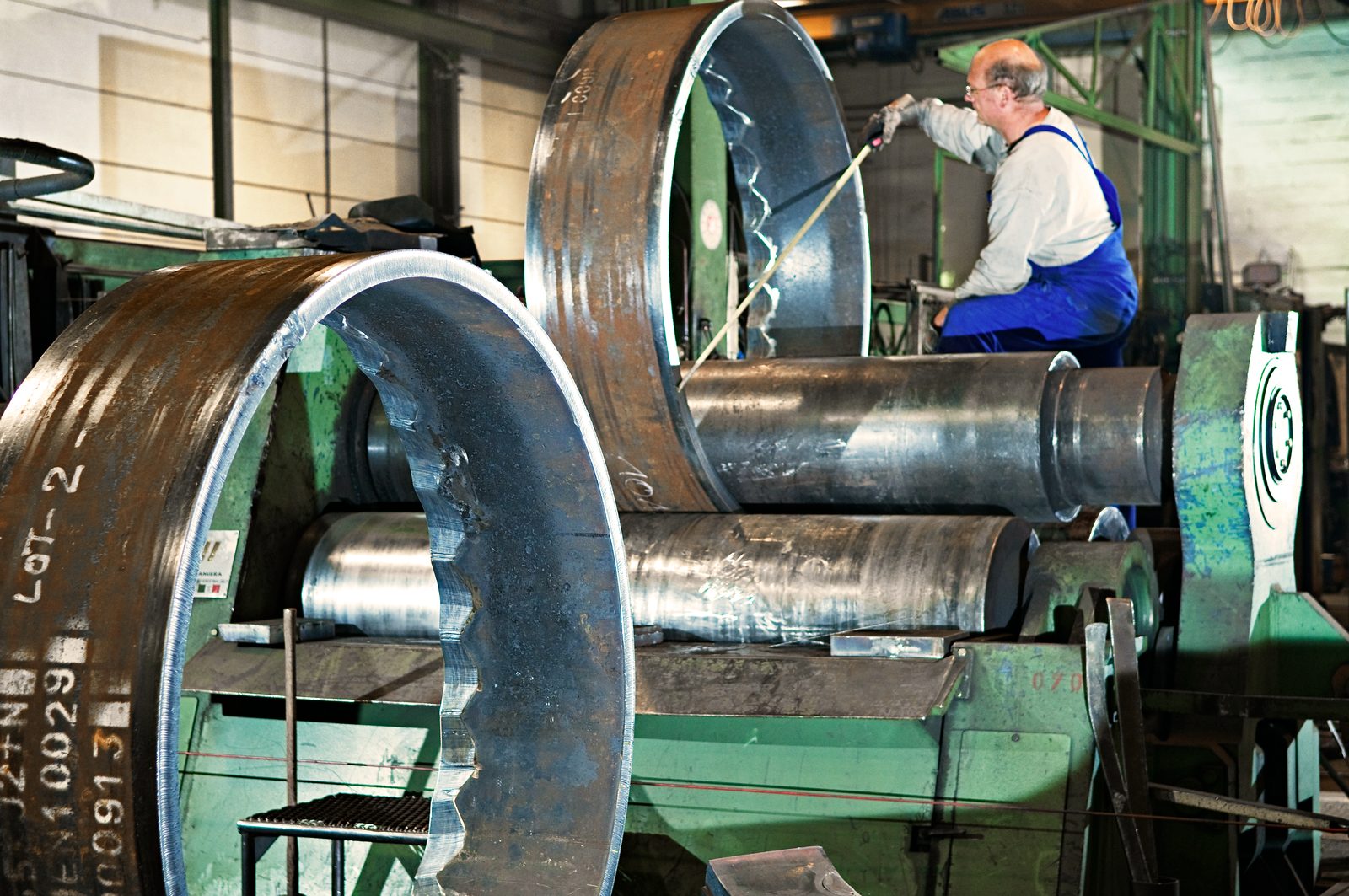
In series production, setup and programming are spread across many identical parts. In one-off and small-batch work, those decisions have to be made for each new component. With large parts, getting the setup right can matter more than reducing the cutting cycle by a few seconds.
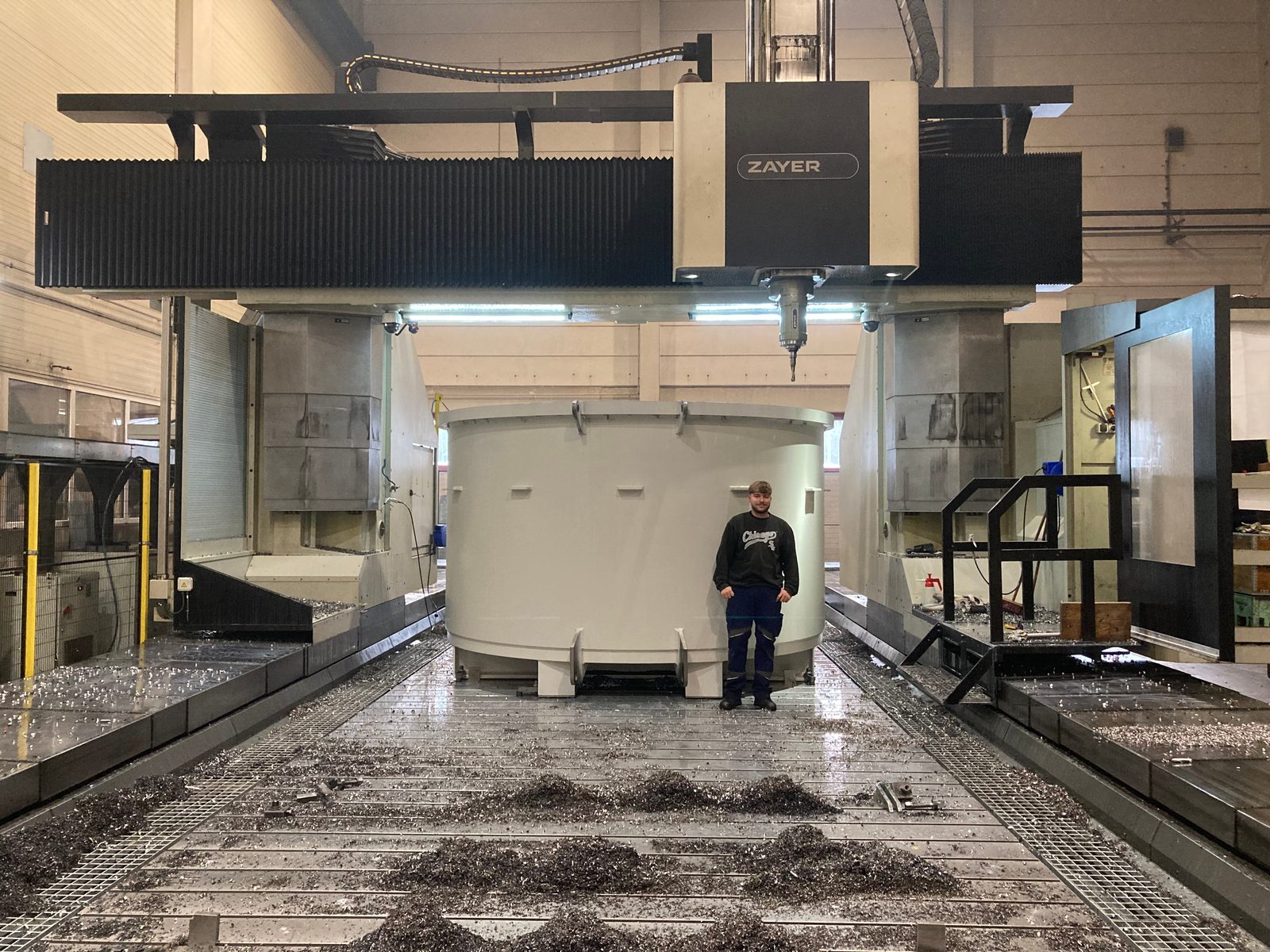
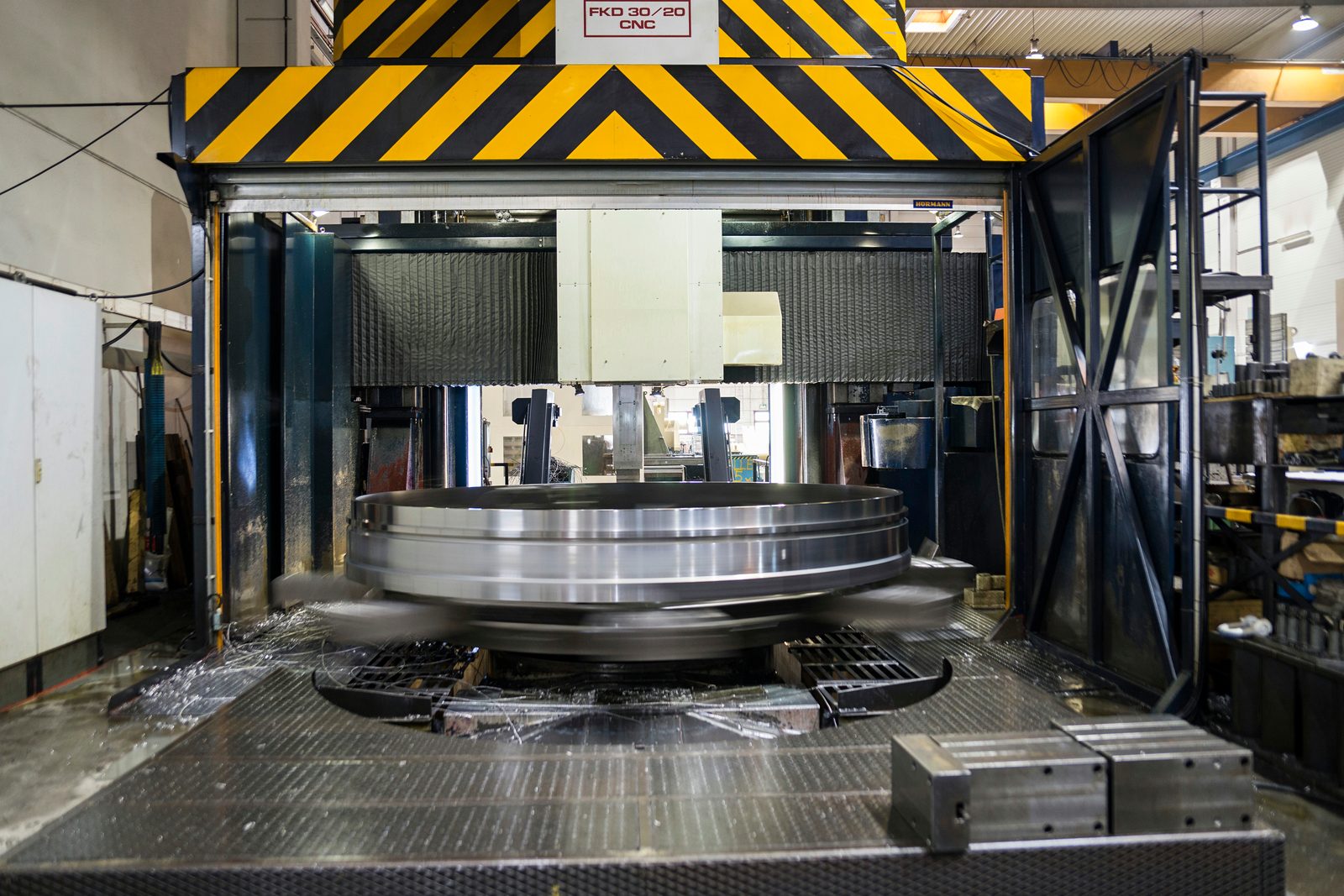
The machines set the scale. The larger of the two Zayer Thera W offers 26,000 mm of travel and a table clamping surface of 26,500 × 4,000 mm, the smaller one 16,000 mm and 16,500 × 3,000 mm; both are controlled by Heidenhain iTNC. Added to these are the Soraluce FR 20000 travelling-column milling centre and three TOS-Varnsdorf WHN 13 CNC horizontal boring mills. Turning is done, among others, on the Feichter FKD30/20 vertical lathe up to Ø 4,800 mm – and with driven tools, milling and drilling too, in a single setup.
For the trade, this means something very concrete: a component of 50 t is not simply re-clamped. Every additional setup costs hours, needs the crane and brings a new reference surface into the dimensional chain. That is why a machinist here thinks longer before starting – and has to re-mill less often afterwards.
By the time a welded component reaches machining, it may already contain weeks of cutting, fabrication and stress-relief work. Checking the clamping, tool path and work offset protects that investment and helps prevent avoidable scrap.
German job titles: turner, milling machinist and machining technician
Many names are in circulation for the same trade. Some are older than the trade itself, some come from Austria or the GDR, and one is a further qualification. What lies behind each of them:
| Title | What lies behind it | Valid |
|---|---|---|
| Zerspaner | Colloquial short form for Zerspanungsmechaniker, not a trade of its own | Current |
| Dreher, Universalfräser, Universalschleifer | Former industrial apprenticeship trades. The same ordinance that abolished them created the Zerspanungsmechaniker | until 31 July 1987 |
| Zerspanungsmechaniker with a Fachrichtung (specialism): turning, automatic lathe turning, milling or grinding | The trade in its first version. The specialisms no longer exist, but they still turn up online | 1 August 1987 to 31 July 2004 |
| Zerspanungsmechaniker with an Einsatzgebiet (area of deployment) | Today's trade: one common trade profile, plus an area of deployment set by the training company – automatic lathe, lathe, milling machine or grinding machine systems | since 1 August 2004 |
| Feinwerkmechaniker (precision mechanic), focus on machining technology | The counterpart in the skilled crafts, trained via the Handwerkskammer (Chamber of Skilled Crafts), likewise three and a half years | Current |
| Zerspanungstechniker (Germany) | Not an apprenticeship trade but a further qualification: Staatlich geprüfter Techniker (state-certified technician), among others in the field of machining technology | Current |
| Zerspanungstechniker (Austria) | Austrian job title. Since June 2011 the apprenticeship there has been called Metalltechnik (metal technology) with the main module Zerspanungstechnik (machining technology) | Current |
| Zerspanungsfacharbeiter | Skilled-worker trade in the GDR, continued until 1990 as Facharbeiter für Werkzeugmaschinen (skilled machine-tool worker) | 1976 to 1985 |
Rule of thumb: in Germany the apprenticeship trade in industry is called Zerspanungsmechaniker, in the skilled crafts Feinwerkmechaniker. You only become a “Techniker” afterwards, through a further qualification – the routes available are described in the chapter After the apprenticeship.
The German apprenticeship: from manual machining to CNC programming
The apprenticeship takes three and a half years, alternating between the company and vocational school (dual vocational training). The ordinance sets out a common trade profile, and the training company also defines one of four areas of deployment: automatic lathe, lathe, milling machine or grinding machine systems. Here a similar line runs through the workshop – milling and boring on gantry milling machines, the travelling column and boring mills is one work area, turning on the vertical lathe another. The order of the apprenticeship is deliberately old-fashioned – CNC comes last:
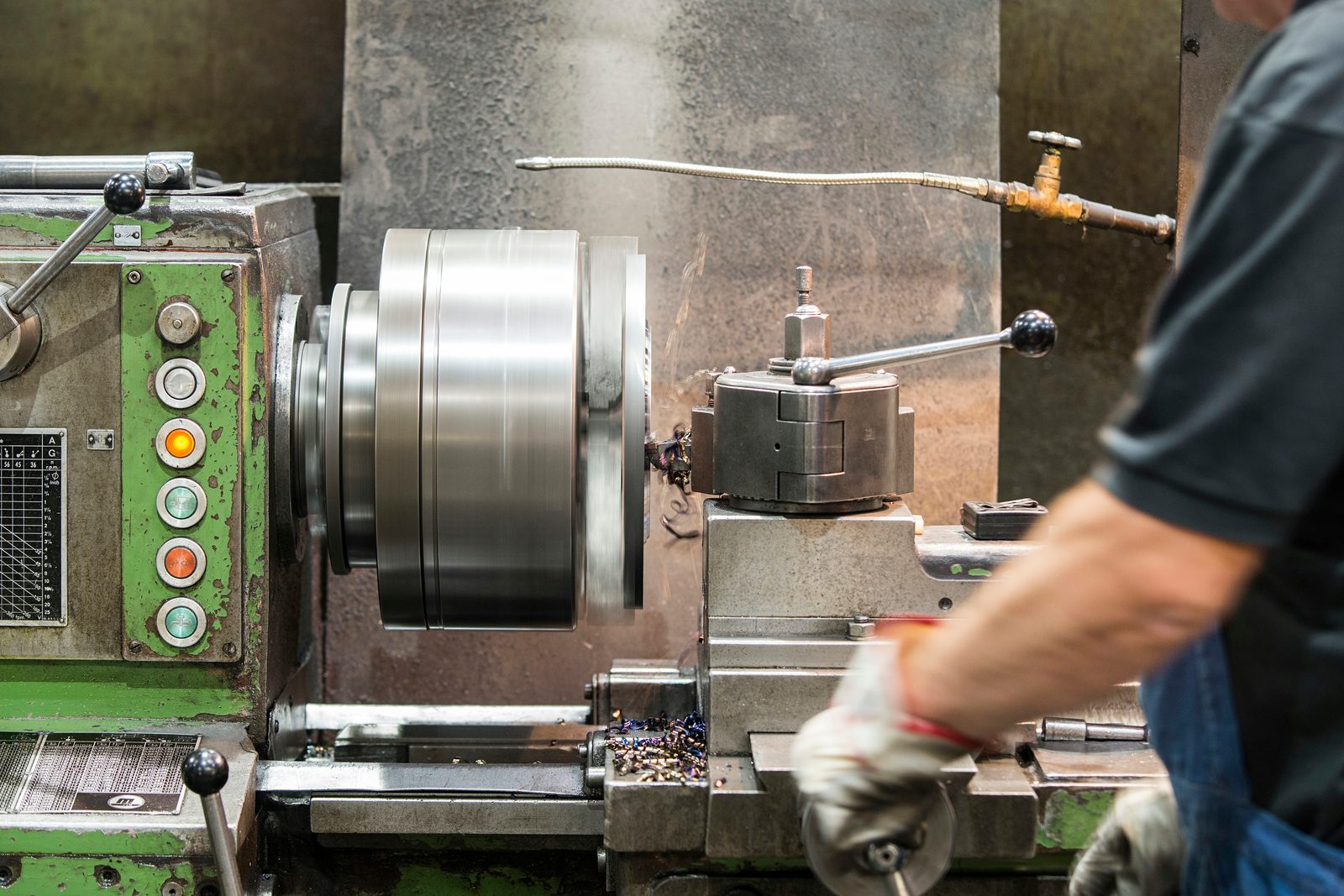
- By hand first: on the conventional lathe you develop a feel for chip, spindle speed and feed. Anyone who only knows CNC cannot judge later whether a value is plausible.
- Reading drawings: dimensions, tolerances, geometric tolerancing symbols, surface specifications. Without this, a CNC program is merely typed in.
- Learning to set up: clamping, aligning, setting the zero point – first on manageable parts, later on the large ones.
- Programming under guidance: first programs of your own on Heidenhain and Siemens controls, initially on simple contours.
- Inspecting: vernier caliper, micrometer, dial gauge, probing systems. Self-inspection is part of it from the very beginning.
Apprentices work on components for customer orders, with guidance from experienced colleagues. As their skills develop, they take on more responsibility for setup, machining and checking their own work.
The two-part final examination: 40% and 60% of the grade
In Germany, the former intermediate examination was replaced in 2007 by a final examination held in two parts at different stages of training. Both parts count towards the overall result.
- Part 1, before the end of the second year of the apprenticeship: a production assignment in turning-milling, turning-grinding or milling-grinding technology, at most eight hours including written tasks. It counts for 40 per cent of the overall grade.
- Part 2, at the end of the apprenticeship, counts for 60 per cent. Half of it is the work assignment – either an order from the company itself or a practical work task, each with a technical discussion. Which variant applies is chosen by the training company.
- Written papers in Part 2: order and function analysis and production technology at 20 per cent each, economics and social studies at 10 per cent.
- Since 1 August 2018, additional qualifications can be agreed: system integration, process integration, additive manufacturing processes and IT-supported plant modification. On application, they are examined as a separate examination within Part 2.
In practice this means: Part 1 is not a dress rehearsal. Anyone who sits the examination after two years already fixes two fifths of their grade there – and the production assignment demands exactly what the apprenticeship above builds up in this order: evaluating documents, planning the sequence, producing, inspecting and documenting.
Before and after machining: the production chain at Bock
A machinist never works on their machine alone – they work on what others have done before. At Bock, these steps are under one roof on 14,000 m²:
- Before machining: cutting, forming and the welded structure to DIN EN 1090-2 EXC3. Anyone who sees their blank being made knows where the allowances are and what to expect.
- Stress relieving: vibration stress relief before machining, so that the component does not move only after milling. That is the difference between a dimension and a dimension that holds.
- Materials from our own stock, over 40 grades with inspection certificate 3.1 to EN 10204 – from structural steel through wear-resistant steel to stainless steel. Each one requires different cutting data.
- After machining: shot blasting, painting and assembly. Anyone who knows what comes next understands why a mating surface has to be protected.
- Crane logistics up to 25 t: with components of this size, slinging is part of the trade, not a side job.
In everyday work, this proximity is a tangible advantage: if something about a component is unclear, the colleague who welded it is two halls away – and not at a supplier you have to call.
What to consider before becoming a CNC machinist
CNC machining combines numerical work, careful organisation and responsibility for valuable components. The main demands are:
- Practical maths: spindle speed, feed, depth of cut and tolerance limits involve calculations every day. The methods can be learned; applying them carefully is part of the job.
- Patience during long cycles: roughing a large component can take hours. Setup, monitoring and inspection remain important even when progress is gradual.
- Responsibility for the workpiece: a part may already contain weeks of other people’s work. Checking the setup and program helps protect it before cutting begins.
- An organised approach: tools, work offsets and inspection records must be kept in order so that the process remains reliable and traceable.
- An interest in precision machining: the focus is on producing dimensions and surfaces. Those who prefer assembling structures from separate parts may want to explore structural metal fitting, the Konstruktionsmechaniker trade.
Structural metal fitter: tasks, training and career paths
How do separate steel parts become an accurately fitted machine frame? A look at the work, judgement and German training route behind structural metal fitting.
Explore the tradeCareer paths and further qualifications
The final apprenticeship examination marks the start of a skilled career. As experience grows, machinists take on more demanding components and greater responsibility for the setup and machining sequence.
Formally, three further qualifications lead onwards: to Geprüfter Industriemeister, Fachrichtung Metall (certified industrial master craftsman, metal), to Geprüfter Technischer Fachwirt (certified technical business administrator) – both via the IHK (Chamber of Industry and Commerce) – and to Staatlich geprüfter Techniker at a Fachschule (technical college), for example in mechanical engineering or machining technology. The Techniker is also what lies behind “Zerspanungstechniker” in Germany: a qualification after the apprenticeship, not a substitute for it.
Then there is the range of machines. Anyone who can operate gantry milling machines, the travelling column, the boring mill and the vertical lathe is a different kind of partner in process planning from someone who knows one machine. And the neighbouring trades are in the same building: welding to DIN EN 1090-2 EXC3, non-destructive testing by personnel qualified to ISO 9712, surface technology.
What ends up on the payslip depends on concrete things: on the machines someone runs confidently, on the responsibility in setting up and on whether a program is written by oneself or merely run. That is why we do not quote a flat figure – pay depends on qualification, professional experience, area of work and individual agreement. Regardless of that, the same benefits apply to everyone in the company, from the company pension scheme to the travel allowance; they are listed on the page Careers at Bock, in a family business with 63 years of manufacturing experience.
Steel construction apprenticeships: which trade suits you?
Follow a component through the workshop to discover the work of fitters, machinists and welders, and how German apprenticeships prepare people for these roles.
Explore apprenticeshipsCNC machining in pictures
Revisit the workshop images from this article. Select an image to return to its chapter.
-
The trade -
1 What CNC machinists make and how they work -
2 Daily tasks: setup, programming, tool selection and inspection -
2 Daily tasks: setup, programming, tool selection and inspection -
4 Large-part machining: why setup matters so much -
6 The German apprenticeship: from manual machining to CNC programming -
8 Before and after machining: the production chain at Bock -
10 Career paths and further qualifications
Frequently asked questions about the CNC machinist trade
What does a CNC machinist do?
A CNC machinist turns, mills and drills material to produce the dimensions and surfaces specified on a drawing. The job includes choosing the clamping arrangement, planning the cutting sequence, selecting tools, programming and inspecting the finished work. Careful setup is especially important on large components, where an error can affect weeks of previous work. In Germany, the recognised apprenticeship is called Zerspanungsmechaniker.
How does a CNC machinist differ from an industrial mechanic?
A CNC machinist, trained in Germany as a Zerspanungsmechaniker, produces components by removing material. An industrial mechanic, or Industriemechaniker, installs, maintains and repairs machinery. Our machinist vacancy accepts a completed apprenticeship in either trade.
Is a Zerspanungstechniker the same as a Zerspanungsmechaniker?
No: in Germany the Zerspanungsmechaniker is the apprenticeship trade, whereas “Zerspanungstechniker” refers to a further qualification afterwards or to an Austrian job title. In Germany you become a Techniker through a Fachschule, as a Staatlich geprüfter Techniker, for example in the field of machining technology. In Austria the trade itself has that name; the apprenticeship for it is Metalltechnik with the main module Zerspanungstechnik.
Do I need good maths grades for the apprenticeship?
Good maths grades help, but the essential skills are practical: calculating cutting data, understanding tolerances and checking results carefully. These methods can be learned during training. Reliability, care and a willingness to learn matter alongside school grades.
Which controls and machines are used?
Milling is done on two Zayer Thera W (up to 26,000 mm of travel) and the Soraluce FR 20000 travelling-column milling centre, boring on three TOS-Varnsdorf WHN 13 CNC, turning among others on the Feichter FKD30/20 vertical lathe up to Ø 4,800 mm. On the control side, Heidenhain and Siemens 840D are in use in-house.
What does a CNC machinist earn at Bock?
We deliberately do not quote a figure that applies to everyone: at the Zayer, the vertical lathe and the boring mill, experience and responsibility are distributed differently, and that is exactly what pay depends on – alongside qualification, area of work and individual agreement. The benefits that apply to everyone regardless are listed on the careers page.
Can I move into this role from series production or another career?
From series machining yes, entirely without metalworking training no: our skilled-worker position requires a completed apprenticeship as a Zerspanungsmechaniker or Industriemechaniker. Anyone coming from series production has less to adjust than it sounds – the processes are the same, only the setup counts instead of seconds per part, and instead of a run-in program a new one is written for each component. Experience on CNC milling centres or on the horizontal boring mill is the foundation, programming is done on the Heidenhain control; the rest comes on the component. Anyone who wants to enter the trade without an apprenticeship starts with the apprenticeship place.
Where exactly is the workplace?
In 73547 Lorch in the Ostalbkreis, near Schwäbisch Gmünd – machining is under the same roof as the welding shop and the fitting shop, and the distances between the trades are short. The site can also be reached from Schorndorf, Aalen, Göppingen and Stuttgart; there is an allowance towards travel costs.
Sources on apprenticeship, examination and job titles
Each entry states which statement it supports. Ordinances are cited with their date and reference in the Bundesgesetzblatt (Federal Law Gazette). The linked sources were accessed and read on the date given.
- Reorganisation of the industrial metal trades as of 1 August 1987 with the Zerspanungsmechaniker in specialisms; among others, Dreher, Universalfräser and Universalschleifer were abolished Verordnung über die Berufsausbildung in den industriellen Metallberufen (Industrielle Metall-Ausbildungsverordnung – IndMetAusbV) of 15 January 1987 (ordinance on vocational training in the industrial metal trades)
- Areas of deployment instead of specialisms since 1 August 2004 Verordnung über die Berufsausbildung in den industriellen Metallberufen of 9 July 2004
- Apprenticeship duration of three and a half years, four areas of deployment and their definition by the training company, final examination Part 1 and Part 2 weighted 40 to 60, additional qualifications and their separate examination Verordnung über die Berufsausbildung in den industriellen Metallberufen (IndMetAusbV 2007) as promulgated on 28 June 2018 (BGBl. I S. 975)
- Four additional qualifications in the industrial metal trades, in force since 1 August 2018 Zweite Verordnung zur Änderung der Verordnung über die Berufsausbildung in den industriellen Metallberufen of 7 June 2018 (second amending ordinance)
- Feinwerkmechaniker in the skilled crafts – three and a half years, focus on machining technology Verordnung über die Berufsausbildung zum Feinwerkmechaniker und zur Feinwerkmechanikerin (FeinwAusbV) of 7 July 2010 (training ordinance for precision mechanics)
- Profile of the apprenticeship trade – 42 months, areas of deployment, legal basis Zerspanungsmechaniker/Zerspanungsmechanikerin – BIBB-Berufesuche (BIBB occupation search)
- Zerspanungsmechaniker specialising in turning (Fachrichtung Drehtechnik), 1987 to 2004 Zerspanungsmechaniker/in – Drehtechnik (Archiv-Steckbrief, archived occupation profile)
- Zerspanungsfacharbeiter as a skilled-worker trade in the GDR and its successor title Zerspanungsfacharbeiter/in (Archiv-Steckbrief, archived occupation profile)
- Staatlich geprüfter Techniker at Fachschulen, among others in the field of machining technology Rahmenvereinbarung über Fachschulen (framework agreement on technical colleges; resolution of the Kultusministerkonferenz of 7 November 2002, as amended)
- Austria – Metalltechnik apprenticeship with the main module Zerspanungstechnik Metalltechnik-Ausbildungsordnung – Rechtsinformationssystem des Bundes (Austrian federal legal information system)