Zayer Thera W 16000 gantry milling machine: our 2017 investment
Contents
Why we invested in a new gantry milling machine in 2017
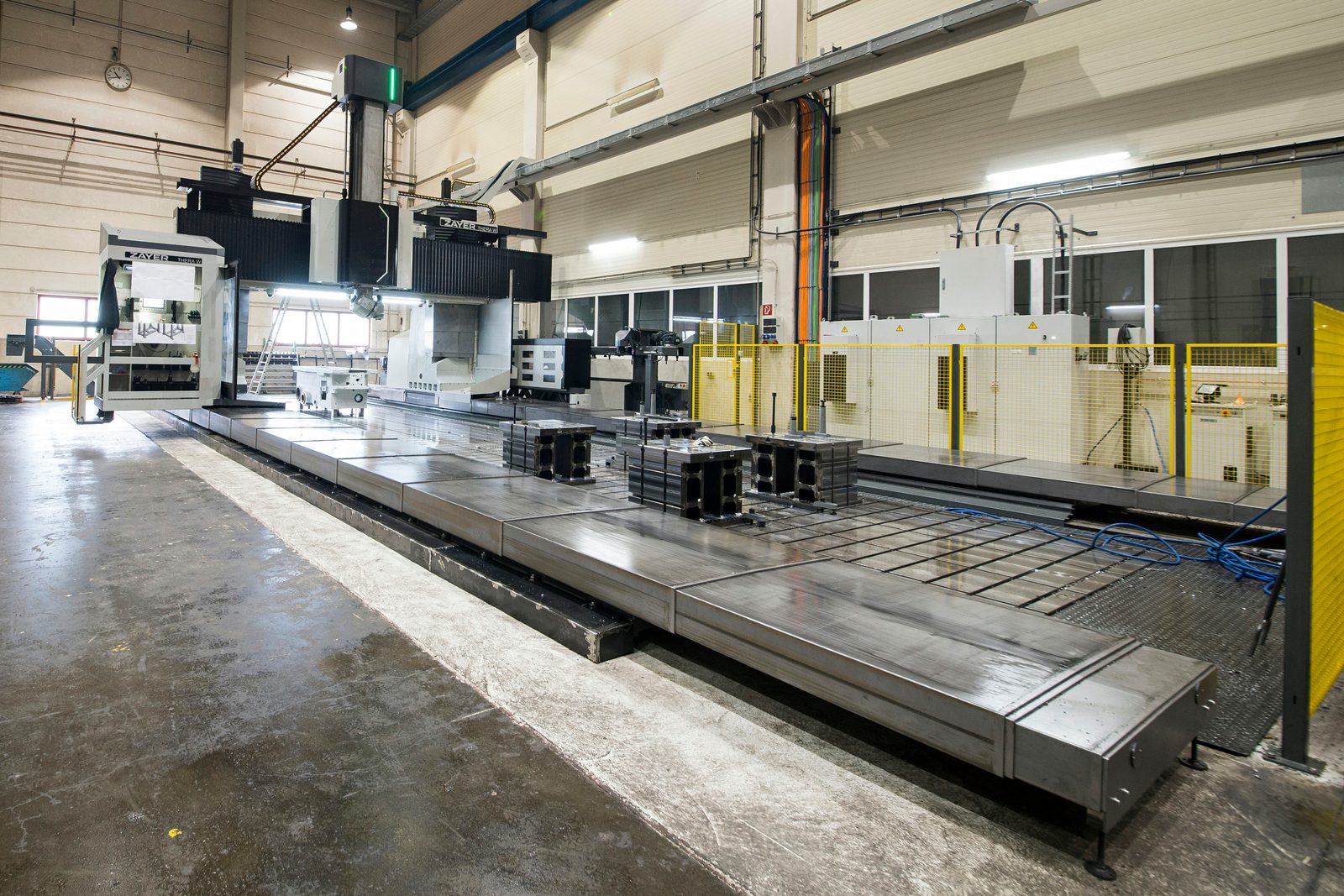
By 2017, orders from special-purpose machine building and plant engineering were calling for larger, heavier components and tighter tolerances. The investment in the Thera W 16000 expanded the space and machining capability available for that work.
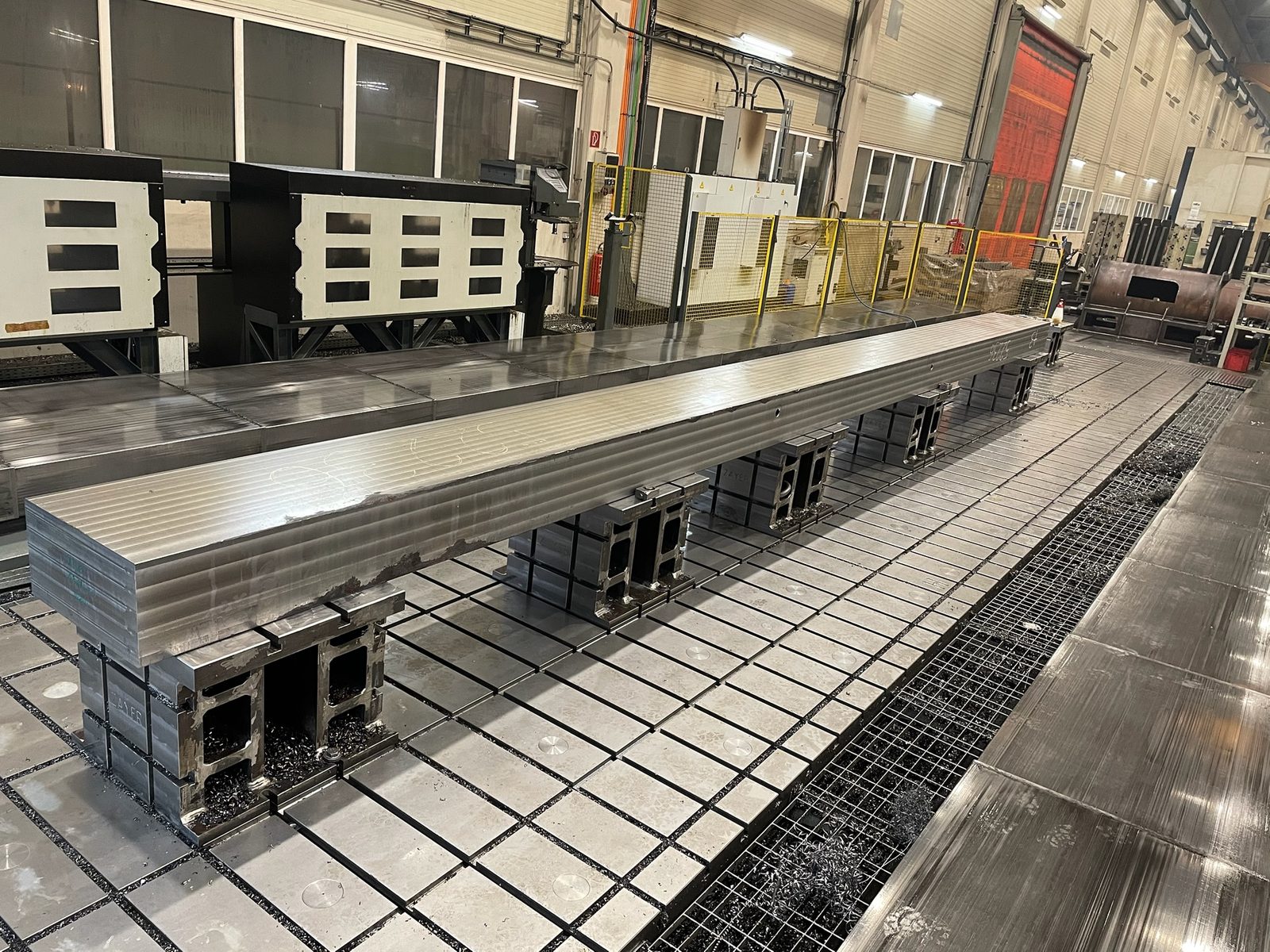
The Zayer Thera W 16000 offers 16,000 mm of travel in length, 4,000 mm in width and 2,850 mm in height. Its table clamping surface measures 16,500 × 3,000 mm. These dimensions describe the working envelope; clamping equipment and tools also take up space within it.
The news item of the time documents the expansion of large-part machining. For an enquiry today, what counts is the drawing and the current machine data: travel alone implies neither a guaranteed workpiece tolerance nor that every geometry can be machined.
The Zayer Thera W 16000 in detail
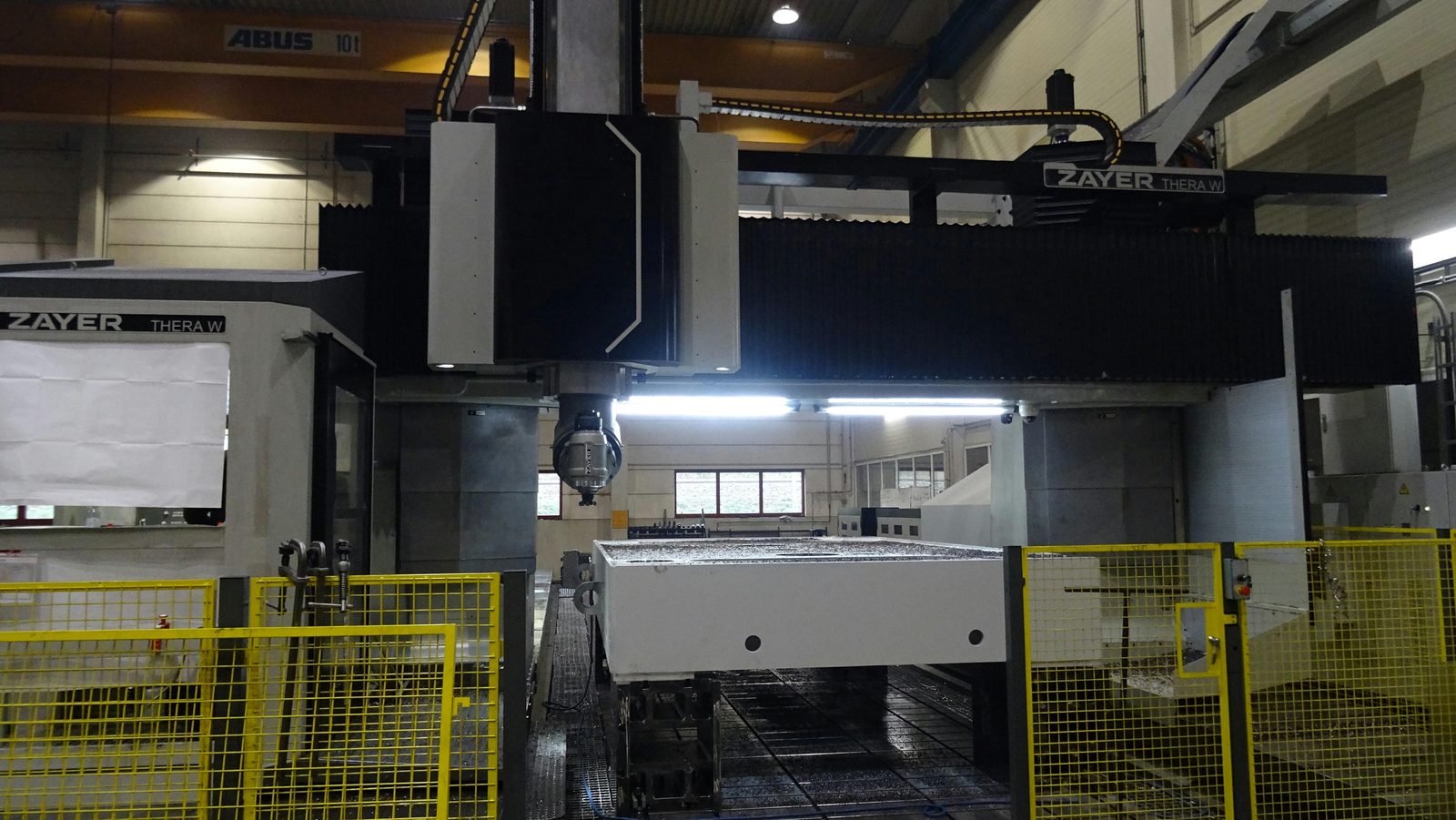
The key data of the machine as it still works in our production in Lorch today:
| Feature | Value |
|---|---|
| Travel X (length) | 16,000 mm |
| Travel Y (width) | 4,000 mm |
| Travel Z (height) | 2,850 mm |
| Table clamping surface | 16,500 × 3,000 mm |
| Milling head | 30° swivel head, positionable to 0.001° in any position |
| Main drive | Heidenhain · 43 kW |
| Control | Heidenhain iTNC 530 HSCI |
| Guideway | Roller way with adjustable pre-tensioning of the roller shoes |
Travel, table surface and component size are different measures. Clamping equipment, tool length and freedom from collision must also be checked; positioning the head in 0.001° steps is not a workpiece tolerance.
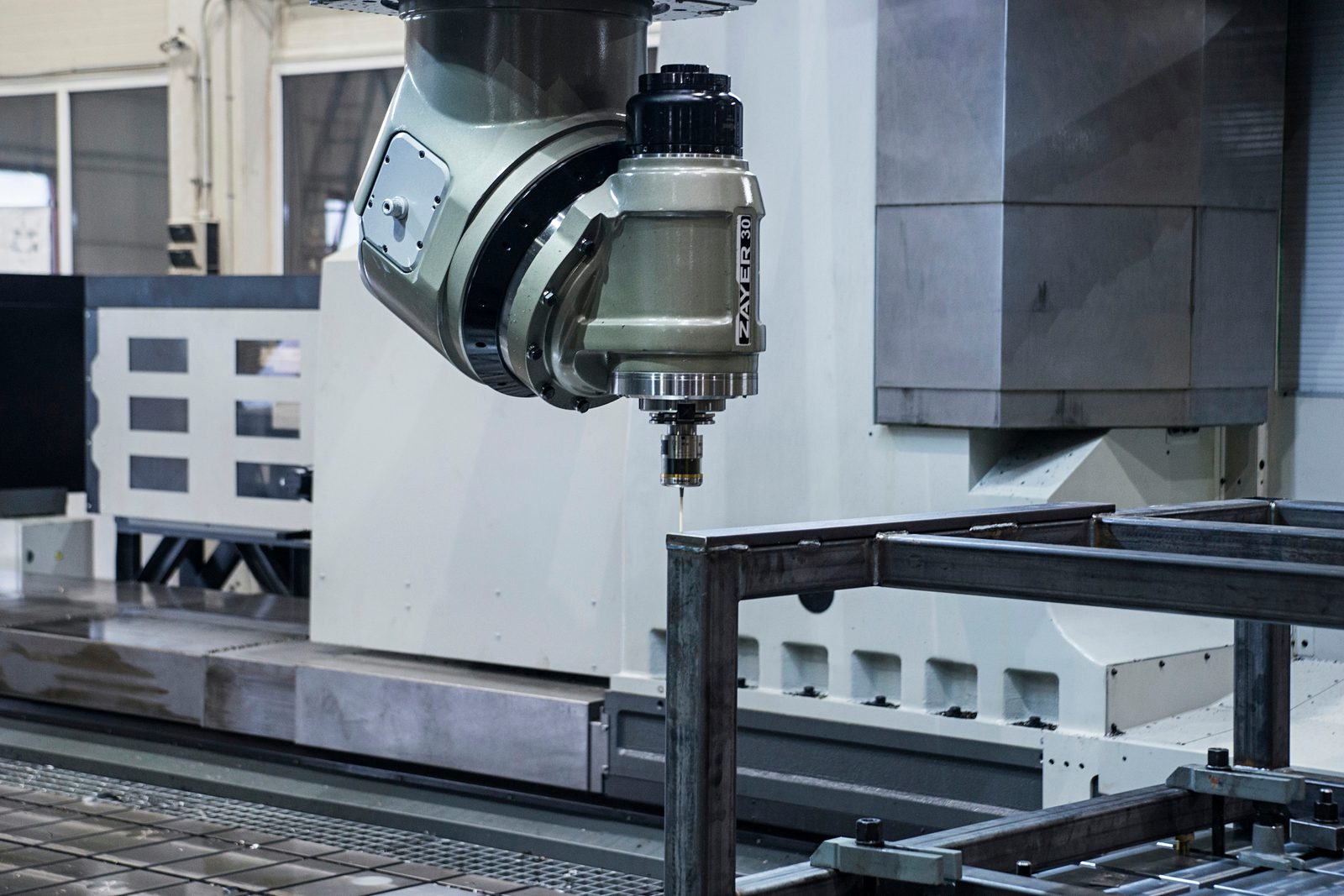
30° milling head: positioning and tool access
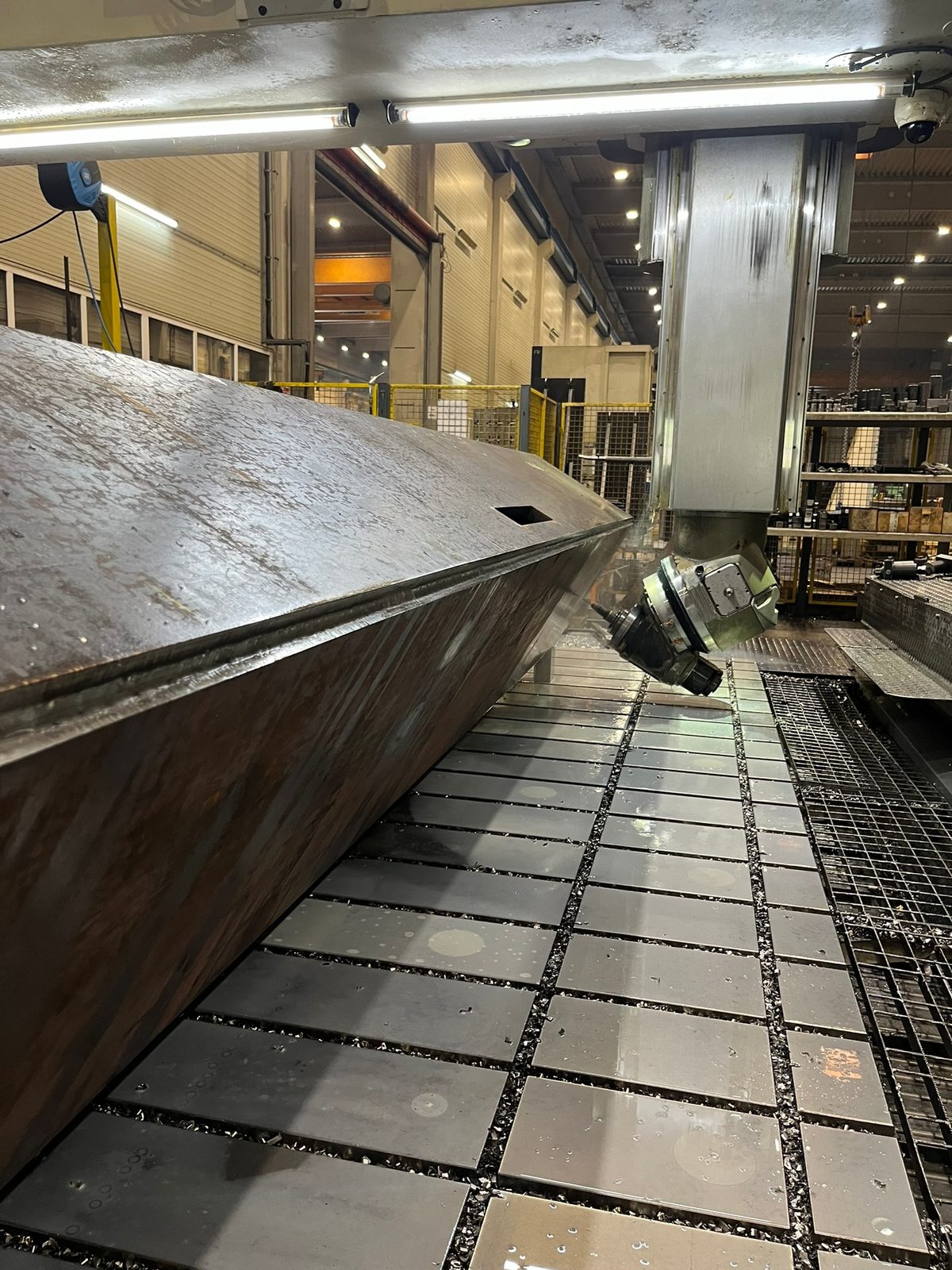
The 30° milling head can be positioned in 0.001° steps. This allows the tool to be aligned for inclined surfaces. Whether internal connecting surfaces and ribbing can be reached also depends on tool length, interfering contours and the setup; the swivelling head does not replace this check.
Roller guideways with adjustable preload support the machine’s rigidity. Reducing deflection under cutting forces helps maintain accuracy, especially over long workpieces.
The equipment includes 43 kW of main drive power and the Heidenhain iTNC 530 HSCI control. The control is part of the machine configuration; no particular accuracy on the finished component can be inferred from its name.
From machine bed to cast housing – versatility in use
The long travel, large clamping surface and swivelling milling head support a range of large-part machining tasks. Typical examples include:
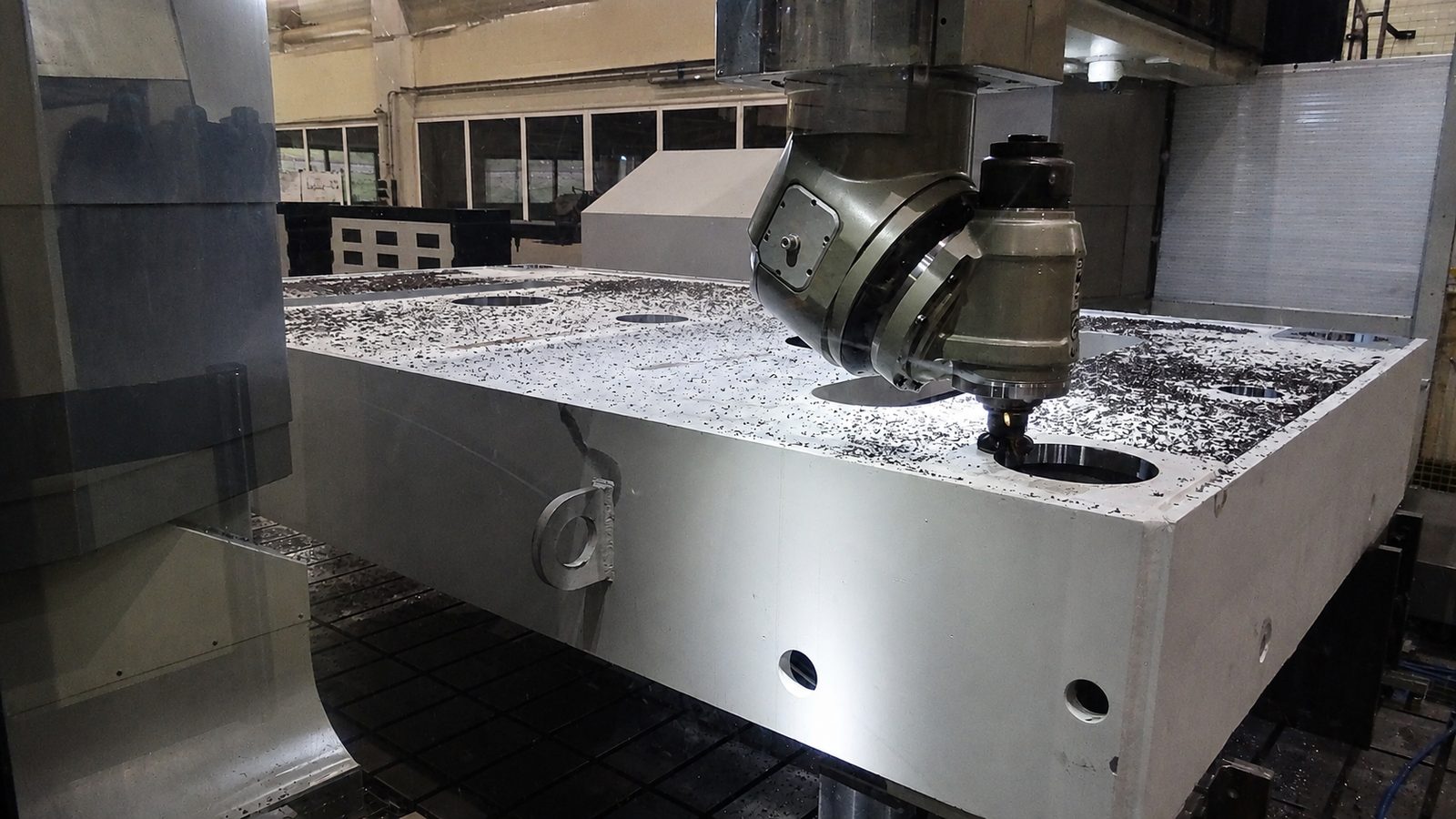
- Machine beds, base frames and press tables – face-milled over the full length, hole patterns in the same setup
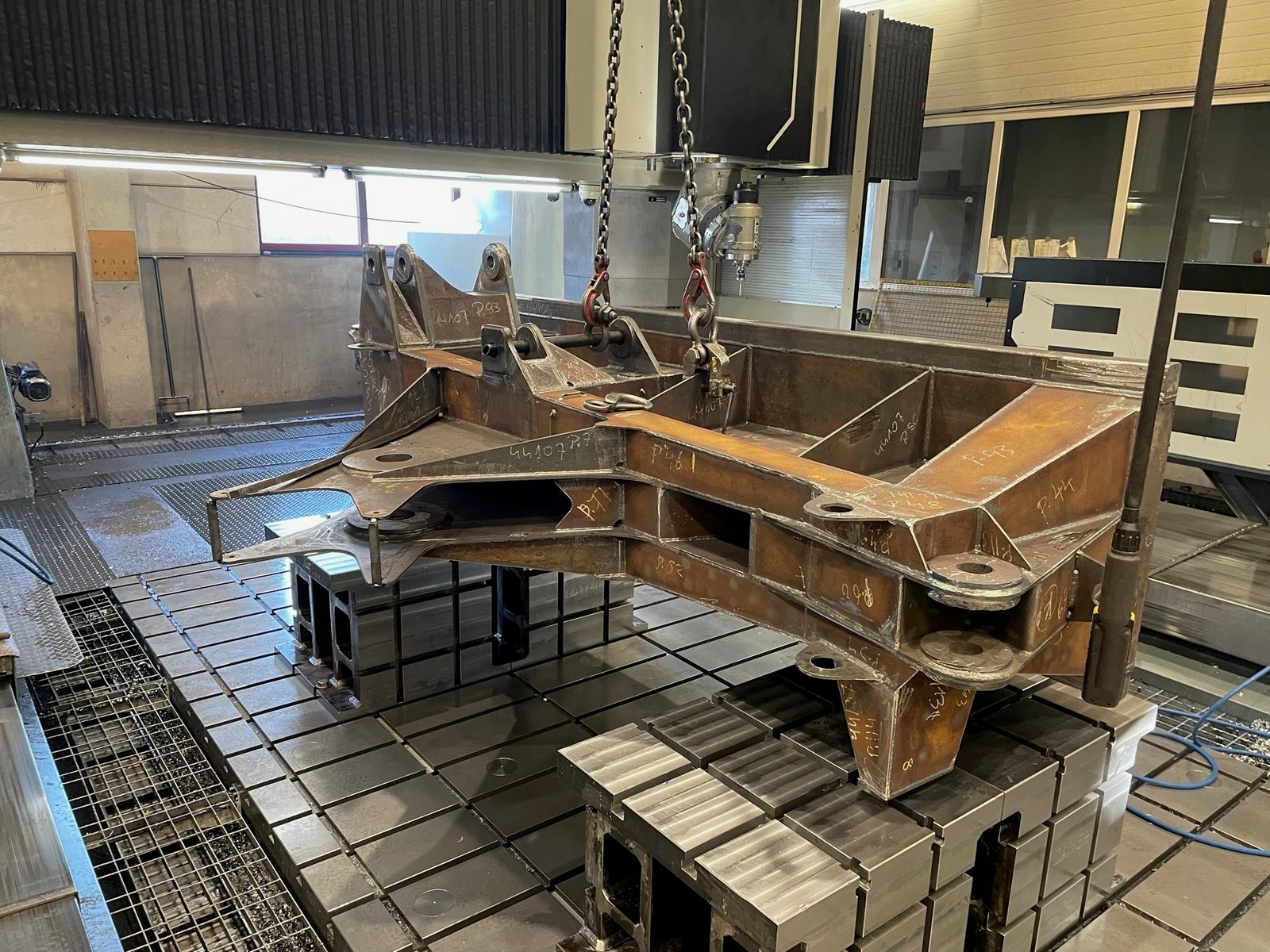
- Welded steel structures whose mating surfaces and connection dimensions are machined after welding – setup and machining sequence are matched to the drawing
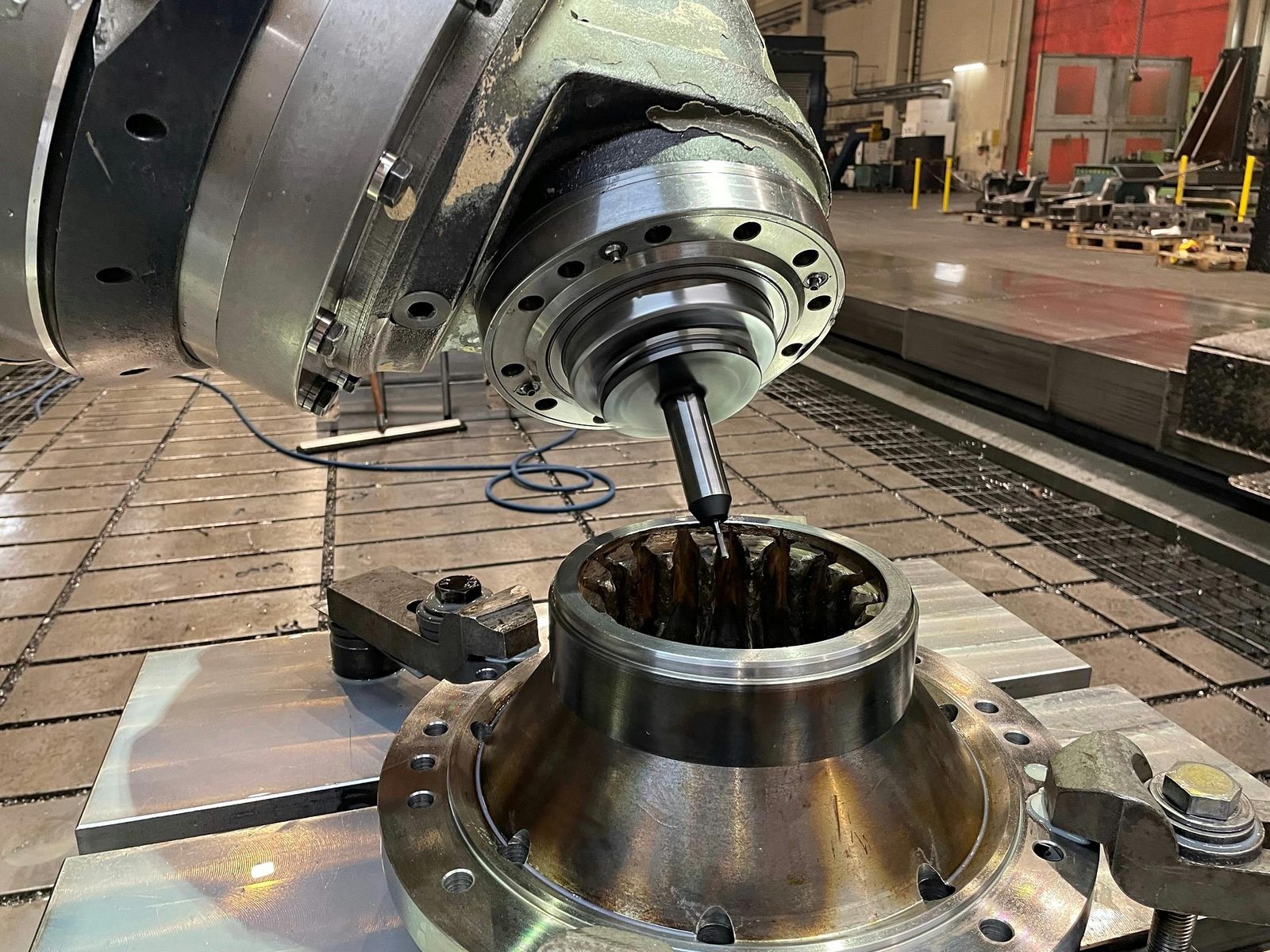
- Cast housings and special components with machining on several planes – the 30° head also reaches inclined and internal surfaces
- Guideways and functional surfaces with tight flatness and parallelism requirements
- One-off parts and small batches – no minimum quantities, from the blank to the ready-to-install assembly
What the investment means for customers
For customers, the number of setups required is decisive. Every re-clamping costs setup time and requires renewed alignment. The long travel can make machining in a single setup possible; whether this succeeds from roughing to the last functional surface is checked on the specific component.
Then there is the environment in which the machine works: crane capacity up to 25 t for heavy parts, our own material stock with inspection certificate 3.1 to EN 10204 and the complete process chain from cutting through the welded structure to painting under one roof – as a contract manufacturer in Lorch in the Stuttgart region.
And finally, the same machines are used for training: as a training company for the Zerspanungsmechaniker (CNC machinist) apprenticeship, we introduce the next generation to large-part machining on the Zayer – knowledge that stays in the company.
The investment in context today
This article was first published in March 2017 on our previous website. For the relaunch, we revised the text and checked the specifications against current machinery data.
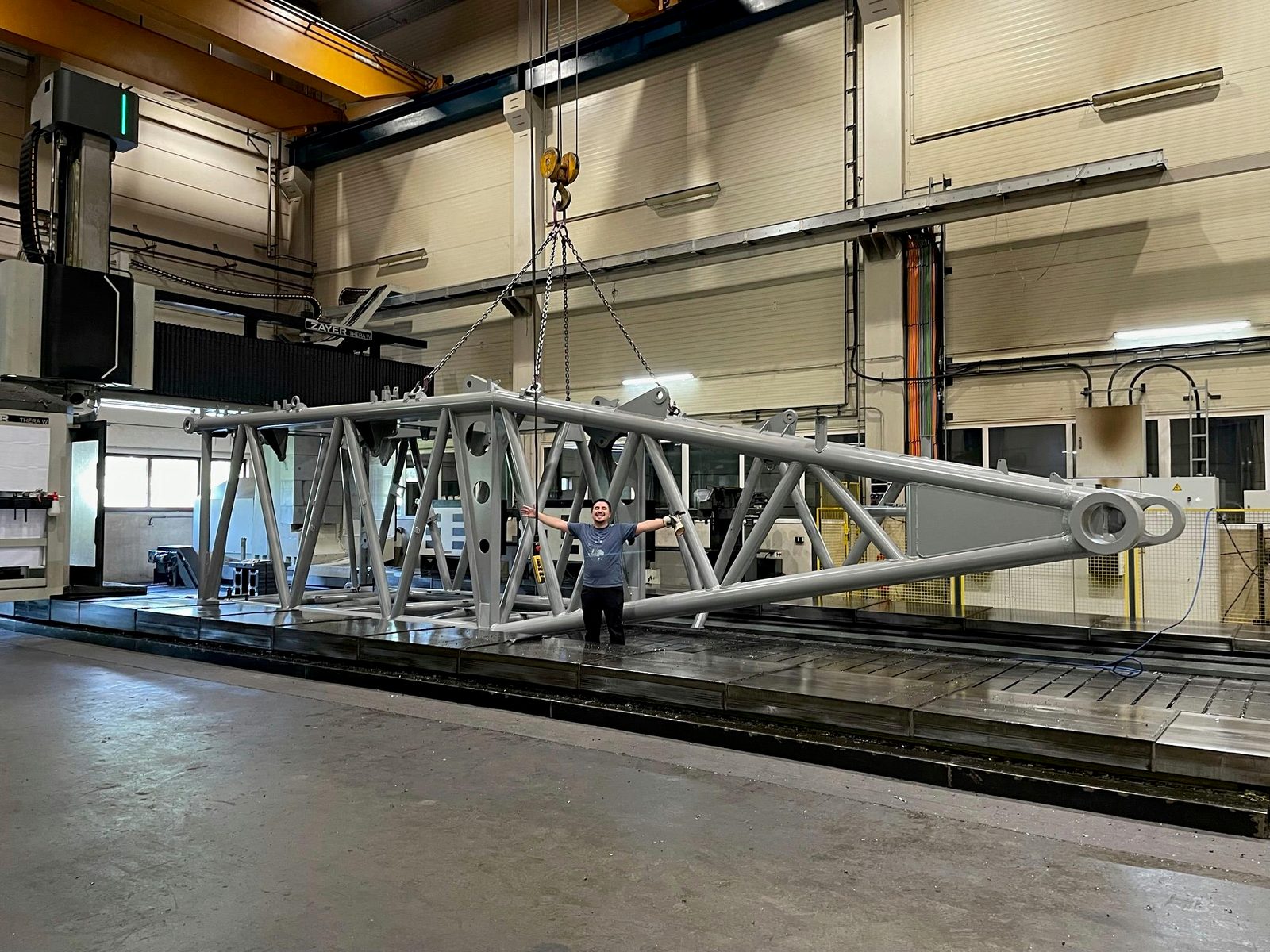
From today's perspective, the Thera W 16000 was the first step of a larger development: in 2020 the Zayer Thera W 26000 followed as the second, even larger gantry milling machine. Together, the two now cover travels up to 26 m, with unit weights up to 50 t – and form the backbone of our CNC large-part machining.
The first Zayer in pictures
Revisit the workshop images from this article. Select an image to return to its chapter.
-
The machine -
1 Why we invested in a new gantry milling machine in 2017 -
2 The Zayer Thera W 16000 in detail -
3 30° milling head: positioning and tool access -
3 30° milling head: positioning and tool access -
4 From machine bed to cast housing – versatility in use -
4 From machine bed to cast housing – versatility in use -
5 What the investment means for customers -
6 The investment in context today
Frequently asked questions about gantry milling on the Zayer Thera W 16000
Which components are suitable for gantry milling on the Zayer Thera W 16000?
The Zayer Thera W 16000 is suitable for large machine beds, base frames, press tables and welded assemblies with mating surfaces to be machined. Its X travel is 16,000 mm; the usable component size also depends on the setup and tool access. For longer components we check the sister machine with 26,000 mm of X travel.
Which materials can be machined on the gantry milling machine?
The range extends from structural steel through fine-grain structural steel and wear-resistant steel to stainless steel. The materials come from our own stock with over 40 material grades – on request with inspection certificate 3.1 to EN 10204.
Can welded assemblies be completely machined?
Yes, welded assemblies can be machined at Bock. Cutting, welded structure, vibration stress relief, machining and painting are part of the in-house process chain. Which steps and setups are required is determined for the respective drawing.
Gantry milling or boring mill – which process suits my component?
The gantry spans the component and plays to its rigidity on long, flat workpieces; boring mills have the advantage with cubic parts that need machining on the sides. We operate both under one roof – and choose with you the most economical process for your drawing.
How does an enquiry for CNC large-part machining work?
A drawing or STEP file, material and quantity are enough: our process planning checks feasibility, setup and lead time – and gets back to you with a concrete quotation. From one-off parts to small batches, with no minimum quantities.
Standard for material certification
- Inspection certificate 3.1 for the material; not a dimensional report of the machined component DIN EN 10204 – Metallic products: types of inspection documents